
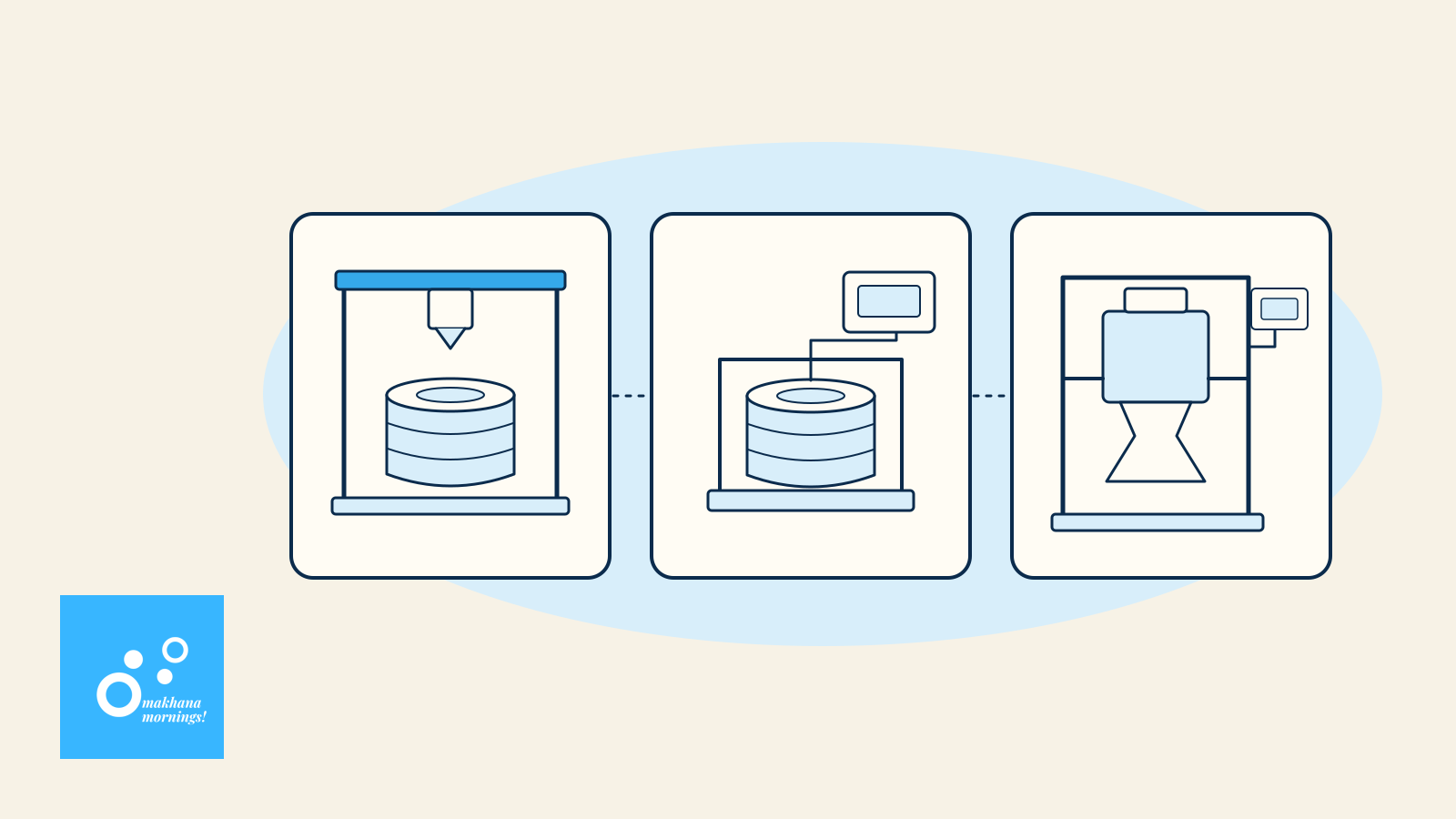
A rocket component can emerge from a printer long before the engine is ready. For Indian manufacturers entering space supply chains, making the hardware and demonstrating how it performs are different milestones.
In an October 16 update, ISRO said more than 70% of its LME1100 methane-engine components had been produced through additive manufacturing, or 3D printing. That is a component share, not a measure of engine weight or cost savings.
The Breakdown
The full-scale gas generator had its first ignition test on October 9. Other work remained at different stages, including pump testing and qualification of bearings and seals. ISRO targets an integrated engine by mid-2027, followed by hot tests. That is not a launch date.
What fewer parts can change
An older, separate engine offers a concrete manufacturing example. In May 2024, ISRO reported that redesigning the PSLV’s PS4 engine for additive manufacturing reduced 14 parts to one and eliminated 19 welded joints. Wipro 3D manufactured it.
ISRO also reported a 60% reduction in overall production time for that PS4 work. This is a project-specific agency figure, not a saving established for the newer methane engine.
The PS4 programme did not stop at manufacturing. Flow and thermal modelling, structural simulation and cold-flow checks preceded integrated hot tests. ISRO reported a successful 665-second qualification-duration test on May 9, 2024.
Why This Matters
The two programmes illustrate different questions: can a design be manufactured with fewer separate pieces, and can the assembled engine demonstrate the required performance? A result for one engine cannot settle the other’s qualification or economics.
The Crunch
The milestone matters: a component made, a subsystem tested, or an integrated engine qualified. Treating these as interchangeable hides the work ahead.