
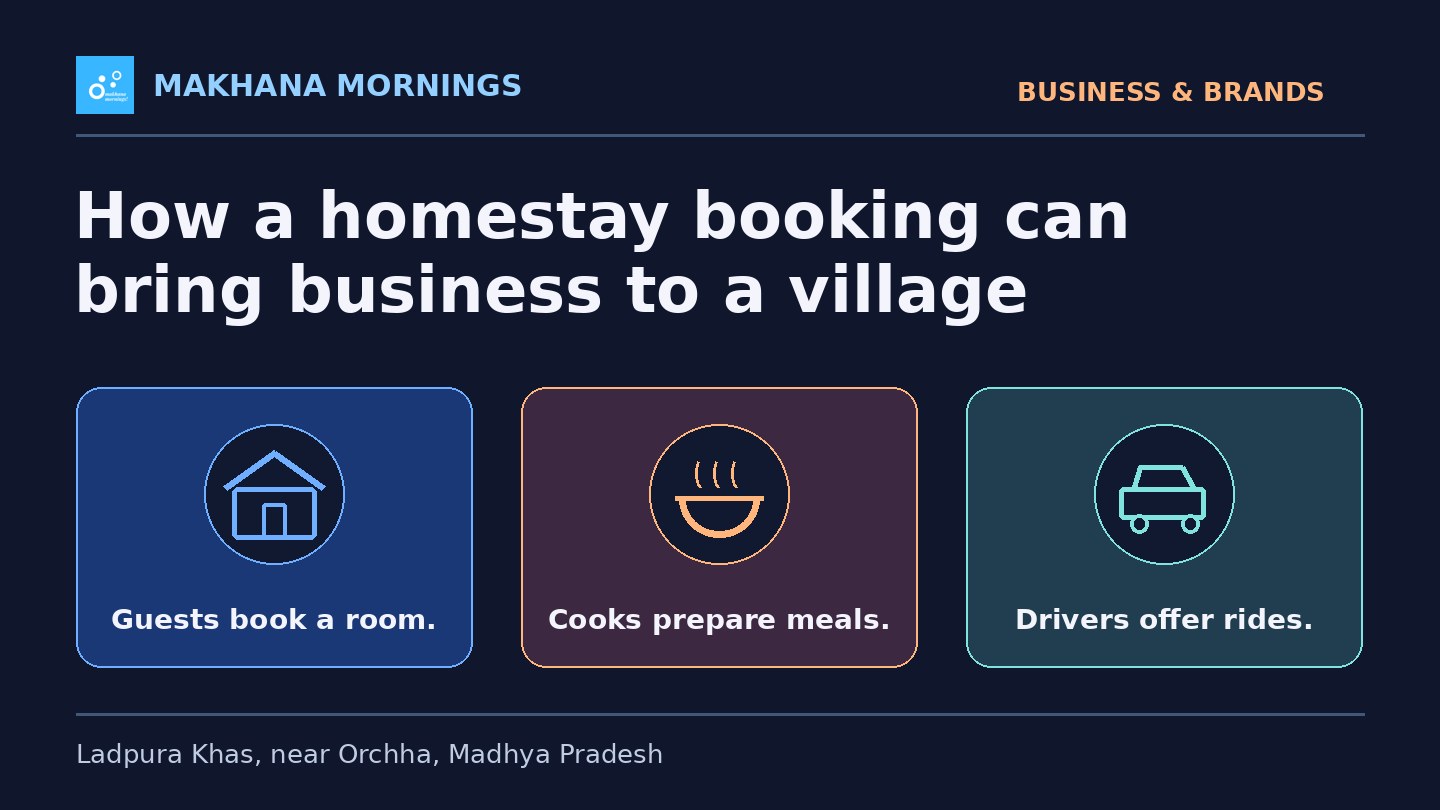
A traveller booking a room near Orchha might also need dinner, a ride between villages and something to do the next morning. For a homestay, those are part of the guest’s visit. For a cook or a driver who does not own a spare room, they are different ways to earn from the same trip.
That is the business behind Mahua Hill View, a homestay in Ladpura Khas in Madhya Pradesh’s Bundelkhand region. In its 25 November account, the Madhya Pradesh Tourism Board said the property had hosted more than 1,700 travellers since it opened in 2021. The figure describes one property, not the village’s total visitor count.
The room brings customers to the village
The homestay’s listing offers meals, including Bundeli food. In an earlier on-the-ground account, Village Square reported that Bhagwati Kushwaha, who lives nearby, cooked guests’ meals at Mahua Hill View. Haritika, the nonprofit involved in the village project, says it also helped train potters to make terracotta toys and reports that women from local self-help groups operate e-rickshaws in the Orchha area.
Those examples show how visitors can buy more than a room. They do not mean every guest buys a pottery experience or that the homestay passes on a fixed share of its booking revenue. A meal can come with the stay, while a driver or an artisan can sell a service separately.
A building is not the same as a business
The tourism board says families received training in hospitality and digital booking. That matters because preparing a room is a one-time task, but finding guests, handling bookings and paying for cleaning and upkeep are recurring jobs. Mahua Hill View manager Uma Pathak reported ₹1 lakh to ₹1.5 lakh a month in peak season in the board’s account. That is a reported figure for one property; the board did not give its costs or off-season receipts, so it does not tell us the profit or a full year’s income.
The Crunch
When judging a village tourism project, count more than how many rooms have opened. Ask how often they fill, what guests buy nearby and whether the people providing those services can earn beyond the busiest months. A room is where the booking starts. It is not where the value has to stop.

Leave your thoughts