
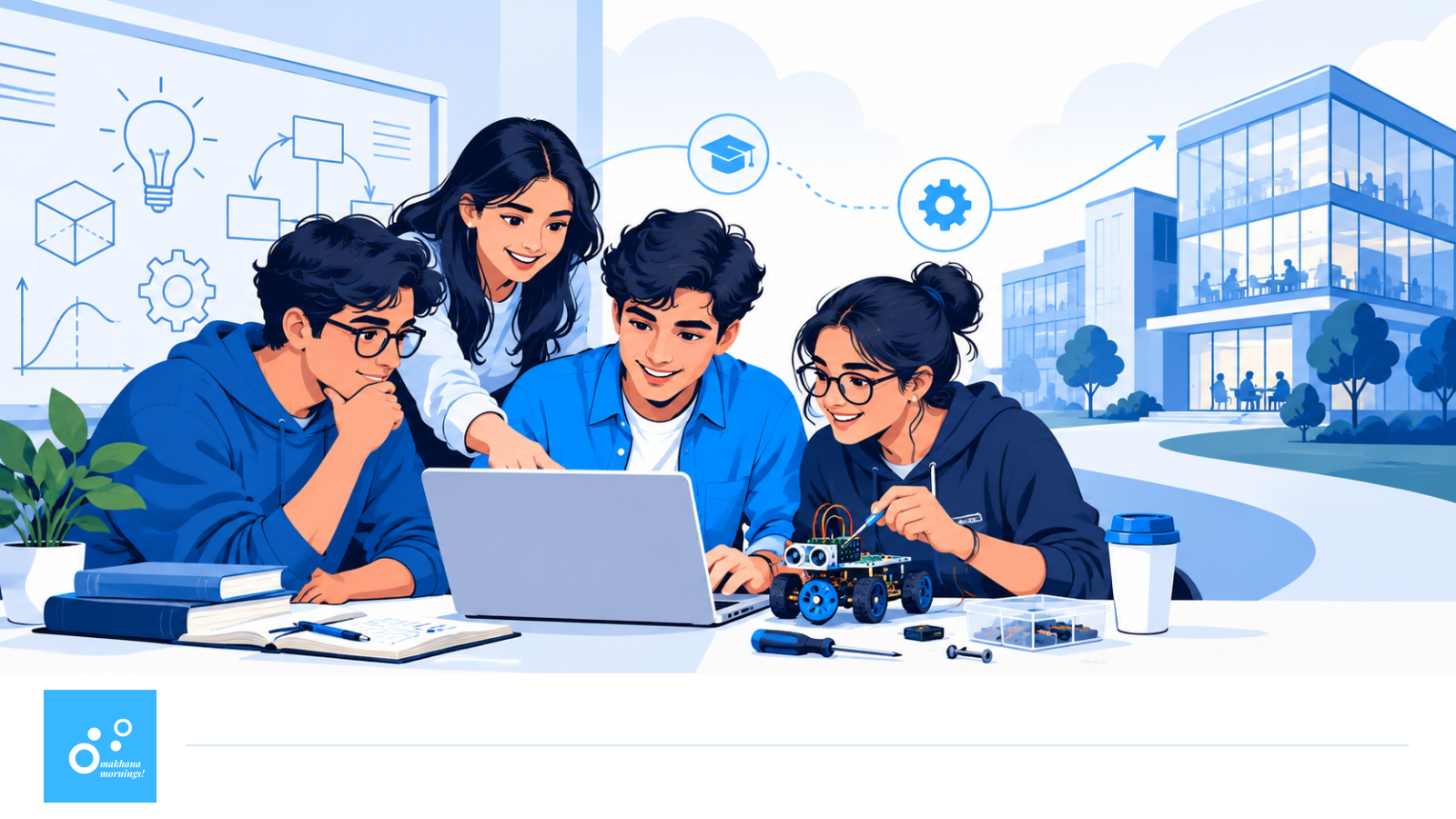
Mastek’s Trichy expansion pairs office capacity with a plan to work more closely with colleges. Its October 28 announcement describes space for approximately 150–200 professionals across Salesforce, Oracle, Data & AI and other digital services, alongside Deep Blue sessions for final-year students and dedicated AI sessions.
The connection worth examining is practical: students need opportunities to turn technical knowledge into a working solution, while delivery teams need people who can understand a problem before choosing the tools to solve it.
The Breakdown
Mastek already runs Project Deep Blue, a beginner-focused hackathon with mentoring from its professionals. The programme describes interaction over three months rather than a single coding event. Its website currently advertises Season 12 registration. This existing programme helps explain the approach behind the proposed college engagement, although the Trichy announcement does not define a local programme schedule.
The office figure describes capacity, not confirmed additional hires. Mastek has not provided a recruitment timetable or placement commitment in the announcement.
Why This Matters
One current Deep Blue challenge asks participants to design an urban pollution-monitoring system. It brings together air-quality sensors, traffic and weather data, location analysis, prediction and dashboards. The assignment is to work through how these pieces could produce useful information.
That example illustrates several tasks involved in applied technology: choosing data, connecting systems, deciding what a model should predict and presenting a result someone can use. Mentored projects can give students a setting to practise these decisions. The published challenge is a design brief, not evidence of a deployed pollution-control system.
The Crunch
The more interesting part of this expansion is the proposed link between local colleges and delivery work. Its value will depend on whether sustained mentoring and practical projects become a repeatable route for students to develop relevant skills.
Related categories: Technology & AI


Leave your thoughts