
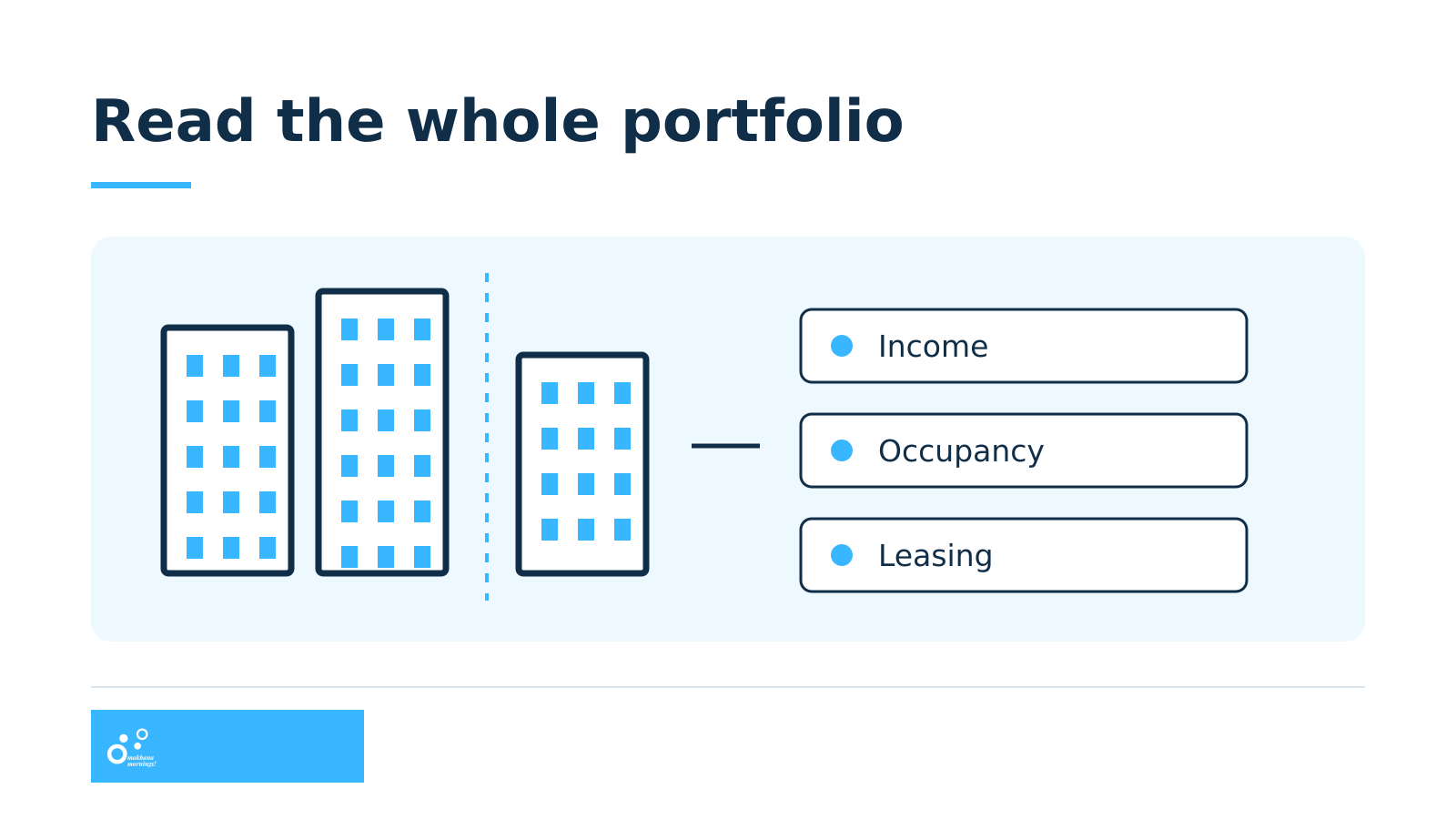
A property portfolio can grow because its existing buildings generate more income, because it adds assets, or through a combination of the two. Reading those routes separately gives a clearer picture of an office landlord’s business than the headline growth rate alone.
Mindspace Business Parks REIT’s November 2 presentation reports net operating income of ₹836.1 crore for the quarter ended September 30, 2026, up 31.9% year on year. Growth on its same-store measure was 16.8%.
Two comparisons, different questions
The overall result describes a changing portfolio. The same-store measure is intended to compare the existing asset base more consistently. The gap is a reason to examine both, not to subtract one growth rate from the other and label the difference as the exact contribution from acquisitions.
For a business assessing an expanding landlord, the useful questions concern what has changed inside the properties as well as what has entered the portfolio. Higher income from an existing asset and income added by a newly acquired one both matter, but they tell different stories about execution.
The same need to check the comparison appears in the occupancy figures.
Committed occupancy was 96.1% excluding assets acquired in the first half of FY27 and Pocharam, which is held for sale. Including those acquisitions, but still excluding Pocharam, the figure was 93.8%. Gross leasing during the quarter was 1.6 million square feet.
Neither occupancy figure should be presented without its exclusions. Imagine an owner buying a partially leased office park. The purchase could reduce the combined occupancy percentage even if leasing at the original buildings remained unchanged. That is an illustrative example of how a portfolio’s composition affects the ratio, not an explanation of every movement in Mindspace’s results.
Follow the route from a lease to cash
A signed leasing commitment is one stage in the operating process. The commercial questions that follow include when space becomes available, when the tenant’s obligations begin and how the arrangement affects cash receipts. Committed occupancy should not be read as proof that every covered space is already producing the same level of rent.
Its net operating income measure deducts property taxes, insurance and other direct operating expenses from revenue. Financing costs and other adjustments appear further down the cash-flow calculation. The reported revenue and operating income also include reclassified regulatory income or expense from its power business.
This distinction helps explain why a property-level operating number is not the same as the cash ultimately available to distribute. A reader should follow the calculation rather than treating different financial measures as interchangeable.
For Indian businesses looking for offices, the practical takeaway is equally specific. A portfolio percentage does not describe the exact building, floor or move-in date they need. Availability, access, fit-out requirements and the terms of the proposed lease remain the relevant checks. Strong aggregate leasing need not make every location equally suitable for an employer.
The Crunch
Mindspace’s quarter is best read through two questions: how the comparable properties performed, and how the wider portfolio changed. Keeping the income measure, occupancy cohort and leasing stage clear makes the operating story more useful than a single growth headline.
Related categories: Business & Brands


Leave your thoughts