
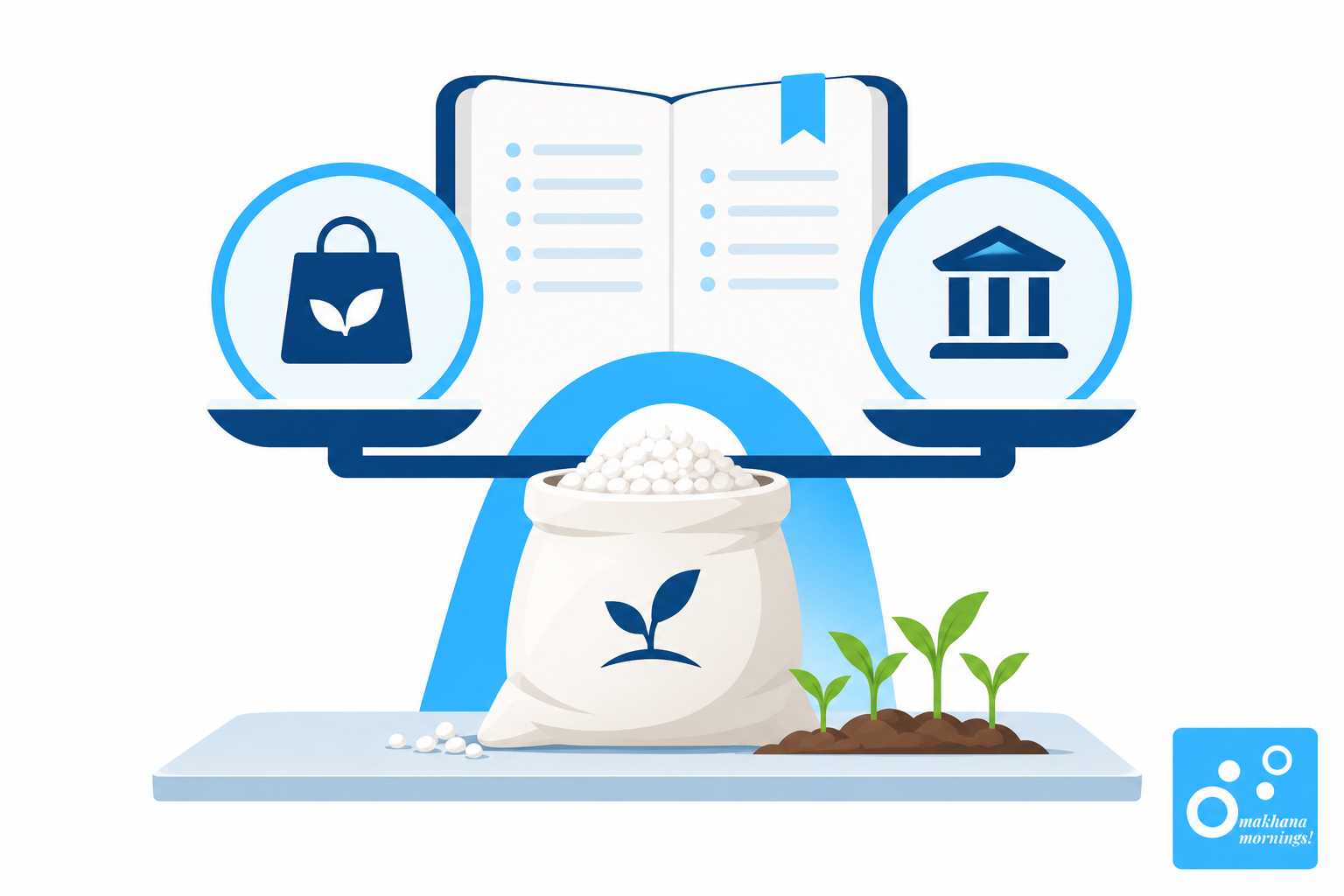
The price a farmer pays and the cost of supporting that price are different numbers. India’s latest fertiliser package makes that distinction important for both farm budgets and public finances.
The Breakdown
On November 11, the Cabinet approved nutrient-based subsidy rates for phosphatic and potassic fertilisers for October 1, 2026 to March 31, 2027. The rabi package has an estimated outlay of about ₹62,370 crore, against an estimated budgetary requirement of ₹37,952 crore for the previous rabi season: an increase of roughly 64%.
Special support beyond the nutrient-based subsidy is intended to keep di-ammonium phosphate, or DAP, available at ₹1,350 per 50 kg bag. This is not an announcement of a new price cut.
The package also extends special provisions to specified triple superphosphate and monoammonium phosphate products, continues freight support for single superphosphate and subsidy for ammonium sulphate, and adds a sulphur-support package for domestic manufacturers. Detailed guidelines for the sulphur package are to follow.
Why This Matters
Under the nutrient-based subsidy system, support goes to manufacturers or importers for notified products, based on nutrient content and point-of-sale transactions. It is not a cash payment of the headline package amount into farmers’ bank accounts.
For phosphatic and potassic products generally, companies set reasonable retail prices under government oversight. DAP’s special support should therefore not be mistaken for a single fixed price applying to every fertiliser grade.
An illustrative household purchase explains the distinction: if a buyer’s bill stays unchanged while public support increases, the underlying expense has not necessarily disappeared. Part of the cost is being borne elsewhere. Stable retail pricing and a larger subsidy requirement can coexist.
The Big Picture
The seasonal estimate is neither money already spent nor the full annual fertiliser bill. It should not be compared with an annual total without matching the period and the products covered.
Price support and physical availability also require separate checks. Fertiliser supply is planned against state-wise, month-wise requirements; distribution within states is handled by state governments. A national allocation cannot establish whether a particular dealer has the required product when a farmer needs it.
For businesses, the next useful evidence is the implementing detail and its effect on realised margins and cash collection, not an assumption that the announced outlay becomes profit. For farmers, the practical test remains the right input, at the stated price, in time for use.
The Crunch
A stable bag price is only one part of the story. Follow the fiscal cost and delivery separately.



Leave your thoughts