
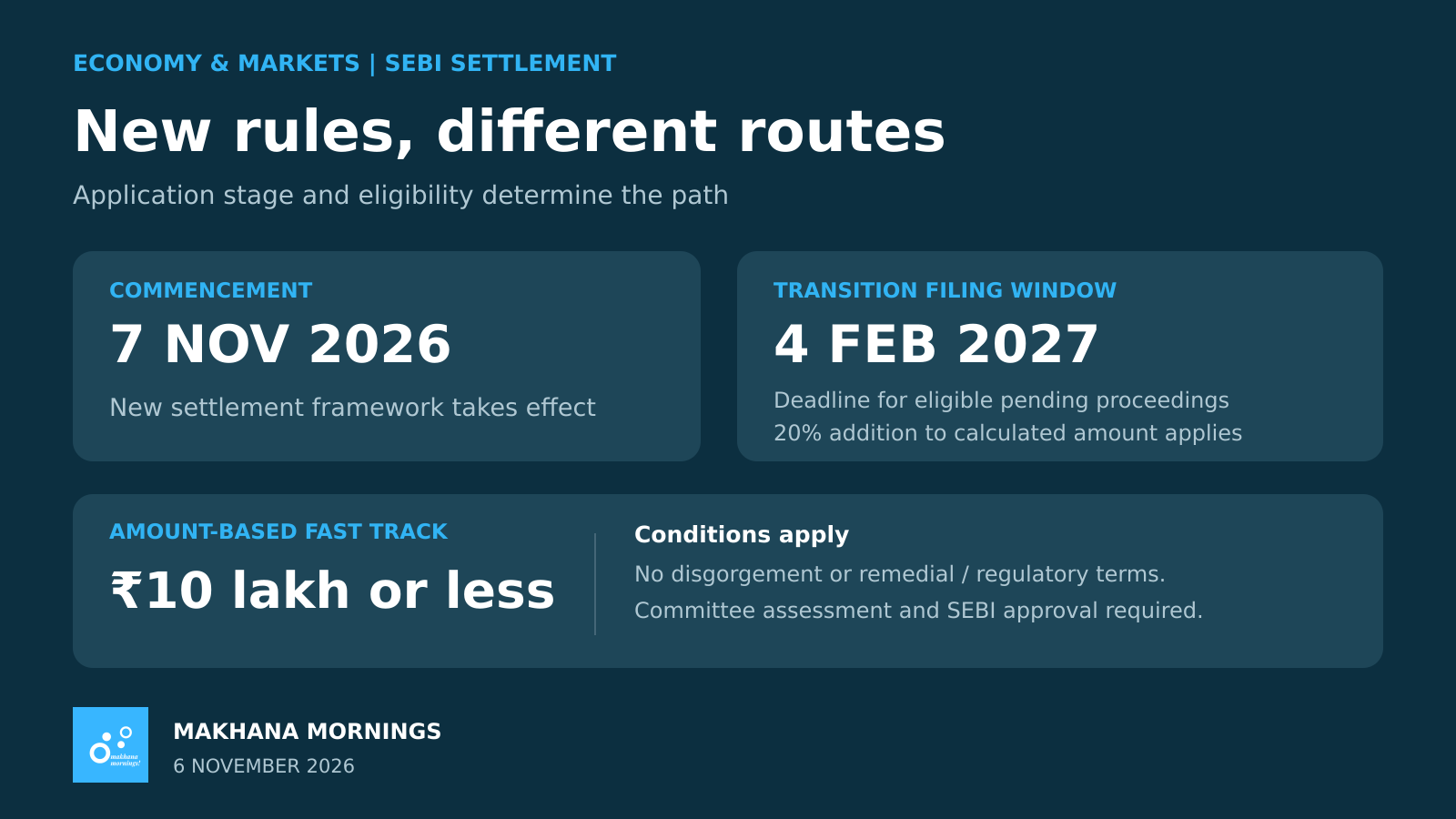
SEBI’s new framework for settling administrative and civil proceedings takes effect on November 7, 2026. For companies, intermediaries and other applicants, the immediate question is how far their case has already moved through the settlement process.
The change follows regulations notified in October. On November 6, SEBI announced their commencement and pointed applicants to an online form, a settlement-amount calculator, FAQs and a help desk.
The Breakdown
Existing settlement applications have three routes at the transition:
- Terms already approved by the panel of whole-time members remain governed by the 2018 framework and the approved terms.
- Where the High Powered Advisory Committee has made its recommendation but the panel has not approved it, the applicant gets a choice: continue with the recommended amount under the old framework, or seek fresh processing under the new rules. The choice must be exercised within 30 days of receiving SEBI’s notice.
- Where the advisory committee has not yet made a recommendation, the application moves to the new framework, with a fresh Internal Committee meeting.
That distinction matters because an application being pending does not, by itself, establish which route applies. The recommendation and approval stages determine the transition.
A filing window with an added cost
The new rules also provide a 90-day window for specified proceedings pending at commencement where a settlement application was never filed, or was rejected, returned or withdrawn under the 2018 rules. SEBI’s FAQs identify February 4, 2027 as the deadline for this transitional window.
Applications under this provision carry a settlement amount 20% above the amount calculated under the new framework. The window creates an opportunity to apply, subject to the regulations; it does not assure that the matter will be accepted for settlement.
What the ₹10 lakh fast track covers
One fast-track route depends on the Internal Committee finding that the calculated settlement amount is ₹10 lakh or less and that neither disgorgement nor remedial and regulatory terms apply. Disgorgement can cover wrongful gains, avoided losses or losses caused to investors; remedial and regulatory terms can require corrective action or impose restrictions.
Qualifying applications go to the panel of whole-time members without the advisory-committee stage. The panel’s decision and the required settlement steps still apply. A separate violation-based fast-track route covers specified types of defaults, including certain disclosure failures.
The Crunch
The reset changes the path through settlement as well as its calculation. The practical issues are the application’s stage, the conditions attached to any fast-track route and the cost of using the transitional window. The FAQs and calculator help explain the process; the regulations govern eligibility and terms.
Leave your thoughts