
Tata Projects is part of a joint venture awarded an underground package for Dhaka’s MRT Line 1. The work illustrates an overseas opportunity for Indian engineering companies that is broader than supplying equipment: building the structures and installing the systems that make underground spaces usable.
The Breakdown
Japanese partners Nishimatsu Construction and Toda announced the CP-06 contract on November 10. The client is Dhaka Mass Transit Company, with the NKDOS consortium responsible for design and the Nishimatsu–Tata Projects–Toda joint venture handling construction.
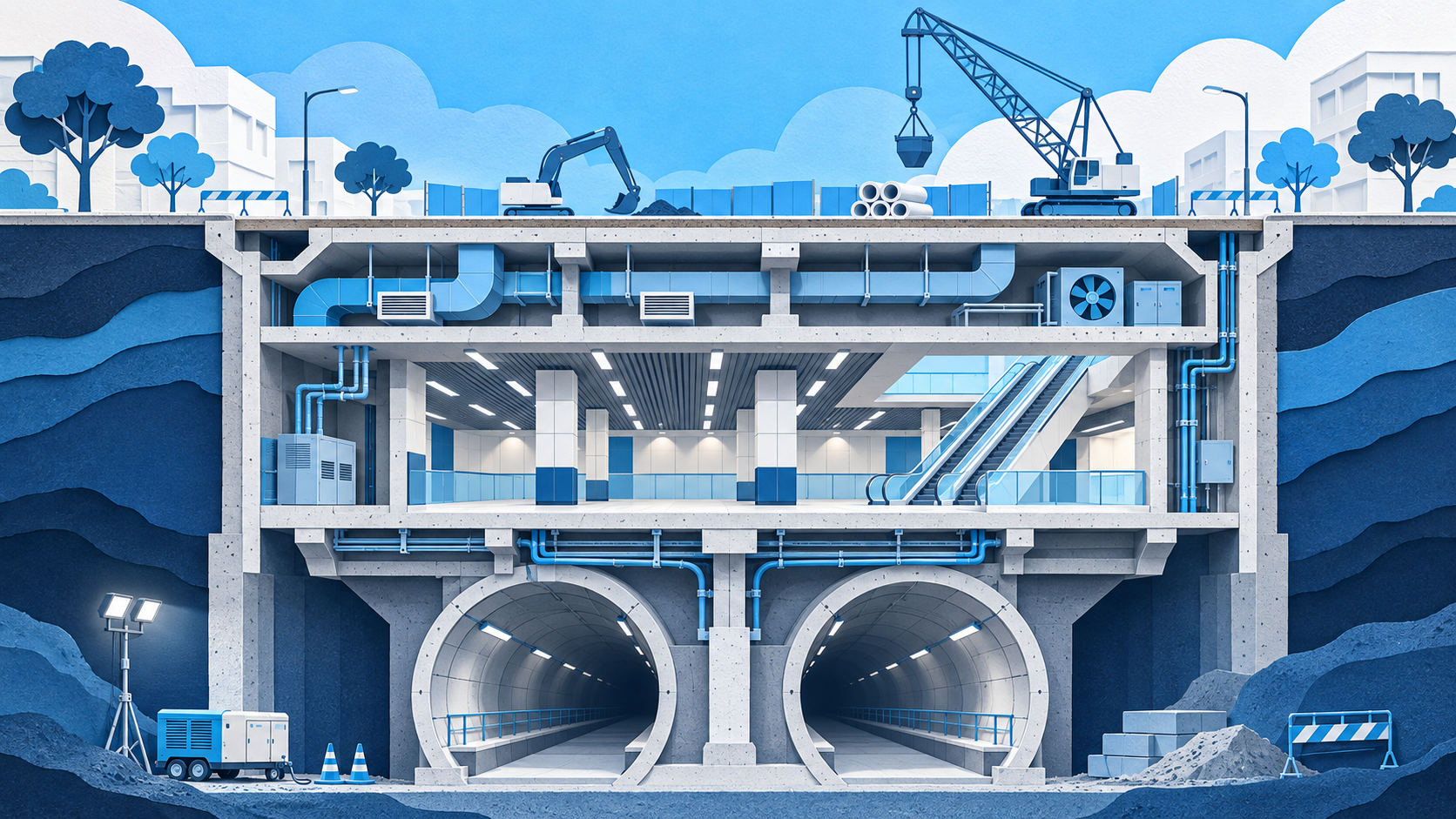
The package includes three underground station structures and two tunnel bores, each 4.3 kilometres long. It also covers station and tunnel systems, including ventilation, power supply, fire protection, lifts, escalators and lighting.
The disclosed contract value is approximately ¥103.1 billion for the entire joint venture. It is not Tata Projects’ revenue. The releases do not disclose Tata’s share or its expected profit.
Why This Matters
A tunnel is only one part of an underground transport project. Ventilation and passenger access must work alongside the civil structure. Their inclusion in one package makes coordination between construction and systems a central part of the assignment.
For an Indian contractor working abroad, that is a different proposition from exporting a finished product. The work is delivered at the customer’s site, alongside international partners and within a larger transport network. The announcement does not establish how much equipment will be sourced from India or how the partners will divide every activity.
The Crunch
The stated construction period is five years from commencement, not a confirmed passenger-opening date. Nor does this package represent the whole metro line.
The useful business question now is how the joint venture delivers its combined scope. The award establishes a substantial overseas assignment involving Tata Projects; revenue allocation, margins and delivery progress still need separate evidence.
Illustration: conceptual artwork, not the actual Dhaka station design.




Leave your thoughts