
A feature in a car brochure becomes a factory investment long before the car reaches a showroom. Uno Minda’s latest sunroof expansion shows that sequence at work in Bawal, Haryana.
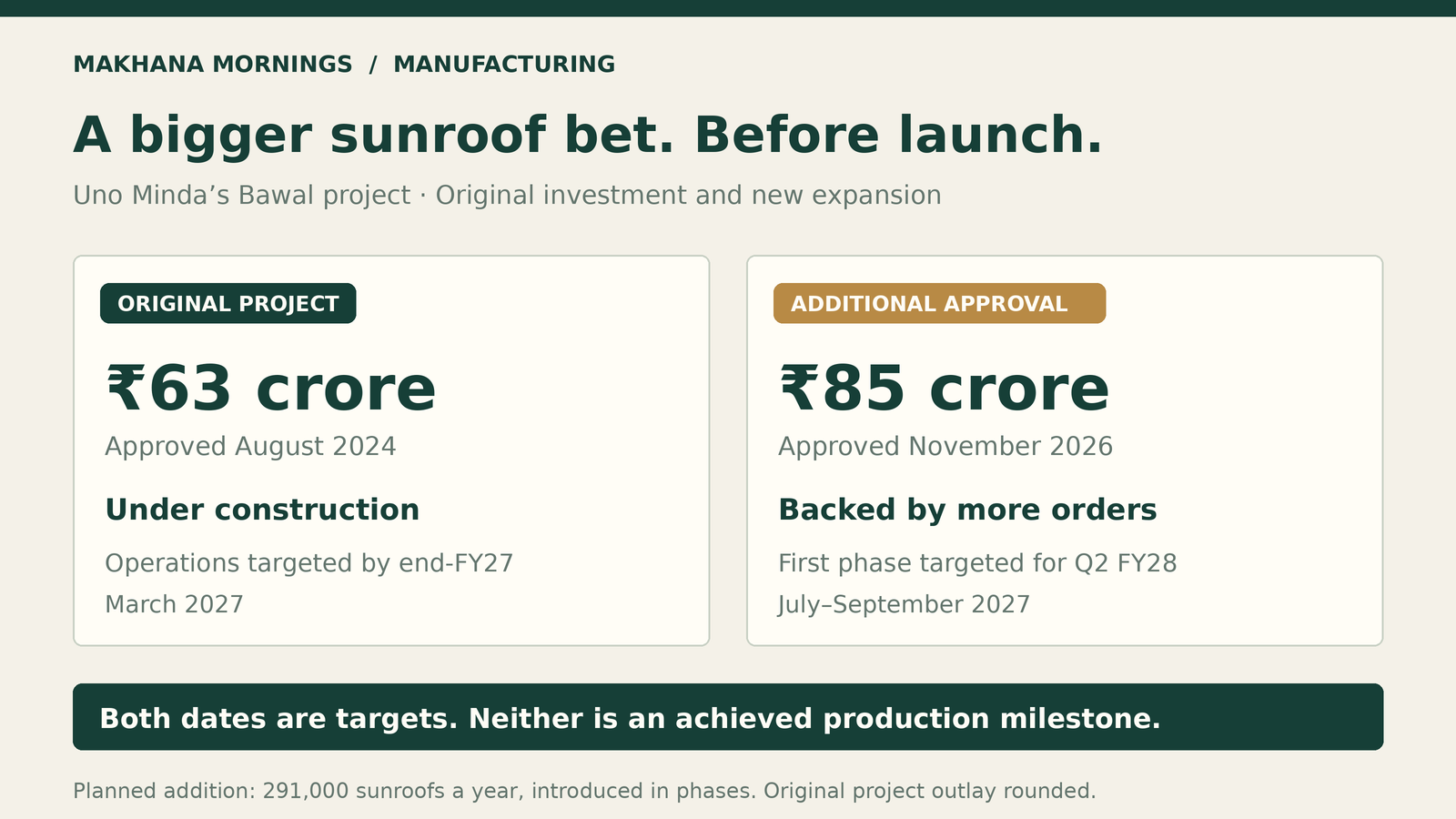
On 5 November, the auto-components maker approved about ₹85 crore of additional investment in sunroof manufacturing, backed by incremental customer orders. The original facility is still under construction. More capacity is being planned before commercial operations begin.
The Breakdown
The first Bawal sunroof project was approved in August 2024 with an outlay of about ₹63 crore. It followed a technical licence agreement with Japan’s Aisin to manufacture and sell sunroofs. The latest approval is a separate addition to that original investment.
The initial plant is expected to begin commercial operations by the end of FY27, which ends in March 2027. The expansion’s first phase is targeted for Q2 FY28, or July–September 2027. These are planned milestones, rather than completed production starts or a promise that the entire expansion will be operating at full capacity by then.
The capacity plan adds 291,000 sunroofs a year to a listed base of 145,000, taking the intended scale to 436,000 once the addition is implemented. Current capacity utilisation is zero. The expansion will come in phases, so these figures describe manufacturing capability being built, not current output.
The new spending will be financed through a term loan and internal accruals. It is intended to serve orders already secured, alongside demand for advanced sunroof systems in India’s passenger-vehicle market. The customers have not been named in the expansion announcement.
Why This Matters
For a component supplier, growth can come from both the number of vehicles built and the value of the parts supplied for each vehicle. A sunroof offers another way to participate in a car’s equipment package, alongside established products such as switches, lighting and alloy wheels.
The timing is revealing. Uno Minda began with a technology agreement and an initial customer-backed factory plan. It is now committing further capital as more orders arrive. That makes this a concrete example of how demand for vehicle features feeds into industrial investment, well before the resulting output appears in sales figures.
The licence arrangement also shows how local manufacturing can be developed with overseas technology. The opportunity is to build the production and delivery capability in India. It would be premature to turn the investment announcement into a claim about lower car prices, import savings or market share.
The practical test now moves to execution: getting the original facility into commercial operation, bringing the additional equipment on stream and supplying customers as their vehicle programmes ramp up. Orders give the investment a commercial reason; actual production will show how quickly that plan turns into business.
The Crunch
Uno Minda’s ₹85 crore decision puts more money behind its sunroof business before the first Bawal plant has started selling output. The useful signal is the progression from a technology tie-up to customer-backed expansion. The next milestone is a working factory, followed by a dependable production ramp-up.


Leave your thoughts