
What should an AI business measure when customer demand and computing commitments follow different timetables?
Anthropic’s third-quarter revenue reached $16.956 billion, up from $11.555 billion in the preceding quarter. Yet a $974 million operating profit became a $567 million operating loss. These are unaudited consolidated figures for 2026.
The Breakdown
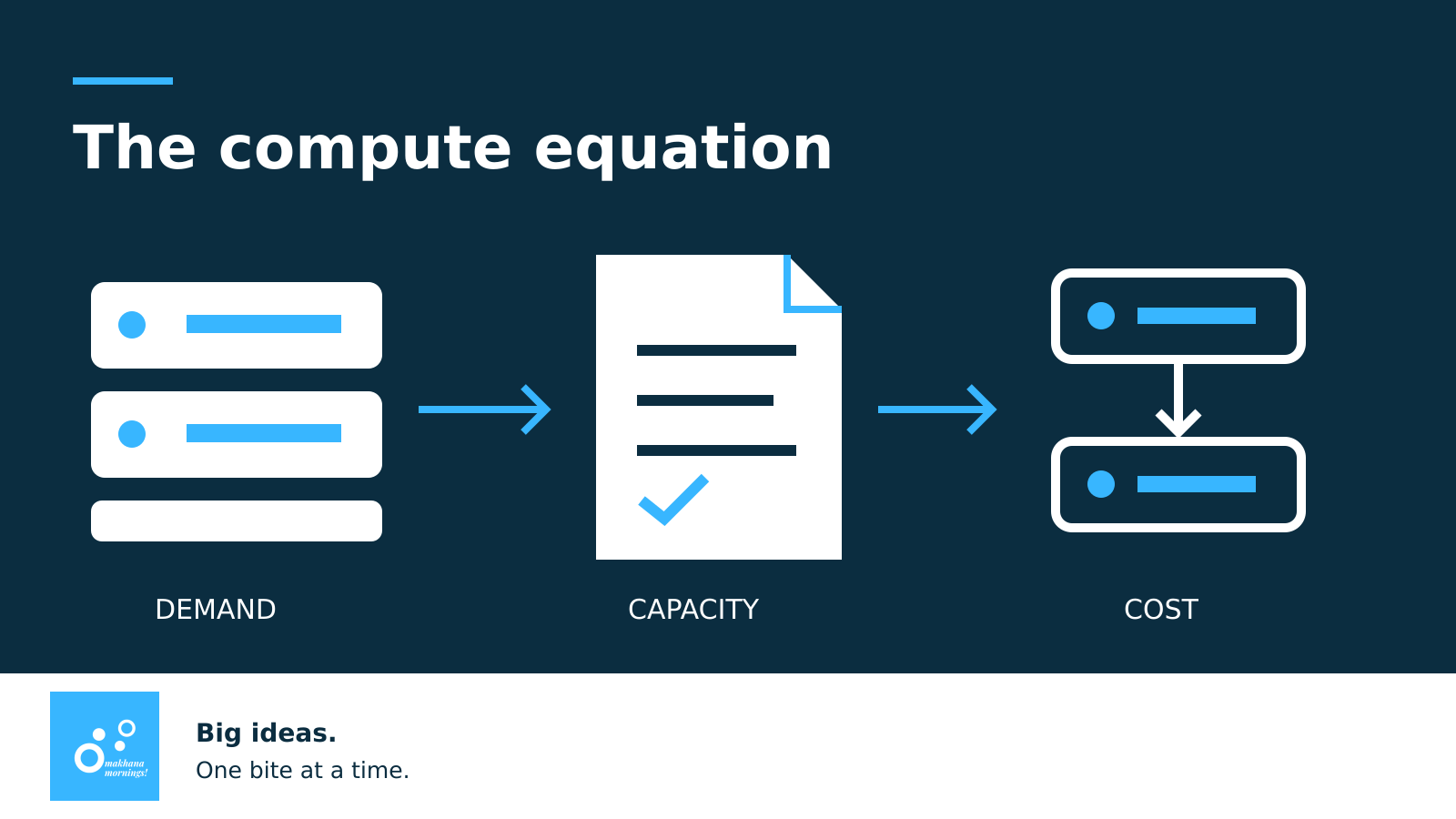
The company identifies two major pressures: $5 billion of short-term compute and a $2 billion non-cash donation-matching charge. It says short-term capacity currently costs significantly more than comparable computing secured through multi-year commitments.
That creates a scheduling problem as well as a demand problem. A provider can have customers ready to use a model before its cheaper contracted capacity is available. Buying more expensive capacity may serve those customers, while changing the economics of each additional unit of work. Faster sales alone do not settle that trade-off.
Compute and infrastructure expenses rose from 48% to 58% of quarterly revenue. That ratio describes the provider’s cost structure; it does not establish that customers’ prices will rise.
Keep the accounting periods separate
The filing’s $104.039 billion net loss covers the first nine months, including $94.324 billion of fair-value changes involving financing instruments. Operating cash inflow for those nine months was $6.569 billion. Neither figure is third-quarter cash burn.
Operating profit, net profit and cash flow answer different questions. The first describes the result from operations under the accounting framework. The second includes additional financing and other items. Cash flow reflects when money actually moves, including working-capital timing. Reading them together is more useful than treating the largest loss figure as a bill for running models.
Why This Matters in India
In February 2026, Infosys announced a collaboration combining Claude, including Claude Code, with Topaz, initially focused on telecommunications. That is existing enterprise context, not a new deal or evidence of its financial contribution.
For an Indian team building a client workflow around an external model, the practical question is how its own commercial promise handles variable usage. A fixed fee for completing a task and a bill tied to model consumption can move differently. Longer instructions, repeated attempts and unnecessary model calls belong in the delivery budget, alongside human checking.
That does not mean a customer inherits the model provider’s computing contracts. It means the application needs its own measurement: cost per successfully completed task, reliability under expected demand and the price of correcting an unsuccessful result. A model’s headline revenue cannot supply those answers.
The Crunch
AI growth has a physical cost and a contractual timetable. Anthropic’s figures make that relationship visible. For businesses using its models, the next step is to understand their own workload economics, rather than infer either unlimited cheap capacity or an inevitable price increase.
Related categories: Business & Brands

Leave your thoughts