
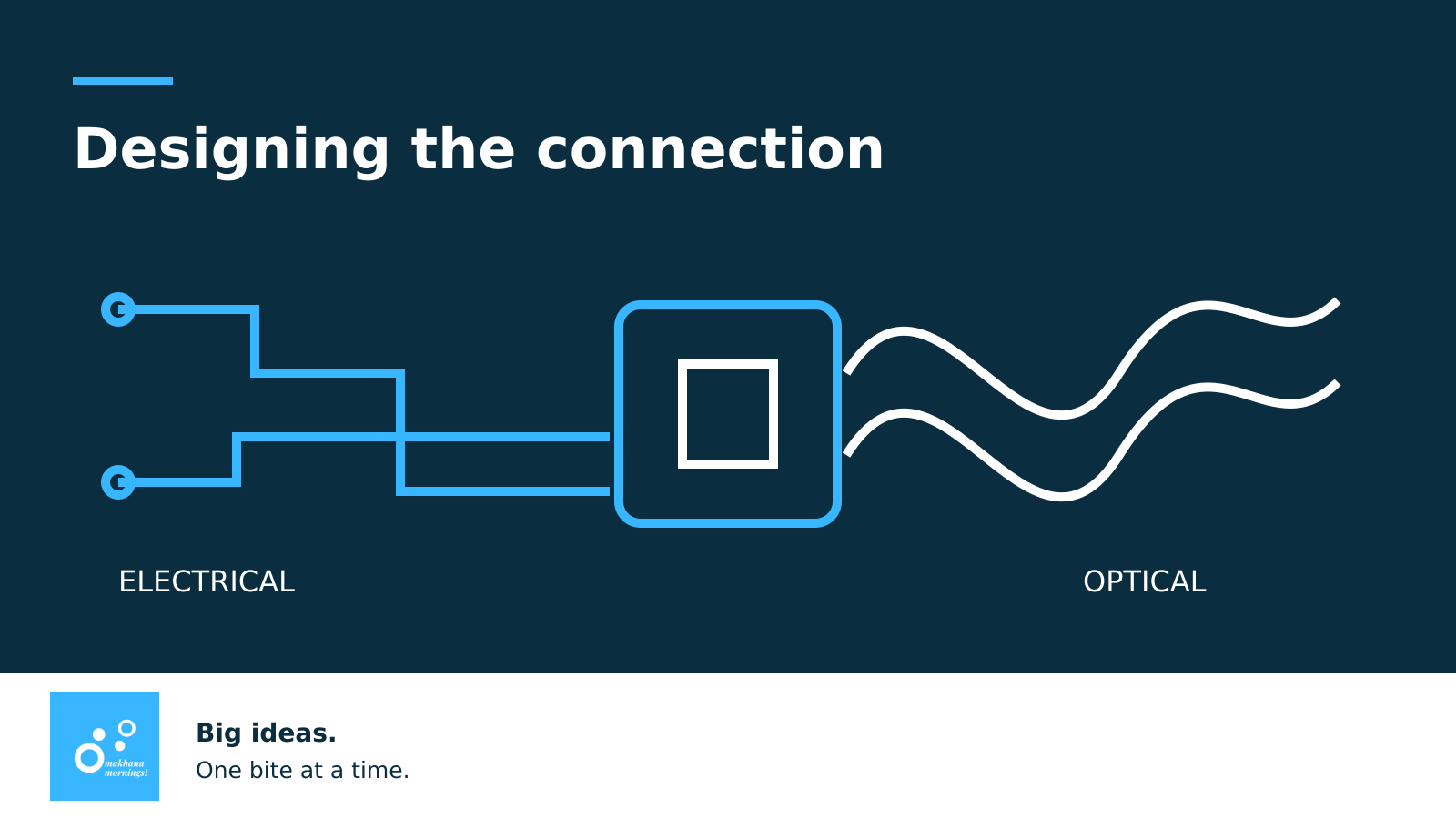
The useful question goes beyond processors: how should electrical and optical components be designed and validated together?
AI infrastructure is often discussed as a race to buy more processors. A different competitive question sits between them: who designs the connections, and who takes responsibility for making those connections work together?
Marvell announced on November 2 that it had agreed to acquire Lumentum in an all-stock transaction with an implied enterprise value of $115 billion. Shareholders would receive 4.5 Marvell shares for each Lumentum share. Closing is expected in the first half of 2028, subject to shareholder and regulatory approvals and other customary conditions.
The Breakdown: designing the connection
The proposed combination brings Marvell’s switching and custom-silicon technologies together with Lumentum’s lasers and optical components. The companies want closer electrical-optical co-design, with pre-validated solutions rather than separately optimised components.
Co-design is the important word. A buyer can compare individual components on a specification sheet, but a system has to operate as a whole. The commercial proposition here is to move some of that coordination into the supplier’s product-development process.
That changes the question from “Which component is fastest?” to “Which combination meets the requirements of this system?” It also gives buyers a different supplier relationship to evaluate. An integrated offering can be attractive without being suitable for every customer’s existing architecture.
India’s connection is engineering
In July, Marvell separately announced a planned $250 million investment in India over three years. Its Indian teams work on high-speed analog intellectual property, subsystem design, software and end-to-end silicon development.
This earlier programme provides a concrete reason for India’s semiconductor ecosystem to follow the deal. The relevant work is designing and validating infrastructure, not simply counting imported processors or announcing another factory. It does not establish that merger-related production, additional investment or particular assignments will come to India.
The chronology matters too. The July programme predates this agreement. Combining the two announcements into a new India investment total would double-count an existing plan and imply a commitment the acquisition announcement does not make.
The Big Picture
For customers, closer coordination and supplier choice need to be considered together. The practical questions include which interfaces remain interoperable, how products are supported across generations, and whether a proposed integrated design fits the customer’s own roadmap. These are evaluation questions, not evidence that the transaction has already improved performance.
The Crunch
Marvell is proposing to combine more of the electrical and optical design process within one company. The useful test is what products emerge and how customers adopt them. An agreement sets that direction; it is not the same as a completed integration.
Related categories: Business & Brands

Leave your thoughts