
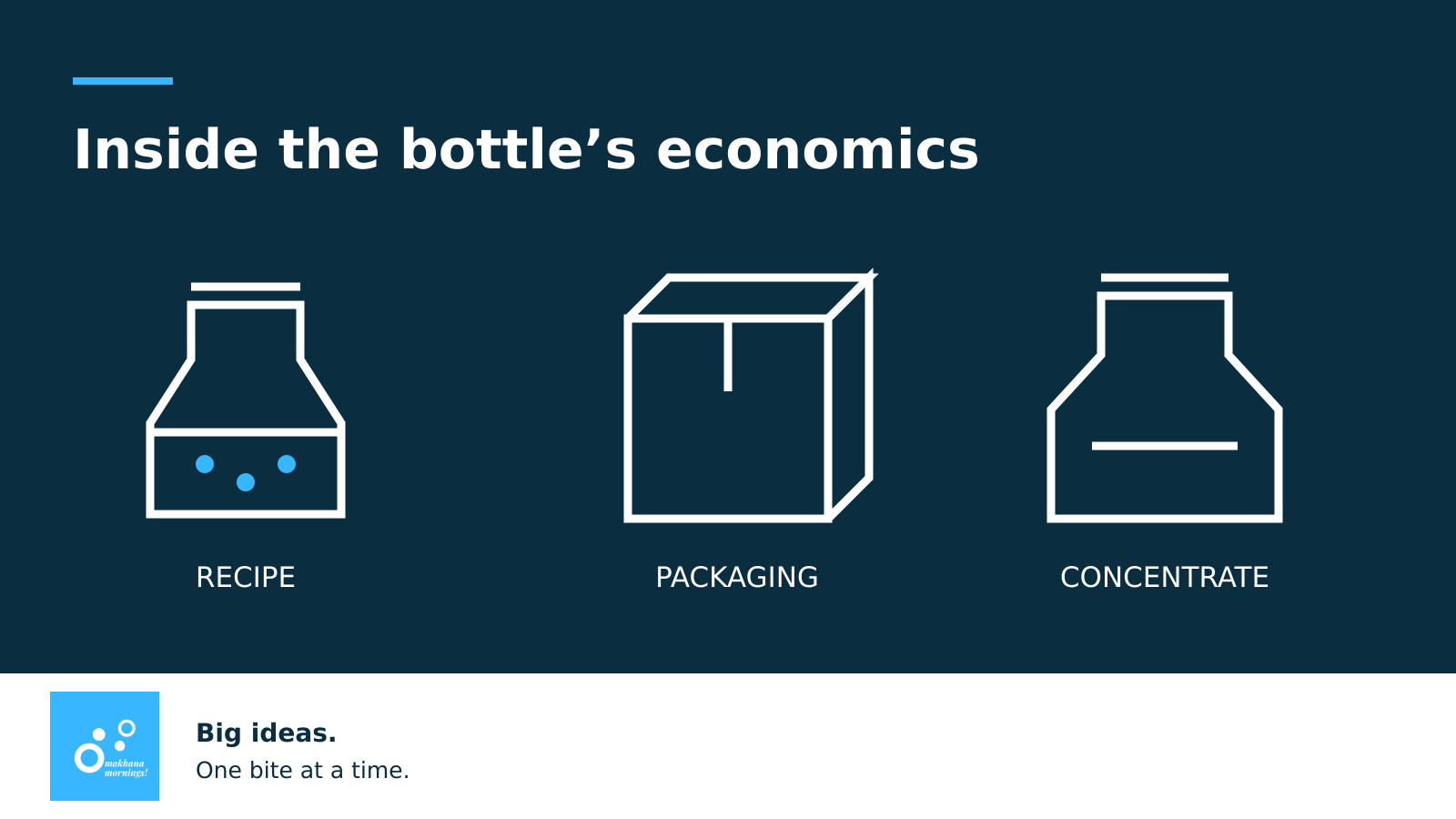
A bottle’s recipe and its packaging belong to the same cost calculation. Reducing sugar can ease pressure on one ingredient without insulating a beverage business from a more expensive bottle, cap or can.
Varun Beverages’ October 30 results illustrate that tension. The PepsiCo bottler reported that low-sugar and no-sugar products accounted for 88% of its India mix in July–September 2026, against 44% a year earlier.
The Breakdown
The company said this shift largely offset an approximately 16% increase in sugar prices, after sharing sugar-reduction benefits with PepsiCo through concentrate costs.
That last detail matters. A bottler does not necessarily retain every rupee saved by changing a recipe. The commercial arrangement with the brand owner helps determine where the benefit ends up.
Yet consolidated gross margin fell 334 basis points to 53.1%. Varun attributed the decline mainly to higher packaging costs. Increased sales of non-beverage products in India also affected the margin.
Gross margin measures what remains from sales after the direct cost of goods sold. A lower percentage can coexist with a larger business: selling more does not automatically mean retaining more of each rupee at this stage.
India sales volumes grew 22.5% year on year. Consolidated EBITDA margin, which measures operating earnings before interest, tax, depreciation and amortisation relative to revenue, fell 140 basis points to 21.6%.
Why This Matters
The useful consumer story is not simply that sugar-free drinks are winning. The disclosed category combines low-sugar and no-sugar products. It does not isolate demand for completely sugar-free drinks or establish the health effects of either group.
A change in sales mix also cannot, on its own, reveal why it happened. To distinguish shoppers actively switching products from changes in recipes, availability or the range sold, we would need product-level evidence. Those are different commercial explanations, even if they produce a similar headline percentage.
For beverage businesses, this raises a practical question: which costs does a portfolio change address, and which remain exposed? Ingredient reformulation, packaging procurement and agreements over concentrate costs belong in the same discussion. Treating the first as a complete answer to inflation misses the rest of the bottle.
The Crunch
The next useful comparison is not just how many lower-sugar products a company sells. It is how that mix relates to ingredient costs, packaging bills and the margin left after both. For shoppers, the corresponding task is simpler: read the individual product label rather than treating a broad business category as a nutritional description.


Leave your thoughts