
From orbit, scientists can look for signs of water near the Moon’s south pole. Finding out where it sits in the soil and how much is there takes measurements on the ground. India and Japan are building a mission to make those measurements.
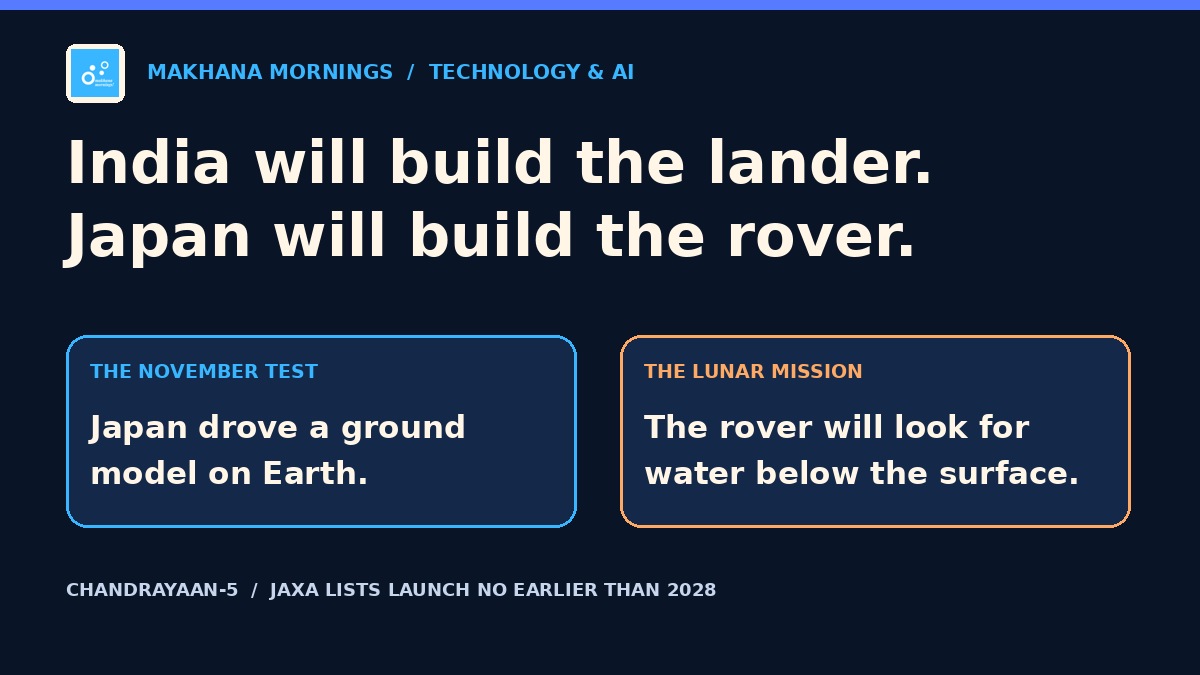
On 25 November, Japan’s space agency JAXA shared footage of a ground model of the rover driving outdoors at its Chofu Aerospace Center on 12 November. The rover belongs to the joint Lunar Polar Exploration mission, known in India as Chandrayaan-5. The footage shows a test on Earth, not the completed flight rover or a trip to the Moon.
India builds the lander. Japan builds the rover.
ISRO is responsible for developing and operating the lander that will carry the rover to the lunar surface. Japan is responsible for the rover and the launch vehicle. JAXA lists an H3 launch from Tanegashima no earlier than 2028. That is the earliest launch year it lists, not a confirmed date.
The split makes the handoff between the machines a mission milestone in its own right. The rover cannot start its work until the lander has reached suitable terrain and the rover can get onto the surface. A rover driving test on Earth does not settle how those steps will work together on the Moon.
The rover is designed to measure water where it finds it
The plan is to survey potential sites before choosing where to drill. The rover is designed to collect samples from the loose surface material, called regolith, down to about 1.5 metres. Instruments on the rover, including ISRO’s Sample Analysis Package, would help study the material on the Moon. The aim is to learn how the water is distributed, how much is present and what form it takes.
That is a different task from Chandrayaan-4. ISRO describes that mission as designed to collect lunar material and bring it to Earth for laboratory analysis. Chandrayaan-5 will study its samples at the site.
Finding water is not the same as showing it can be used
Where the water is, how much is present and how hard it is to reach would all matter to any future attempt to use it. Chandrayaan-5 is designed to gather evidence for that decision. The November rover test is a step toward getting the instruments to the places where they need to measure, not a finding about lunar water.




Leave your thoughts