
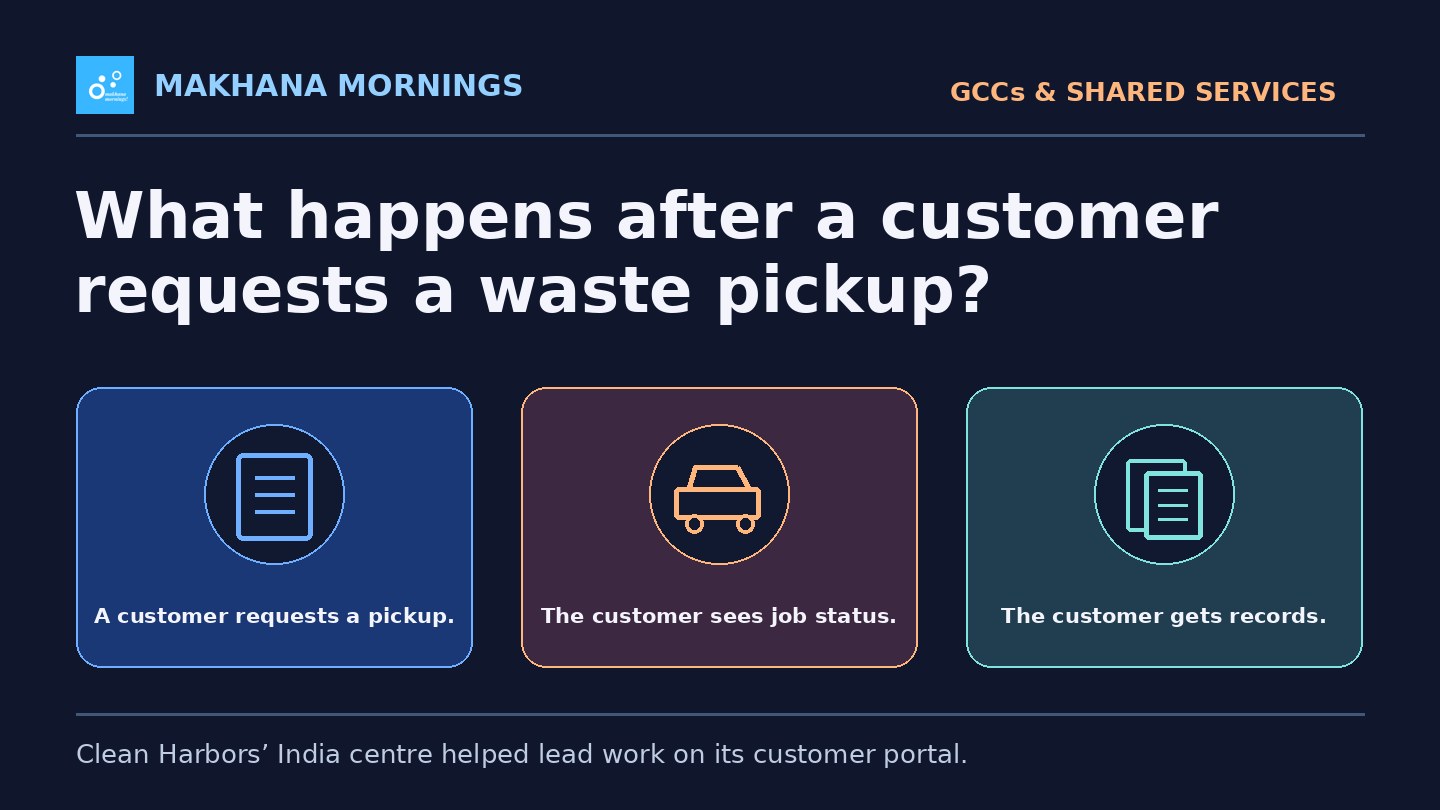
A waste pickup does not end when the truck leaves. The customer may still need to check whether the job was completed, find a shipping record or retrieve the invoice. Clean Harbors’ online portal brings those steps together. It is also a useful example of what an India-based engineering team needs to learn before it can change a business process.
Clean Harbors, a US environmental services company, established its India global capability centre in 2017. In a 2023 industry case study, the company said its India centre took leadership roles in building the customer portal and moving its enterprise software to the cloud. It had invested in product owners, architects and project managers. This was not a new portal launch in November, and the case study does not say the India team built every feature now in use.
The software has to follow the service
The current customer guides show the sequence. A customer selects a service location, raises a request and views scheduled and completed work. The portal also lets customers retrieve records and invoices. The screens are only one part of that job. To make the sequence useful, an engineering team needs to understand what counts as a completed pickup, which records customers need afterwards and who can confirm that the status shown in the portal matches the work done.
What the centre wants engineers to learn next
In November, India country manager Avinash Samrit told ETGCCWorld that Clean Harbors is involving business teams in defining AI projects and coaching its own technical staff as it also hires. The aim is to find people who can take a project beyond a demo and make it work in a live operation. A forward-deployed engineer works close to the teams using the software, so the work includes understanding their process and putting the solution into use, not just writing code.
The portal helps explain why that skill matters; it does not prove that AI built the portal or improved pickup times. A practical test for a future project would be whether customers can resolve more requests without chasing an update, and whether the records they retrieve stay accurate. Those are examples of what to measure, not results the company has reported.
The Crunch
The shift is from shipping software to taking responsibility for a step in the business. A team cannot know whether it has made a pickup easier to manage until it understands what happens before the truck arrives and what the customer needs after it leaves.



Leave your thoughts