
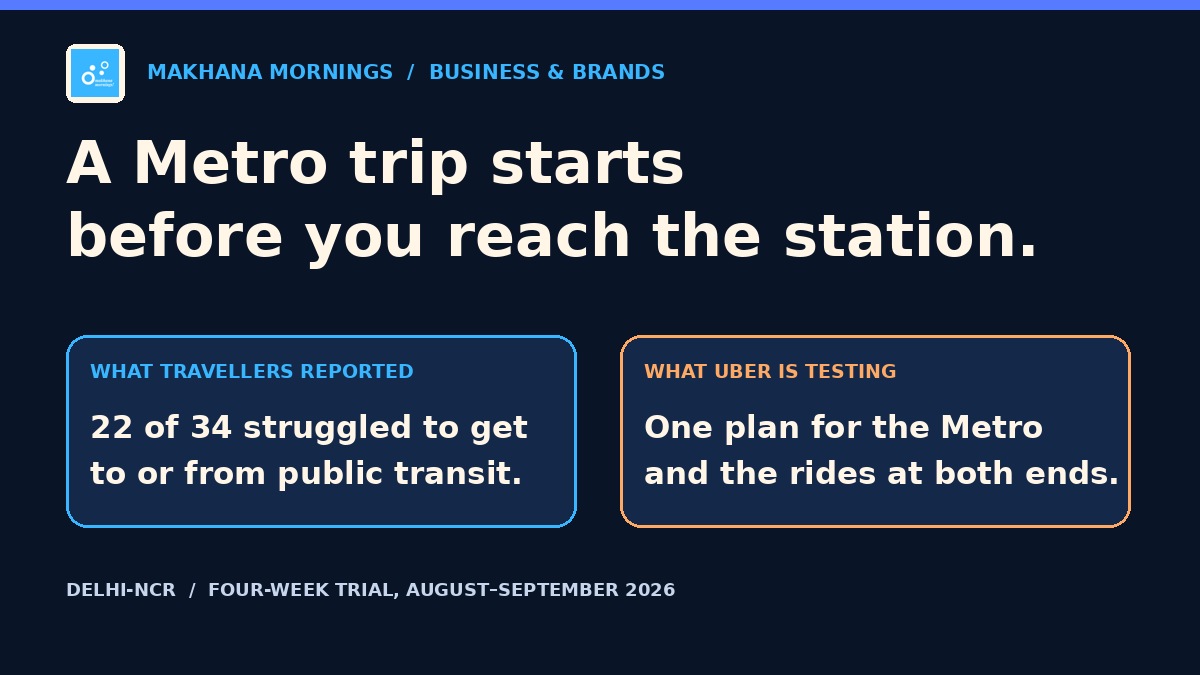
Knowing when the next Metro train arrives does not tell you whether you can get to the station on time. In a small Delhi-NCR trial, 22 of 34 participants reported trouble getting to or from public transport. The gap was often outside the station, not on the train.
Uber is rolling out Connected Journeys in Delhi, which puts a Metro trip and ride options at either end into one journey plan. Its India operations team expects the rollout to reach all Delhi Uber app customers by the end of the first quarter of 2027. That is the company’s timetable, not a claim that the feature is already available to everyone.
People used more than one way to get around
The Quantum Hub and Young Leaders for Active Citizenship ran the One Less Car study with Uber. During the four-week trial in August and September, 34 regular users of personal cars or two-wheelers set those vehicles aside and received a ₹20,000 transport bundle. The bundle combined Uber credits with a flexible wallet for other travel.
In the baseline week, nine people used the Metro at least once. In the week after the trial, 18 did. The comparable counts went from 15 to 28 for ride-hailing, from 11 to 27 for walking and from 15 to 22 for autos. The same person could use more than one mode. The comparison also uses baseline travel logs and a follow-up survey, rather than two identical measurements.
The study measured only one week after the trial
After participants got their vehicles back and the credits ended, 20 did not use their personal vehicles in the follow-up week. The number who relied solely on their own vehicles fell from 12 at baseline to two. That is a change in how these 34 people travelled, not an 83% fall in driving across Delhi, and not a measure of permanent car ownership or the impact of the new feature.
The trial was small and not representative. The transport credits could steer participants toward the platform, and one week without incentives cannot tell us whether the pattern lasted.
Planning a connection does not make it reliable
Putting the trip in one app can make it easier to compare time and cost before leaving. It does not make an auto arrive. In the trial, 30 of 34 participants reported a long wait, cancellation or refusal when trying to book a ride-hailing cab. Getting to a station, finding the right exit and having a ride show up are different problems.
The meaningful test for Connected Journeys is whether more people can complete the entire trip predictably at the price and time they saw when planning it. Downloads or Metro ticket sales alone would not answer that.



Leave your thoughts