
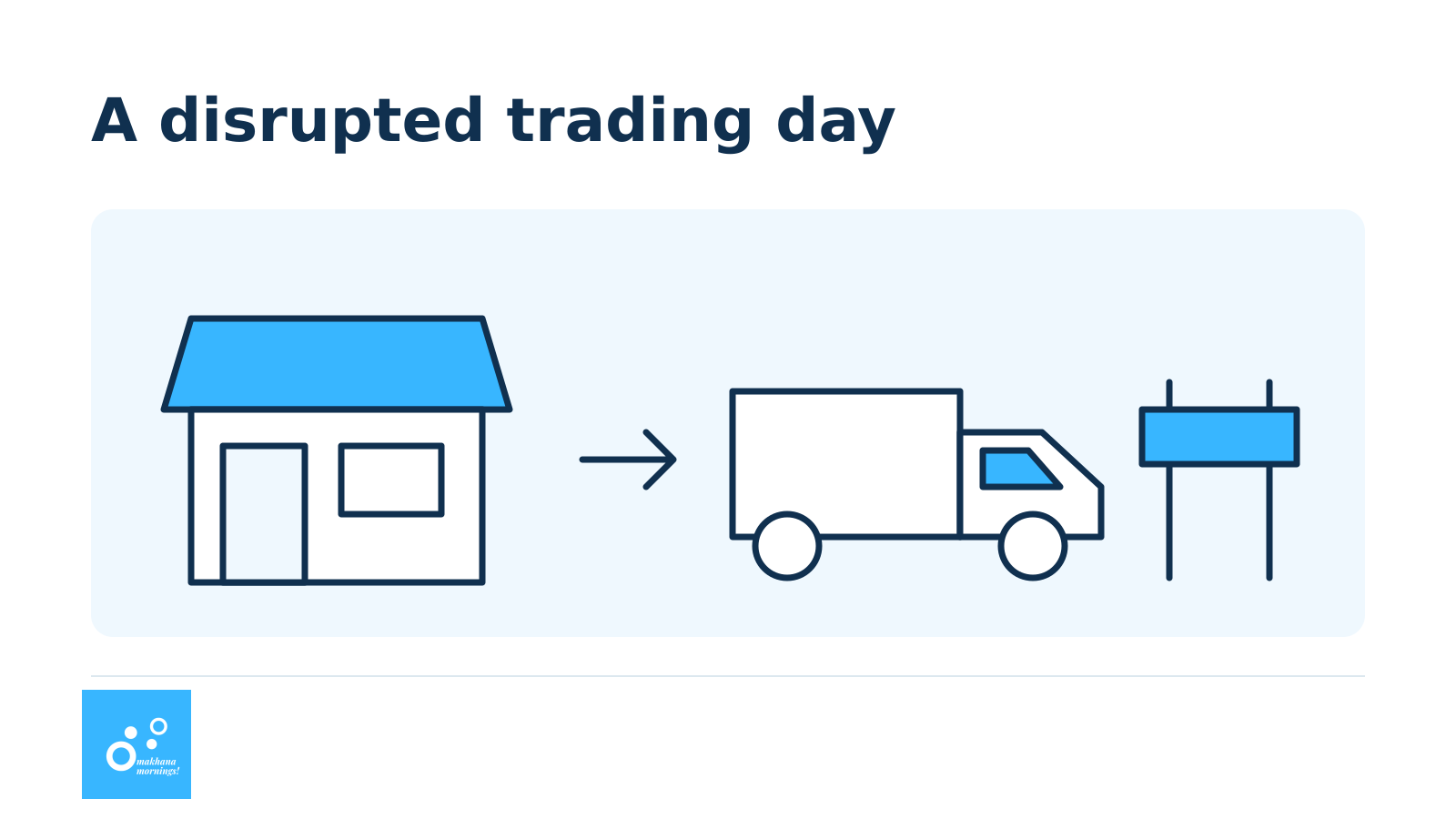
A trading day depends on more than whether a shop opens. Customers need to reach it, deliveries need to arrive, and wholesalers need to move goods onwards.
That is the business concern behind the Chamber of Trade and Industry’s warning about the November 1 rally at Delhi’s Ramlila Maidan. CTI put ₹10,000–12,000 crore of daily business across nearby markets at risk. The figure describes the association’s assessment of commercial exposure; it should not be read as a verified bill for losses.
The Breakdown
Ahead of the rally, CTI chairman Brijesh Goyal said around 20 wholesale and retail markets could be affected. The association’s concerns covered both shoppers’ access and the movement of goods during festive trading.
Its ₹10,000–12,000 crore figure referred to estimated daily turnover across those markets. A detailed calculation supporting that estimate was not available in the material reviewed.
There was a separate, identifiable reason to expect travel disruption. Delhi Traffic Police’s advisory provided for possible diversions in parts of central Delhi between 10am and 5pm on November 1. The arrangements depended on traffic conditions, rather than establishing that every affected road would remain closed throughout the day.
The advisory supports the concern about access. It does not establish how much business was ultimately lost.
Why This Matters
For a retailer, fewer visitors can mean fewer sales that day. For a wholesaler, the immediate problem may instead be a delivery that misses its slot or an order that cannot leave on time.
Those outcomes need different measurements. A purchase completed the following day is delayed revenue. A customer who buys elsewhere represents a lost sale for the original shop, but not necessarily an equivalent loss across the wider economy. Extra transport or storage charges would be a further cost.
These are possible ways disruption can affect trade, not measured outcomes from this rally. They explain why one turnover figure cannot capture the entire business impact.
The Big Picture
CTI’s warning is worth reporting as the position of a traders’ association concerned about market access. Its financial estimate needs to remain attached to that attribution.
A useful assessment after the event would compare actual trading with an appropriate normal day, identify which markets and hours were affected, and distinguish cancelled orders from purchases completed later. It would also separate sales revenue from traders’ profit.
No post-event accounting reviewed for this story establishes those amounts. The scale of the impact remains uncertain.
The Crunch
The access risk had a basis in announced traffic arrangements. The ₹10,000–12,000 crore figure remains CTI’s estimate of daily business at risk, not an independently established total of lost sales.
Related categories: Business & Brands


Leave your thoughts