
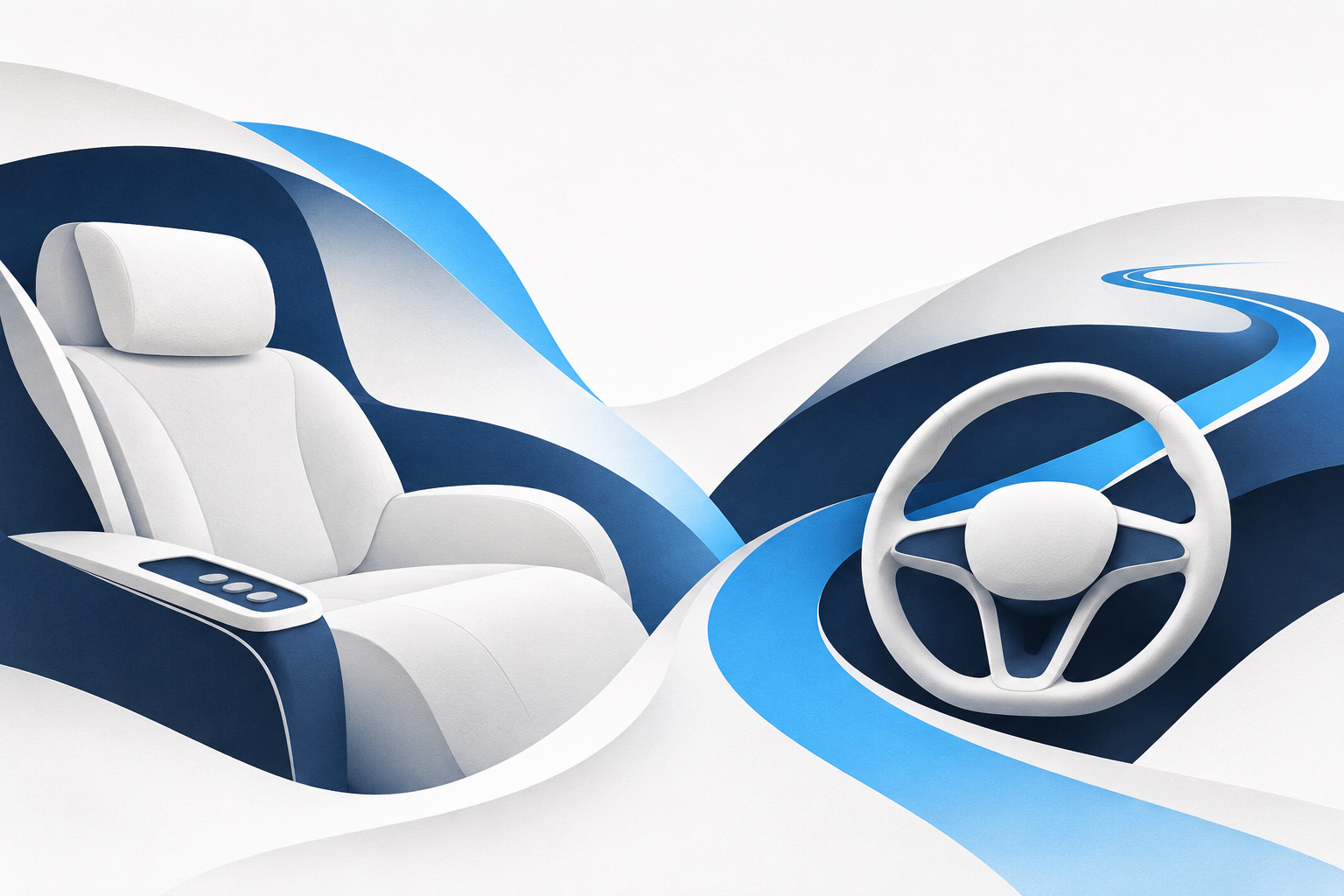
Denza has entered India with two electric vehicles that make quite different promises. The D9 puts the rear passenger at the centre of the experience. The Z9GT puts performance and handling much closer to the foreground.
BYD launched its luxury brand in India on November 13, 2026. Rather than relying on one model to establish what Denza stands for, the opening line-up combines a seven-seat multi-purpose vehicle with a sporting grand tourer.
The useful business question is not simply whether India has room for another electric-car badge. It is whether one new luxury brand can establish credibility with buyers seeking different things from their cars.

The Breakdown
The D9’s official India presentation emphasises chauffeured travel. Its second-row seats offer powered adjustment, heating, ventilation and massage, while passengers can control settings from an armrest screen. Seven seats give the vehicle a role beyond a conventional luxury sedan.
The Z9GT takes a different route. Its shooting-brake body combines a low, sporting profile with an extended roof and rear cargo space. Denza highlights a three-motor electric drivetrain and rear-wheel steering, alongside cabin features intended to keep it useful as a touring car.
The emphasis differs; neither model serves only one kind of buyer.
These are manufacturer descriptions of the products, not independent judgments of how either performs on Indian roads.
Why This Matters
The pairing illustrates why electric cars do not all compete on the same terms.
For a chauffeured-car buyer, rear-seat access, comfort and the ability to carry family or colleagues can matter more than a fast acceleration figure. For someone buying a performance car, steering, handling and the driving experience may carry more weight. Charging still has to fit the intended use in both cases.
That gives Denza two routes into a buyer’s shortlist. It also means the brand cannot rely on a single specification to explain its appeal.
The Big Picture
This is a brand-positioning move, not evidence that customers have already accepted the positioning. The launch introduces the products; it does not establish sustained deliveries, repeat purchases or a profitable Indian business.
The next useful evidence will be how the two models convert interest into customer deliveries, and whether their ownership experience supports the different promises being made.
The Crunch
Denza is introducing itself through two versions of electric luxury: a comfortable place to be driven and a car built to make driving part of the attraction. Its India test is whether that distinction becomes convincing beyond the launch.
Related categories: Technology & AI


Leave your thoughts