
FlySBS can add aircraft to its operating permit without buying the jets. What it cannot lease away is the need to keep them flying. The Chennai charter operator’s November 28 investor presentation shows how more of its paid flying is moving from partners to aircraft it operates itself.
More paid flying moved onto FlySBS’s permit
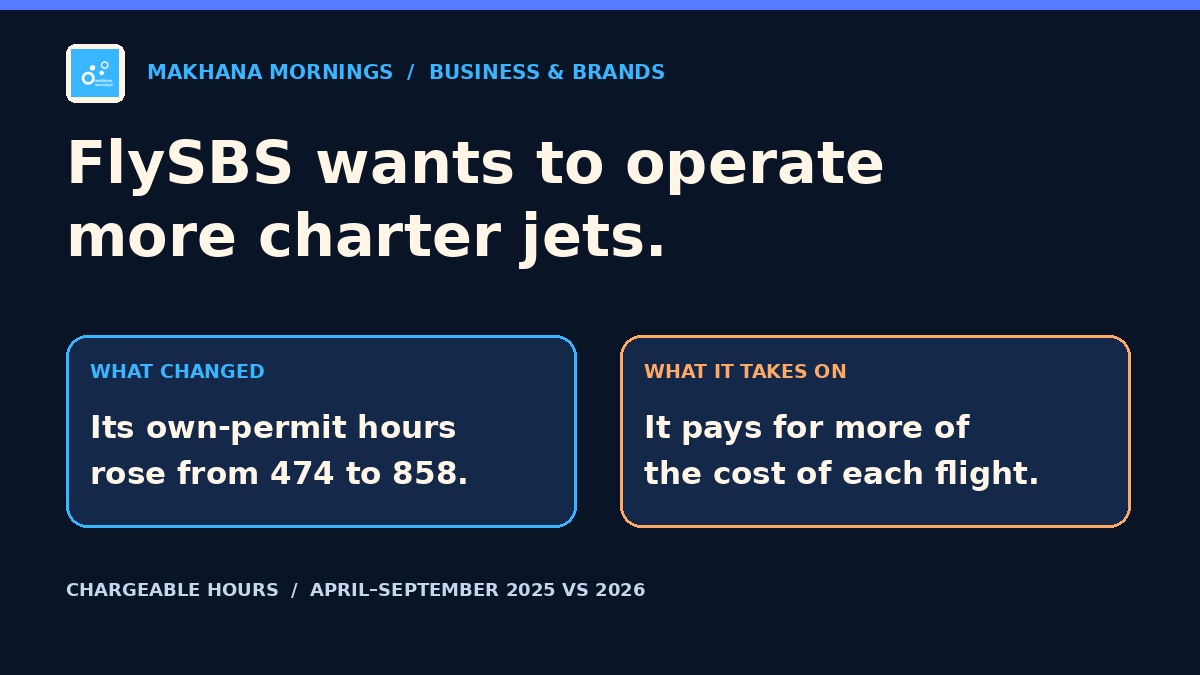
In the six months to September 2026, FlySBS recorded 858 chargeable flying hours under its own permit, up from 474 a year earlier. Hours on partner aircraft fell from 1,286 to 1,252. Its own-permit share went from 27% to 41%. These figures come from the company’s unaudited operating records.
The company had three jets under its own permit when it presented the figures. It is targeting seven by March 2027, up from two in March 2026. The additions depend on aircraft deliveries and approvals from India’s aviation regulator. The target is not a count of jets already in service.
A dry lease brings more of the operating bill in-house
In a dry lease, the lessor supplies an aircraft without its crew, and FlySBS operates it under its own permit. With partner aircraft on wet lease, the arrangement includes the crew. FlySBS says fuel becomes its own cost as it operates more aircraft itself and points to a fuel-supply agreement with HPCL.
The business trade-off is that the company depends less on a partner to provide an aircraft, but must cover more of the operating commitments itself. Lease payments and staffing can still cost money when a jet is sitting on the ground. A flight hour earns revenue only when it is chargeable to a customer.
The fleet target is only half the test
FlySBS reported ₹192.4 crore of standalone revenue from operations for the six months to September, up 39.8% year on year. That result was originally filed earlier in November. The presentation adds the operating detail, but neither figure establishes that switching leases caused all of the revenue growth.
The useful comparison after more jets enter service is how many chargeable hours each one adds, and what it costs to operate those hours. Flying more under the company’s permit could let FlySBS retain more of the charter revenue. It also leaves the company responsible for more of the costs when demand falls short.



Leave your thoughts