
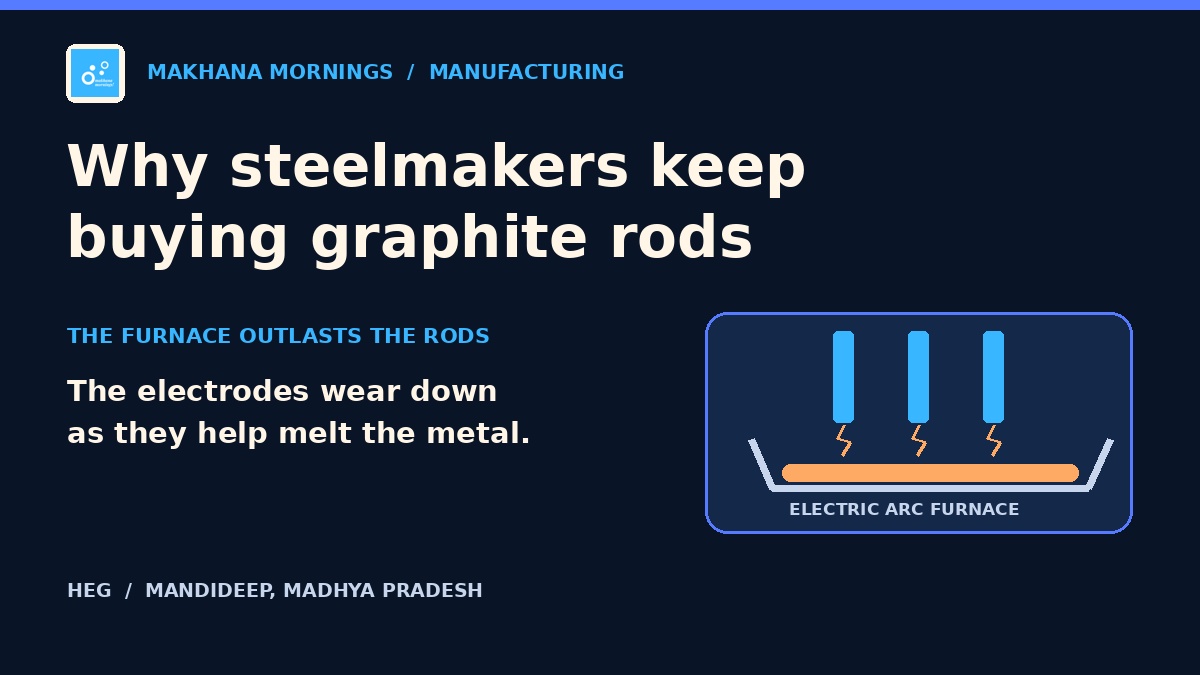
A steel furnace is a long-lived asset. The graphite rods that help it melt metal are not. They wear down as the furnace runs and have to be replaced. That difference explains why a Madhya Pradesh plant can serve steelmakers abroad long after their furnaces are built.
HEG Limited, formerly HEG Graphite Limited, began trading separately on the NSE and BSE on 27 November after the graphite-electrode business was split out. Under the arrangement, eligible holders of HEG Advanced Materials, the company previously called HEG Limited, received one share in the electrode business for each existing share they held. The listing gives investors a way to own shares in the electrode business separately. It does not add capacity at the plant.
Running a furnace consumes electrodes
In an electric arc furnace, a current arcs from the electrodes towards the metal and generates heat. The graphite wears as the process runs. Operators lower the rods as the tips wear and add sections to keep the furnace working. That makes electrodes a recurring purchase tied to how much an electric arc furnace runs. A new furnace may add potential demand, but the number of furnaces built is not the same as their steel output or their electrode consumption.
HEG is expanding an existing plant
HEG says its Mandideep site can make 100,000 tonnes of electrodes a year, and that about 65% to 70% of its production is exported. The board approved a ₹650 crore expansion that would lift annual capacity to 115,000 tonnes, a rise of 15%. The company targets production from the expansion in the first quarter of calendar 2028. Those are capacity and timing figures, not sales or orders.
The useful measure after the extra capacity starts up is how much it produces and ships, not just how many tonnes the plant can make. Steelmakers’ furnace utilisation, electrode wear and purchasing choices determine whether recurring demand turns into orders for Mandideep.


Leave your thoughts