
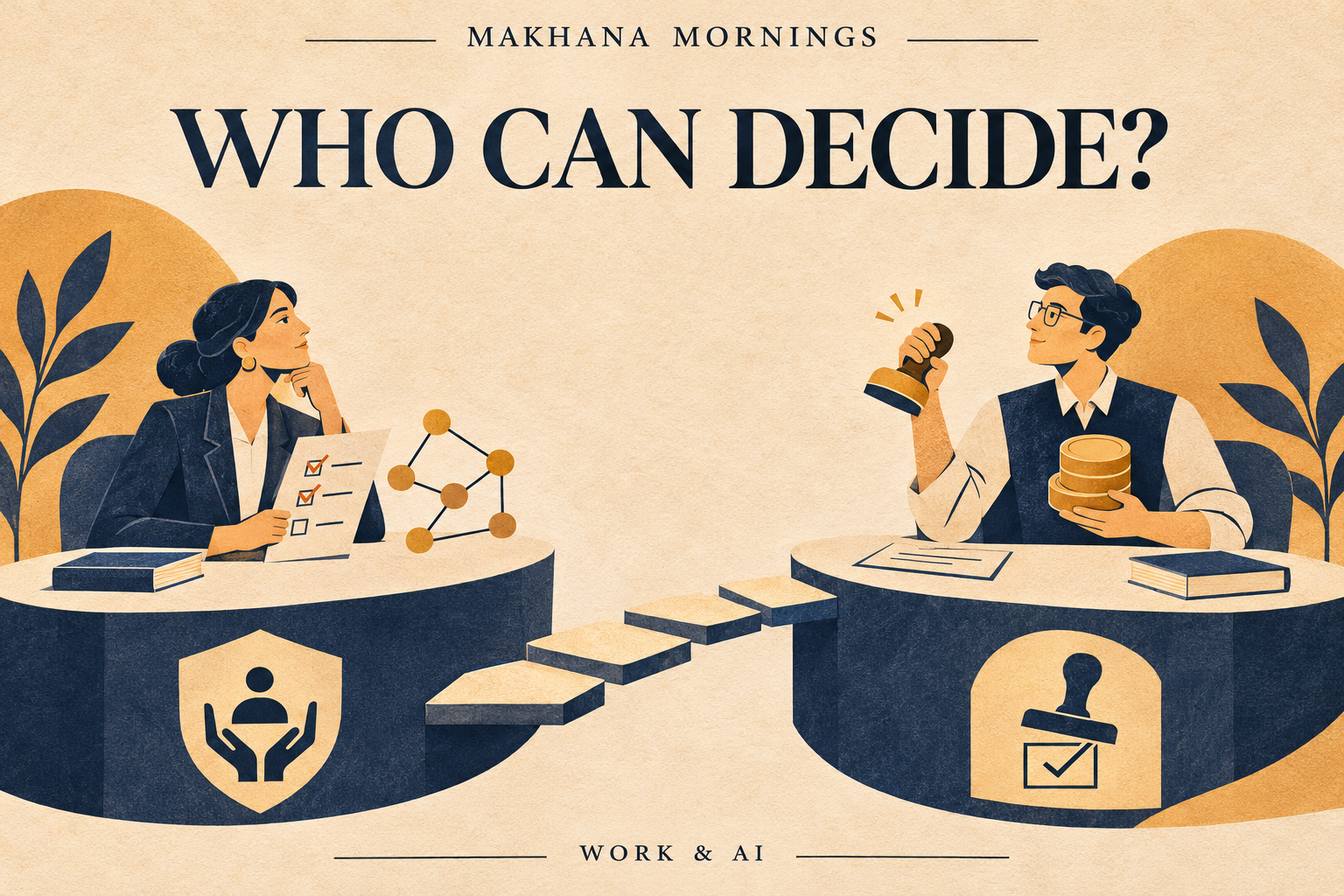
An AI leader can be asked to explain a disappointing project without being the person who can redirect its budget. A new global survey puts numbers around that organisational tension.
IBM’s Institute for Business Value released the study on November 17. Only 18% of respondents reported full control over AI investment decisions; 29% said their organisations quickly changed decisions and resources in response to AI performance evidence.
The Breakdown
IBM and Oxford Economics surveyed 1,667 senior enterprise AI executives across 33 geographies and 20 industries between April and June 2026. The group included chief AI officers, chief data and AI officers, heads of AI and equivalent leaders, not just people holding one specific title.
These are self-reported findings from vendor-sponsored research, not independently audited performance measures. They are global results, not statistics about Indian companies, and describe the survey period rather than a November snapshot.
Shared control is not the same as no control
The 18% figure does not mean everyone else has no influence. Full control is a demanding standard. Finance, technology, business-unit and risk leaders may legitimately share responsibility for spending.
The practical question is whether that shared responsibility produces a decision when one is needed. Who can approve another month of testing? Who can stop a project? Who can move staff from an unsuccessful experiment to a more useful one? A title alone does not answer those questions.
A workplace question, not a case for fewer safeguards
Separately, 75% reported that governance, risk or compliance delayed AI-driven action. That finding does not establish whether the delays were avoidable or necessary safeguards.
Consider a hypothetical customer-support assistant that answers quickly but produces too many incorrect replies. The AI team might identify the problem, while the service manager owns the workflow and the finance team controls expansion spending. A sensible process would specify who can pause deployment, what evidence is needed for a restart and who pays for corrective work.
That is an illustrative management test, not an intervention evaluated by this survey. Nor does the research prove that giving one executive more budget authority causes better AI outcomes.
The Crunch
For an Indian business considering how to organise AI work, the useful takeaway is a question rather than a borrowed benchmark: does the person responsible for results have a clear route to the people who can change the plan?
Accountability need not require unilateral control. It does require an explicit decision process, including a way to resolve disagreement before another round of spending.
Illustration: original AI-generated conceptual artwork, not an actual company office or executive.



Leave your thoughts