
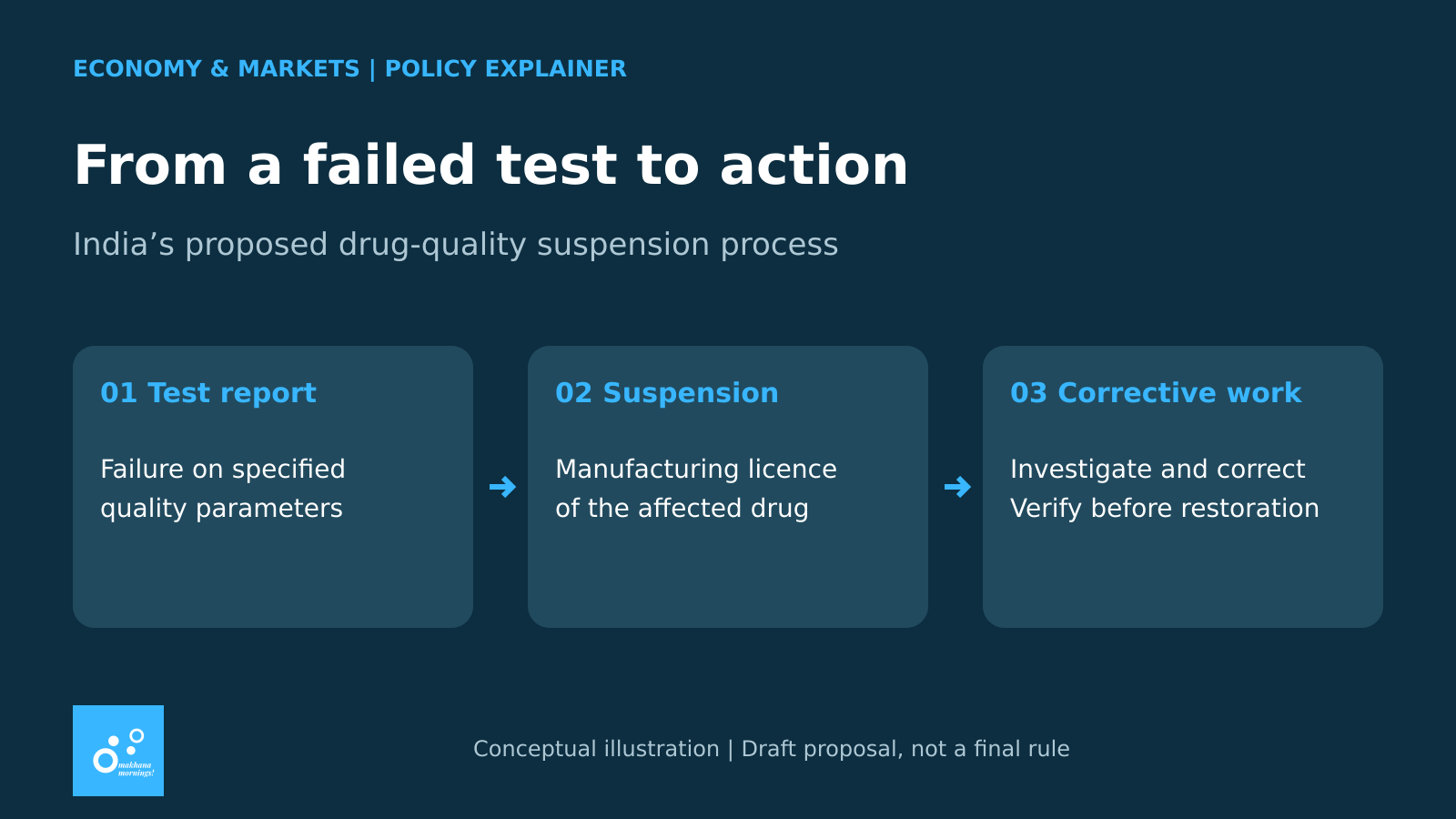
A medicine quality test identifies a problem. The next question is how quickly that finding reaches the people who can stop further production and organise a response.
India’s Health Ministry addressed that interval on November 4, announcing proposed changes to the Drugs Rules, 1945. Under its explanation, a government analyst’s finding that a drug fails specified critical quality parameters would trigger immediate suspension of the manufacturing licence for that drug.
The announcement concerns a draft open for public consultation. It does not announce that the new requirement has taken effect.
The Breakdown
The specified parameters are assay, dissolution, related substances, impurities and sterility. The ministry says the present regulatory process, including a show-cause notice, can leave a gap between an adverse test finding and action.
Its proposal also addresses restarting production. Suspension would continue until the manufacturer investigates the cause and implements corrective and preventive action, with verification by the relevant licensing authority.
The government analyst’s report would additionally be sent to the national drug regulator, the licensing authority responsible for the manufacturing site, the manufacturer and the marketer.
Why This Matters
For a pharmaceutical business, the useful operational question is how those steps connect. Who receives a test report? Who identifies the production records and distribution information needed to investigate it? Who owns the corrective work, and what evidence demonstrates that it has been completed?
Those questions reach across laboratory, manufacturing, regulatory and commercial teams. A process can look clear on paper while leaving responsibility unclear at a handover. An earlier trigger for action makes those handovers worth examining before an incident occurs.
The Big Picture
There are two separate jobs here: responding to a detected failure and establishing whether its cause has been addressed. Measuring only the speed of the initial response would leave the second job out of the picture.
For readers assessing implementation, useful evidence would include the time between a report and regulatory action, the basis for lifting a suspension, and whether the same problem returns. The announcement does not provide those outcomes. They would need to be assessed after any final rules and subsequent enforcement.
The Crunch
The ministry has invited comments within 30 days of the draft Gazette becoming publicly available. The next milestone is the final text, including the process that connects the laboratory finding, the affected drug and verified corrective work.
The practical test will be whether those connections work reliably when a quality problem is found.
Related categories: Business & Brands


Leave your thoughts