
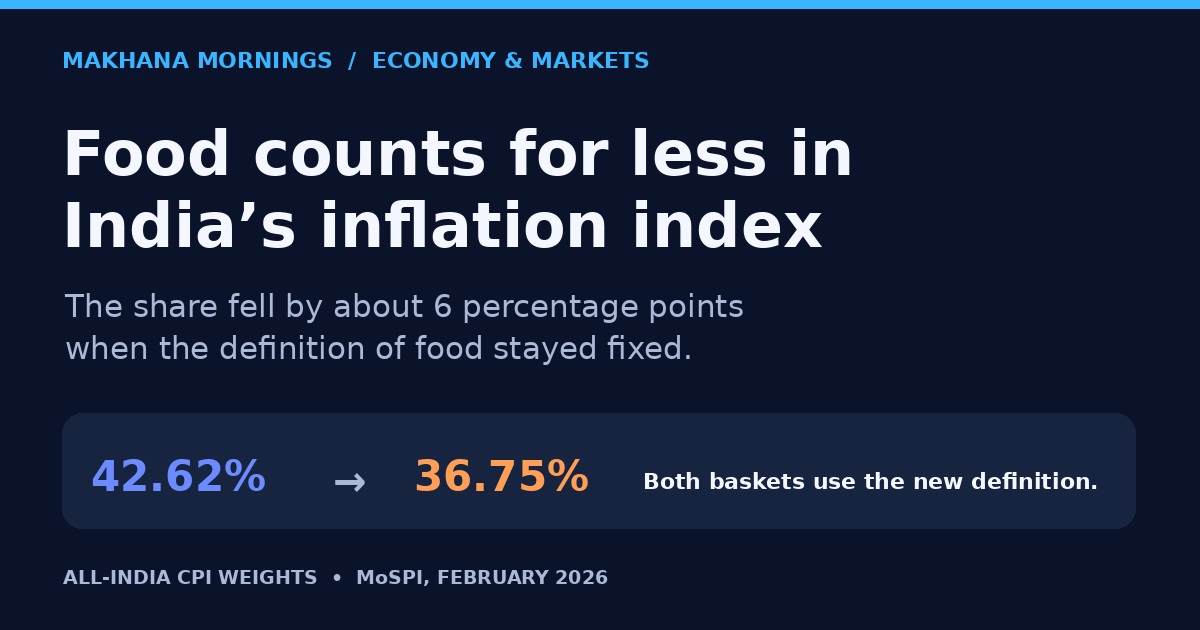
Food and beverages carry less weight in India’s inflation index than they used to. At a conference in Mumbai on 23 November, RBI Deputy Governor Poonam Gupta highlighted the move from roughly 46% in the old index to 37% in the new one. That comparison uses the official weights, but it also changes what counts as food. Keep the definition fixed and the drop is closer to six percentage points than nine.
The food share fell under either definition
The statistics ministry calculated the food and beverage weight both ways. Using the old definition for both baskets, it fell from 45.86% to 40.10%. Using the new definition for both baskets, it fell from 42.62% to 36.75%. Both comparisons tell the same broad story: food and beverages carry less weight even when the category boundaries stay the same.

The new index, released in February, uses spending patterns from the 2023–24 household survey. It also uses a different way to classify purchases. For example, some prepared food formerly counted in the food group now sits under restaurant and accommodation services. It still counts in the overall index; it is no longer counted in the same group.
A smaller weight does not mean cheaper groceries
A weight determines how much a price move matters to the national inflation measure. If two categories see the same price rise, the one with the higher weight generally has a bigger effect on the total. Gupta said the smaller weight for a historically volatile category should make headline inflation less volatile. That is an expectation, not a result established by the first few months of the new series.
The figure is an all-India weight for rural and urban households combined. It is neither the food inflation rate nor the share every household spends on food. If groceries take a bigger share of your budget than they do in the national basket, the same rise can feel larger to you.



Leave your thoughts