
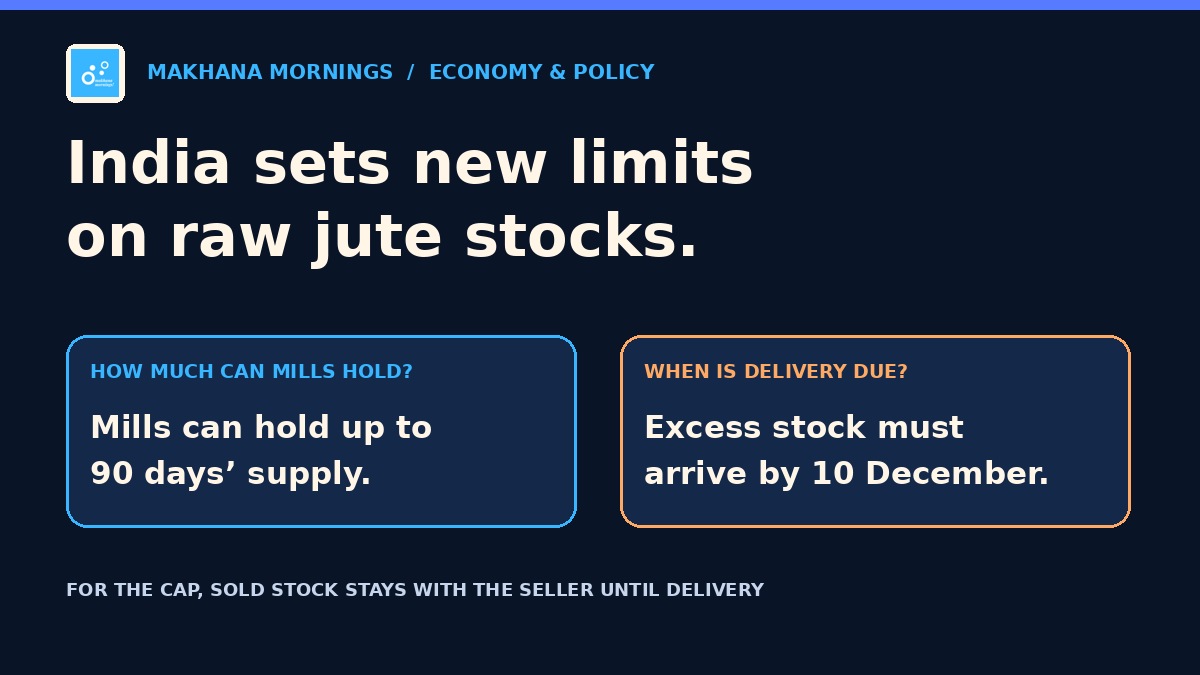
Under India’s new raw jute stock limits, selling a bale on paper does not take it off the seller’s books for the purposes of the cap. Until it is physically delivered, the Jute Commissioner still counts it as the seller’s stock. Businesses holding more than their limit have until 10 December to sell and deliver the excess.
The 27 November order sets separate ceilings for balers, other stockists and mills. The Textiles Ministry says the aim is to improve the availability of raw jute. What actually moves depends on how quickly sellers can get the fibre out of warehouses and into buyers’ hands.
The cap depends on who holds the fibre
A baler with a press on the same premises can hold up to 1,000 quintals, or 100 tonnes, if it is registered and files stock returns, or had applied for registration by the date of the notification. Other stockists meeting the registration and reporting conditions can hold up to 100 quintals, or 10 tonnes.
The ceiling is five quintals, or 500 kg, for balers and stockists who had neither registered nor applied, or who are registered but are not filing stock returns. Mills and manufacturers that process raw jute have a different limit: 90 days’ consumption at their current production rate. That is not a single tonnage that applies to every mill.
A warehouse can count as one stock
The order counts raw jute held at one premises as a single stock, even when it is recorded in different names. It also applies to inventory held for someone else. A business over its limit must stop buying fresh stock until its holdings come within the cap. The order requires stock returns every fortnight on Jute SMART.
Raw jute is the fibre that mills turn into products such as grain sacks. A delivery deadline can bring existing fibre into circulation sooner, but it does not increase the harvest. It also does not tell us whether farmers will receive higher or lower prices. The ₹5,925 per quintal minimum support price for TD-3 grade in the 2026–27 season is a separate policy, not a market price set by this order.
The Crunch
The date to watch is 10 December, but the better measure is what actually arrives at the mills. The rule counts delivered fibre, not invoices alone. Those deliveries and the prices buyers pay will show more than the headline stock limits.



Leave your thoughts