
A voice service can fail before it begins answering a question: it may choose the wrong language to process. For organisations building multilingual services in India, that first decision deserves its own test.
An October 14 preprint by researchers affiliated with the Central Institute of Indian Languages examines language identification using Anuvani-LID. This is a task-specific model, not a voice assistant. The paper covers India’s 22 scheduled languages and Indian-accented English.
The Breakdown
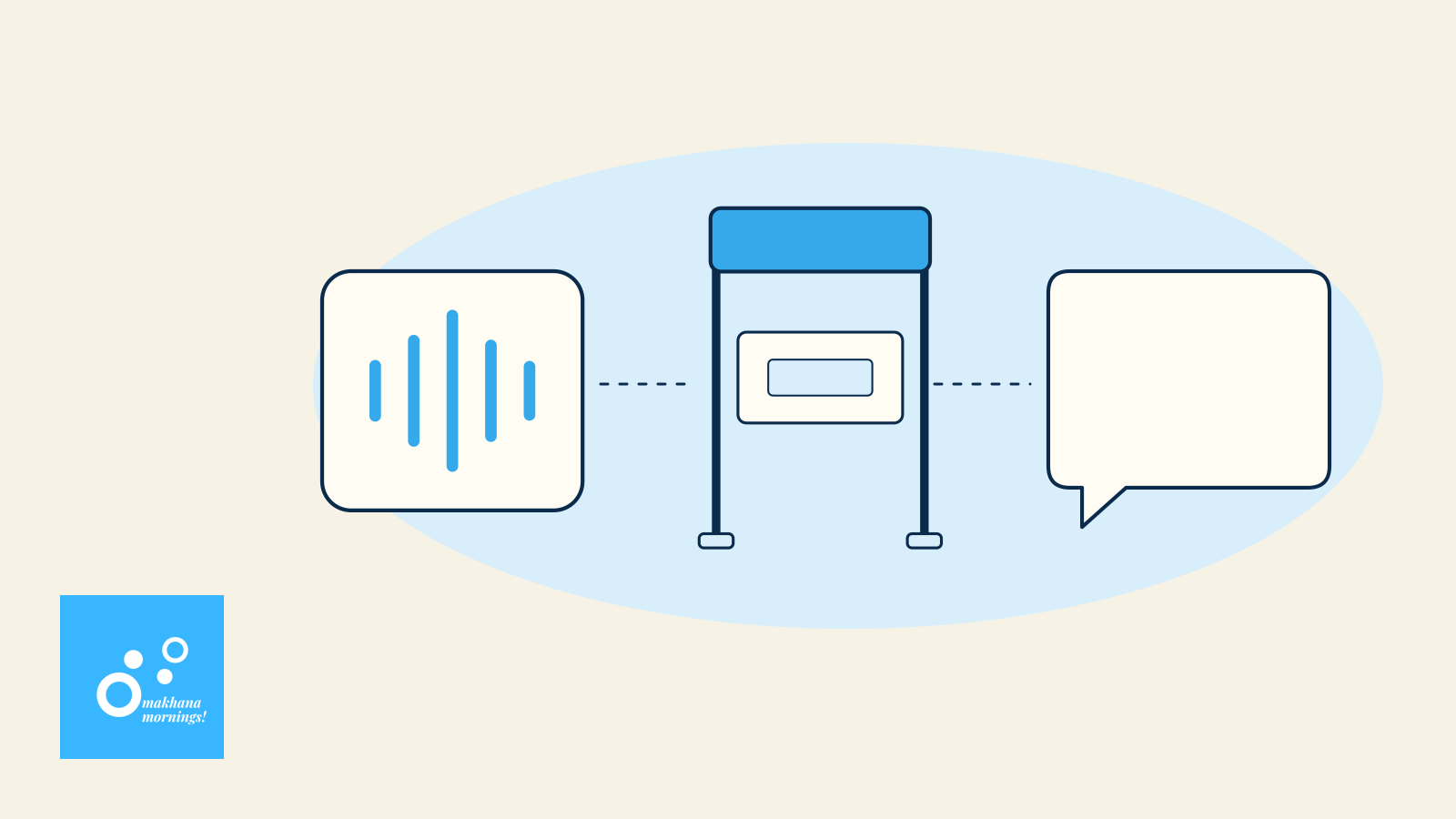
Language identification labels the speech; it does not transcribe the words or translate their meaning. A system can use that label to choose the next processing step. Getting the label right does not establish that later steps will work.
The released model’s documentation provides ways to classify audio and process longer recordings in segments. It also identifies short utterances and strong regional accents as difficult cases. Availability of these tools is not evidence that a customer-facing service has deployed them successfully.
Where one label falls short
The paper explicitly warns that assigning one language to an utterance is ill-suited to code-switched speech, such as Hinglish. Languages outside its stated coverage remain outside the label set. Its results are the authors’ benchmark findings, not independent validation of performance on every Indian caller.
Why This Matters
Consider a hypothetical service that hears a short greeting before a longer request. Should it commit immediately to a language, wait for more speech, or ask the caller to choose? Those are product decisions. This research does not establish one universal answer or a tested fallback policy for such a service.
A useful evaluation would check the whole interaction: the language chosen, the words recognised and whether the request was resolved. It would also examine what happens when the caller switches languages. A single score for language identification cannot stand in for those outcomes.
The Crunch
The model card warns against treating a language label as a proxy for ethnicity, religion or nationality. Use the prediction to understand the audio-processing task—not to infer who the speaker is.