

Jio wants to turn technology developed for its Indian network into a business serving operators abroad. Its own description of that ambition is more specific than simply selling equipment: it wants an ongoing role in helping partners run services.
Reuters reported on November 3 that Jio had discussed licensing wireless broadband technology to Comcast and Charter in return for possible equity stakes, citing two people familiar with the matter. They gave no deal timetable. Jio did not respond to Reuters, while Comcast and Charter declined to comment. The report describes talks, not an agreed transaction.
The Breakdown
On its October 30 analyst call, Jio outlined a managed-service partnership model for overseas expansion. Akash Ambani said the company did not plan a capital-heavy rollout of its own towers and fibre abroad. He described an ambition for around 10 to 15 sizeable partners across developed and developing markets. That is a target, rather than a list of signed customers.
The technology offer has several parts. Reliance’s FY2025–26 annual report identifies a portfolio including 5G network systems, software for running telecom operations and customer accounts, and wireless home broadband. It describes working with local operators in selected international markets.
One component is Unlicensed Band Radio, or UBR. Reliance describes it as a point-to-multipoint system for connecting premises, meaning one transmitting point can serve multiple receiving locations. It sits within the broader category of fixed wireless access: using radio links for a connection to a fixed home or business.
Why This Matters
A domestic operator already has one place to test its technology: its own network. Selling that capability abroad creates another test. The system must work inside a partner’s operations, with its existing equipment, customer processes and service obligations.
Jio’s management acknowledged that difference on the October call. Dan Bailey identified both UBR and the wider telecom operating-software stack as areas of focus, while describing the latter as a more complicated delivery discussion with operators.
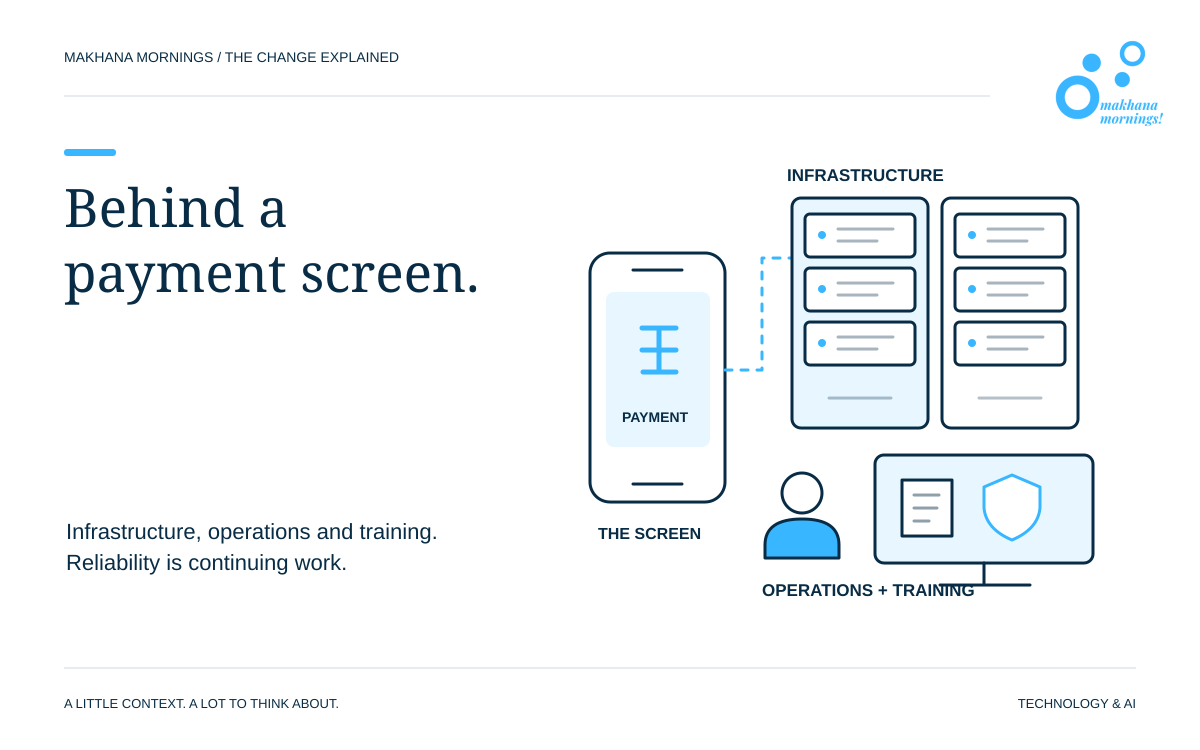
For an overseas partner, the practical questions extend beyond a demonstration of speed. Who integrates the system? Who handles software upgrades? Who is responsible when it fails? A managed-service arrangement makes those ongoing responsibilities part of the commercial relationship.
The Big Picture
The reported possibility of receiving shares adds a separate business question. A technology licence defines permission to use a product or system. An equity stake gives its holder an ownership interest. If a future agreement combines them, the valuation of that stake and the obligations attached to the technology would both matter.
Without published terms, readers cannot calculate the cash Jio would receive, the spending it would retain or the return it might earn. A partnership that avoids building an entire overseas network can still require engineers, integration work and continuing support.
For India’s telecom technology industry, the useful test is whether experience gained at domestic scale can become a repeatable service for other operators. The evidence would be paying deployments, clearly assigned responsibilities and commercial results over time.
The Crunch
Jio has set out how it wants to expand abroad: through technology and operating partnerships. The next milestone is an agreement that shows how that model works in practice, followed by evidence that it delivers for both sides.
Related categories: India & The World

Leave your thoughts