
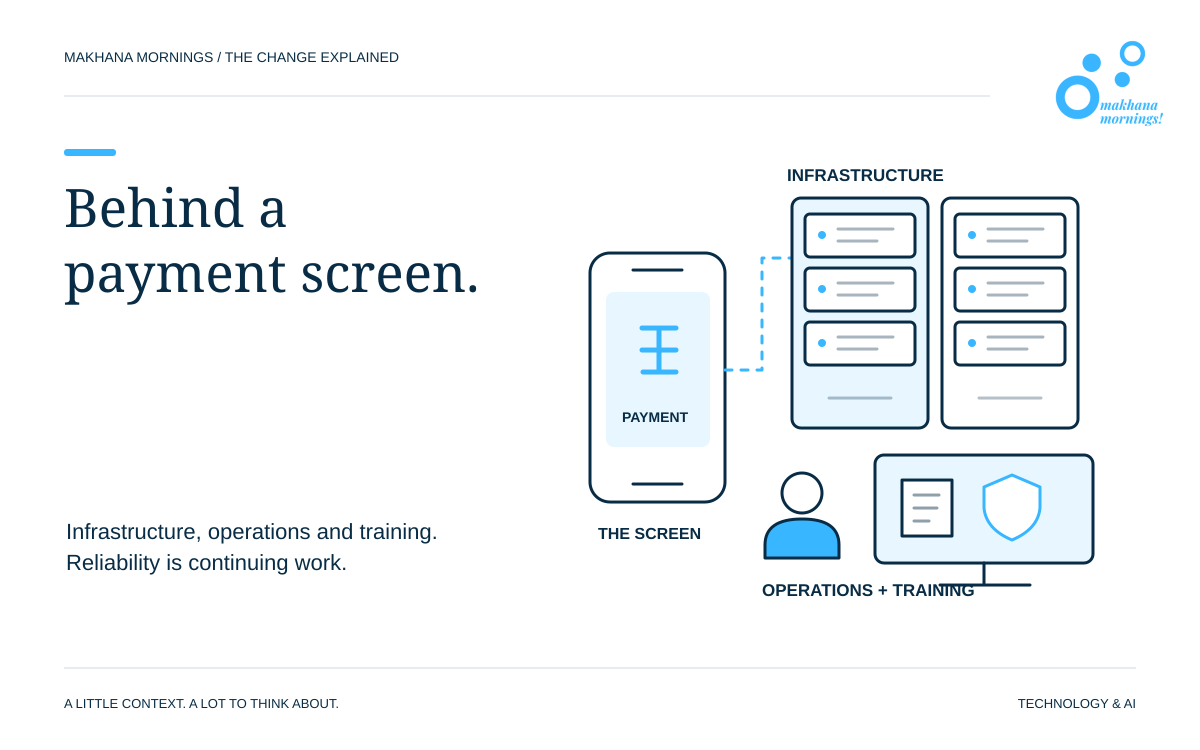
A payment can take seconds on a phone. Keeping the systems behind it dependable is a continuing job for infrastructure engineers, software teams and security specialists.
That is the useful lens for RBI’s new Data Centre and Cybersecurity Training Institute in Bhubaneswar, inaugurated on October 25, 2026. The project brings computing facilities and professional training together, rather than treating a stronger building as the whole answer to digital reliability.
The Breakdown
The announced infrastructure includes four data centres intended to host critical payment and settlement systems and other initiatives. The training institute is intended to support cybersecurity and enterprise-technology skills, research and capability development across the financial sector, including work on AI and quantum computing.
Those are complementary functions. Infrastructure supports the services running on it; people must operate those services and respond when something goes wrong. Opening a training institution establishes a place to build that capability, not a count of professionals already trained.
What Tier IV does and does not tell us
The project announcement describes the facility as Uptime Institute Tier IV-certified. Tier IV is a fault-tolerant infrastructure classification: it concerns a site’s ability to withstand infrastructure failures, not a guarantee that every application using it will always work.
Even a fault-tolerant site can experience IT outages if it is not operated and managed effectively. Infrastructure standards and day-to-day operating discipline therefore belong in the same conversation. Neither should be read as proof that cyberattacks have been eliminated.
Why This Matters
India’s payment volumes show why reliability deserves attention beyond the app interface. UPI handled about 25.47 billion transactions in October 2026, worth approximately ₹31.53 lakh crore. That is about 821.5 million transactions a day, calculated across the month’s 31 days.
These figures describe UPI across its network. They are not the workload of the new RBI facility, and they do not establish that UPI has moved there. Their relevance is the scale of everyday activity that now depends on functioning digital payment systems.
For a small business, dependable payments help keep routine transactions moving. For the institutions supporting those transactions, reliability involves more than adding computing capacity: it also requires effective operations. The project’s combination of infrastructure and training makes that distinction visible.
The Big Picture
An inauguration is a meaningful project milestone. It is not, by itself, a published record of which systems have migrated, how the facility performs during disruption or what its training programmes have delivered. Those are useful questions for subsequent operating disclosures, not reasons to overlook the opening.
The Crunch
Bhubaneswar adds infrastructure and a training institution to India’s financial system. The larger lesson is that dependable digital finance needs both robust facilities and people who can run them. The opening establishes the investment; its operating record will show what it delivers.
Related categories: Economy & Markets



Leave your thoughts