
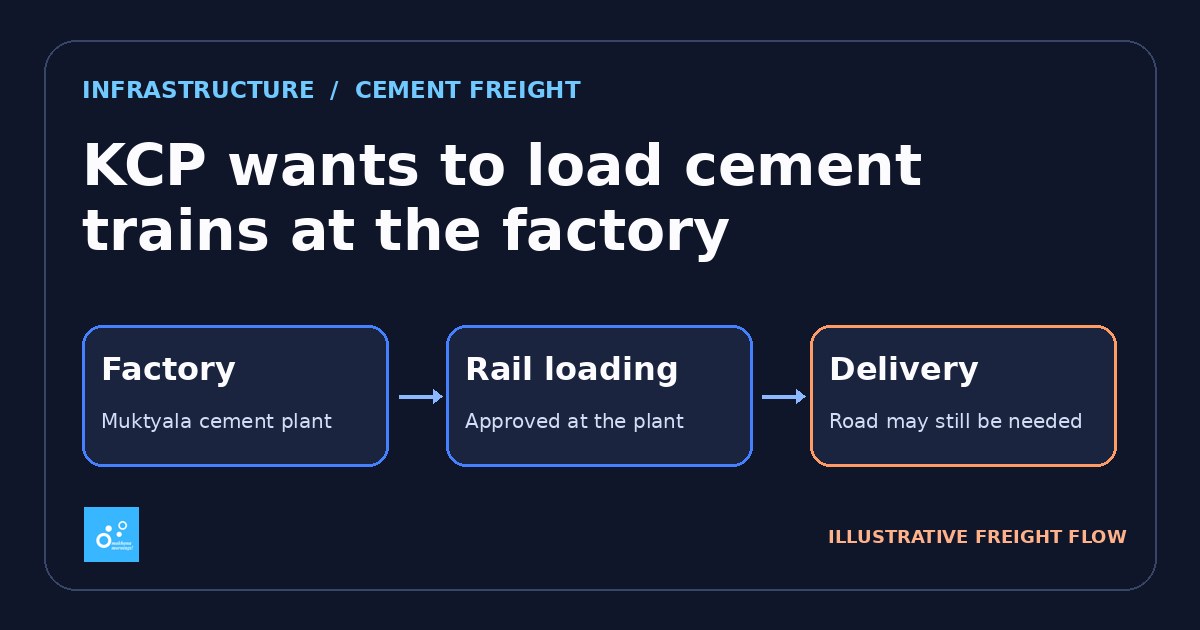
A cement plant can make the same product and still change how it competes by changing where it loads and handles the freight. KCP’s new rail approval in Andhra Pradesh shows why that matters. In the same filing that disclosed the approval, the company said it had decided to close its cement packaging plant at Arakkonam, Tamil Nadu.
KCP is changing how it handles cement freight
KCP told the exchanges on 27 November that South Central Railway had approved commissioning of a Gati Shakti cargo terminal at its Muktyala cement plant, effective 21 November. The terminal is served by Jaggayapet Town railway station. KCP linked its decision to close the Arakkonam packaging plant to the terminal development, prevailing economic conditions and the need to reduce operating costs. It did not give a closure date, report a first freight train or quantify the savings.
The plan goes back at least to 2024. K&R Rail Engineering disclosed a ₹45 crore order for a siding at Muktyala. A siding is a track that connects a facility to the rail network so wagons can be loaded or unloaded there. The contract called for loading cement and unloading imported coal and gypsum. Loading clinker, the material ground to make cement, was listed as a future provision. The contract value covered that siding work, not the total cost of the new terminal.
The useful comparison is the cost to deliver a tonne
Loading a train at the factory can avoid a truck trip to a separate loading point and the cost of transferring the cargo there. But a cheaper rail leg does not automatically make the whole journey cheaper. The economics also depend on how often the company can fill trains, where it unloads them and how far the cement still has to travel by road to reach buyers.
This is the point of moving rail terminals closer to factories and markets under the Gati Shakti policy. The Railways Ministry counted 149 commissioned terminals nationwide at the end of August. That figure counts facilities, not the tonnes they carry or the savings they deliver.
The first facts to watch at Muktyala are when trains start moving, what they carry and whether the company reports a lower cost per tonne delivered. The approval gives KCP a new shipping option. It does not, by itself, tell us how much the change will save.



Leave your thoughts