
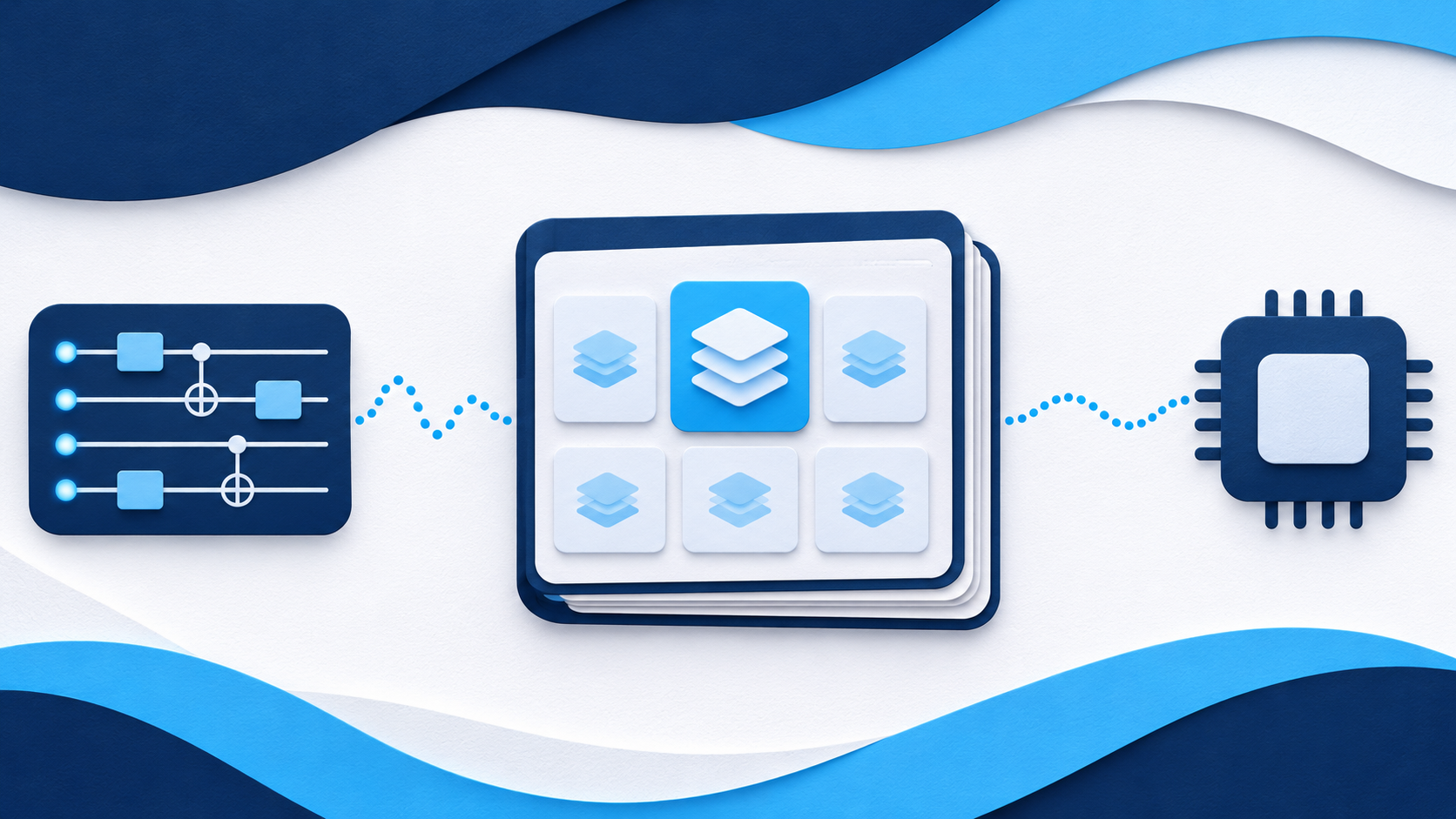
LTM’s quantum error-mitigation tool is now accessible through an existing research-software workflow.
LTM announced on November 12 that its AI-powered Quantum Error Mitigation tool, AI-QEM, is available in IBM’s Quantum Functions Catalog. IBM’s developer update had included the function a day earlier.
The Breakdown
Quantum measurements can be distorted by noise. AI-QEM uses a trained model to estimate adjustments to those results, with that post-processing performed on classical computers. Eligible users can access the function through Qiskit, the software framework used to build quantum experiments.
That makes this a distribution story as much as a research announcement. A defined capability is being packaged inside a platform that researchers already use. It is not a new quantum processor, and error mitigation is not the same as building a fault-tolerant quantum computer.
Access is restricted. IBM describes the catalogue as a beta service, with per-workload billing through Resource Units on Premium and Flex plans. This is not an unrestricted free service.
Why This Matters
The claim of no additional mitigation-specific quantum runs has a precise meaning: the adjustment does not require another set of runs on the quantum processor. Classical processing still takes time. It does not follow that the whole calculation is instantaneous, free or always cheaper than another method.
LTM says it has tested the capability on IBM quantum computers, including experiments involving more than 100 qubits. That is a provider’s validation claim, not independent proof of a universal advantage or evidence of commercial adoption.
For India’s technology-services industry, the concrete development is a reusable software function with a distribution channel. Whether that becomes a meaningful business depends on use, performance and customer demand. The announcement does not establish those outcomes.
The Crunch
LTM has put a specialised tool where eligible researchers can try it. That is a more tangible step than a broad partnership promise, but catalogue availability is the beginning of the commercial test, not its result.
Illustration: conceptual artwork, not an actual product interface or hardware design.




Leave your thoughts