
Mahanadi Coalfields has received regulatory clearance for its proposed IPO, Reuters reported on November 5. The planned sale would put money in the hands of its parent, Coal India, while giving public investors a direct stake in the subsidiary.
The Breakdown
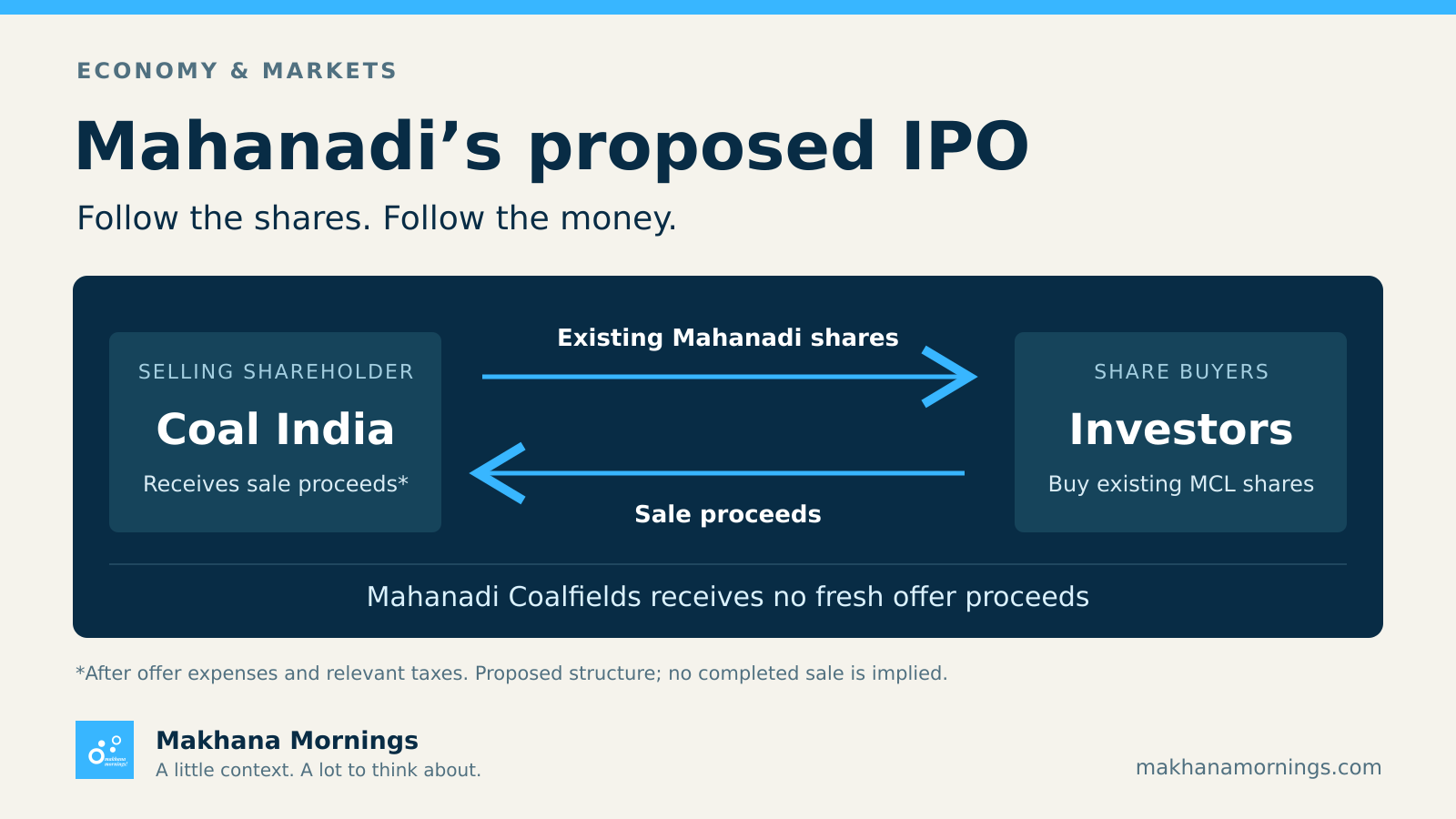
The draft abridged prospectus hosted by SEBI describes an offering consisting entirely of an offer for sale, or OFS. Coal India proposes to sell up to 661,836,300 existing shares, equivalent to 66.18 crore shares when rounded. There is no fresh issue component.
An OFS transfers shares from their current owner to new investors. The seller receives the sale proceeds. A fresh issue works differently: the company creates additional shares and receives the money raised. An IPO can combine the two, so its headline size alone does not reveal how much new funding the business receives.
For Mahanadi, the draft is explicit: the company would receive no offer proceeds. Coal India would receive them after the offer expenses and relevant taxes it must bear. The proposed maximum sale represents 10% of the shares outstanding in the draft.
Why This Matters
The transaction would let Coal India turn part of its ownership into cash. It would also give investors a way to buy Mahanadi shares directly, rather than gain exposure through the parent. Those are ownership changes. The sale itself does not establish a new budget for mines, equipment or other investment inside Mahanadi.
A listed share price could provide a separate market valuation for the subsidiary. What that valuation turns out to be depends on the eventual offer terms and trading. Neither the number of shares offered nor regulatory clearance supplies the missing price.
The Big Picture
Moneycontrol reported that SEBI issued its final observations on November 4. That is the reported regulatory milestone; it does not establish that subscriptions have opened or that a listing has taken place.
The draft leaves the offer price and bidding dates blank. Its ₹2 face value is the nominal value assigned to each share, not the price investors will pay. The offer documents also caution that SEBI does not recommend the shares or guarantee the document’s adequacy. Investors still need to examine the business and its risks.
The Crunch
Follow an IPO’s money as well as its headline size. In Mahanadi’s proposed offer, the cash would go to Coal India. The next documents to examine are the final offer terms, including the price and timetable, before drawing conclusions about valuation or the opportunity for investors.


Leave your thoughts