
TeamLease ended September with fewer associates after deliberately stepping away from some low-margin staffing business. The decision makes its latest workforce figures useful for understanding the economics of outsourced hiring, as well as the limits of reading one supplier’s headcount as a measure of India’s job market.
In its November 5, 2026 results, the company reported total headcount of 3,33,170, compared with 3,41,330 at the end of June. That is a reduction of 8,160 people. TeamLease said the quarter’s roughly 8,000 net decline was led by a planned exit from low-margin staffing involving about 7,000 associates.
The Breakdown
The general staffing and apprenticeship businesses together recorded more than 62,500 gross joiners during the quarter. Yet their combined closing headcount fell from 3,33,700 to 3,25,500.
Why This Matters
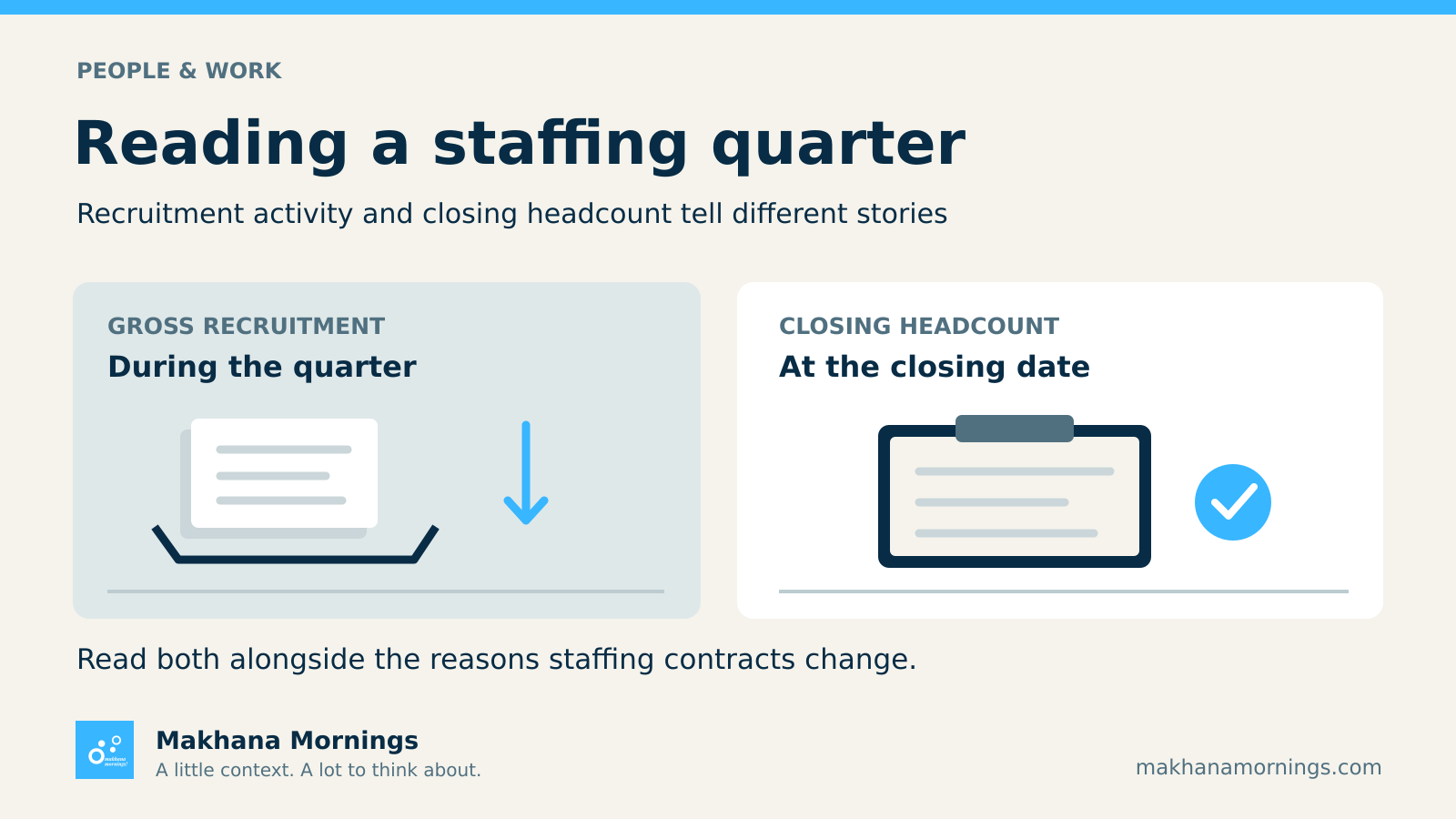
Those figures describe different parts of the same activity. Gross recruitment counts people joining during a period. Closing headcount reflects who remains at its end, after arrivals and departures. High recruitment activity can therefore coexist with a smaller workforce.
The explanation matters here because TeamLease identifies a commercial choice behind much of the reduction. Its disclosed numbers do not establish how many people, if any, subsequently lost employment with the client businesses, moved to another supplier or found other work. Treating the entire decrease as a layoff tally would go beyond the evidence.
The Big Picture
The smaller specialised staffing business added 40 people on a net basis, ending the quarter with 7,670 associates. Its year-earlier headcount was 7,050. Revenue in this business was about ₹190 crore, compared with ₹165 crore a year earlier, according to the company’s presentation.
TeamLease also said it served more than 130 global capability centre clients, up from more than 110 at the end of FY26. These are the centres through which multinational companies run activities such as technology, engineering and business services.
The two staffing businesses show why an aggregate employment number needs its underlying mix. A provider can shrink one set of assignments while expanding another, with different skills, customer needs and commercial terms.
The Crunch
Group operating revenue reached about ₹3,076 crore in the September quarter, compared with ₹3,006 crore a year earlier. The company reported EBITDA of about ₹36 crore, down from ₹38 crore, and said spending on people, brand and technology weighed on the comparison. The release also noted buyback-related expenses.
That leaves an important distinction between the purpose of the exit and its eventual payoff. Leaving low-margin work is intended to improve the business mix. Subsequent results will show how that choice affects earnings as TeamLease continues investing in the company.
For readers following Indian hiring, the practical lesson is to examine recruitment, closing headcount and the reasons contracts change together. TeamLease’s quarter contains active hiring, a planned reduction in low-margin work and growth in a smaller specialist business. Each says something different about demand.



Leave your thoughts