
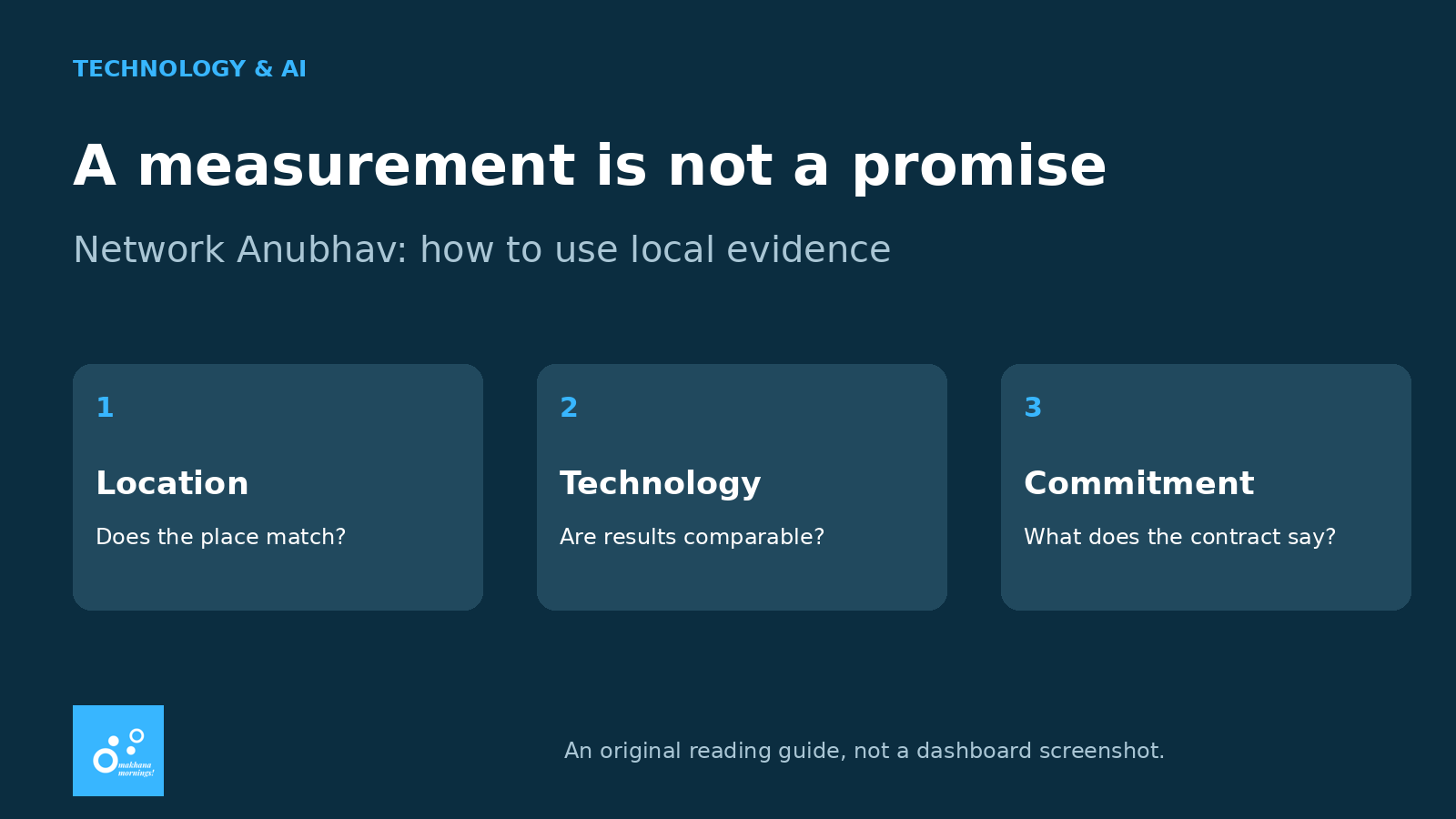
Choosing a connection for a shop or home office is a local decision. A result from somewhere else cannot settle whether a video meeting will work reliably where you need it.
The Telecom Regulatory Authority of India (TRAI) launched Network Anubhav on November 4. According to its launch announcement, it brings consumer measurements from MySpeed and MyCall together with the regulator’s independent drive-test data. Its maps organise observations by location, provider and technology, covering cellular and fixed broadband.
The Breakdown
The important qualification comes with the launch: user tests are not a comprehensive network-quality assessment conducted under a standard methodology. They show observed experiences rather than guaranteeing what every subscriber will receive.
That distinction changes how a small business should use the information. Before comparing two connections, ask whether the observations refer to a relevant place and comparable technology. A mobile reading and a fixed-line result answer different purchasing questions. A useful comparison should also consider when measurements were made and whether there are enough observations to support a confident conclusion.
Consider a retailer evaluating connectivity for its counter and back office. Nearby measurements can suggest questions to ask a supplier. They do not establish how the connection will perform inside that particular premises, or settle the terms of a service contract. The map is a starting point for due diligence, not a substitute for it.
Why This Matters
For consumers, making local evidence easier to inspect can improve the questions asked before buying. For operators, it can make the gap between a broad service claim and a particular experience more visible. Neither consequence requires treating a map as a league table.
TRAI says the platform also adds web access to Do Not Disturb (DND) facilities for commercial-communication preferences and spam complaints. That should not be confused with handing every individual service dispute to TRAI: ordinary service grievances still belong in the provider’s prescribed complaint process.
The Crunch
The practical value lies in a better-informed choice, not an automatic winner. Look for evidence relevant to the place and task, then ask the provider what it will actually commit to delivering. A measurement describes an observation; a contract defines an obligation.



Leave your thoughts