
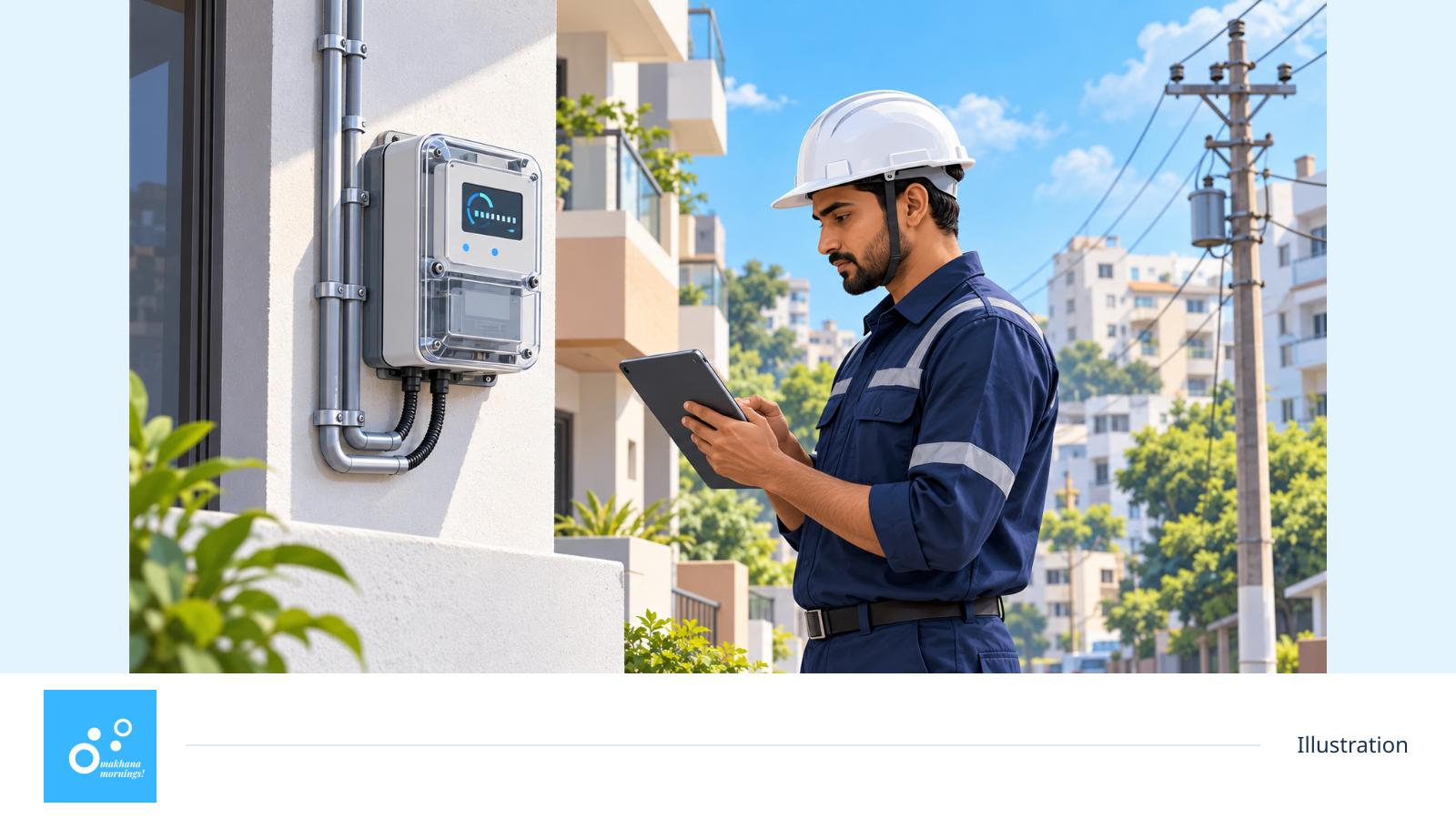
A smart meter is a device. The business behind it can involve procuring and deploying equipment, then operating and maintaining the infrastructure. That is the work IntelliSmart does for utilities.
The Competition Commission of India has approved Adani Energy Solutions’ acquisition of IntelliSmart’s entire equity capital from National Investment and Infrastructure Fund and Energy Efficiency Services Limited.
What is being bought?
The ₹3,050 crore cash transaction covers both the equity purchase and redemption of optionally convertible debentures held by NIIF. Those debentures are a separate financial instrument, so the total is not simply a price for the shares.
The June agreement made completion conditional on customary requirements, including competition approval. The clearance does not establish that the ownership transfer has closed.
How the system works
A smart meter records electricity use at different times and sends those readings wirelessly to the supplier. It is one component of advanced metering infrastructure: the wider system that connects measurement to the utility’s information systems.
Earlier experience in Bihar shows why that connection matters. Its utilities had two existing billing systems that were not designed for prepaid metering. Integrating them required software linking meter data with billing, including calculations for energy charges, fixed charges and arrears. Installing the device alone could not do that work.
India’s distribution-reform programme also treats metering as an ongoing service. The model described in 2023 combined upfront investment with operating expenditure and linked operating payments to agreed service levels. That is programme context, not confirmation of the terms of every IntelliSmart contract.
What households should watch
Usage information, recharge facilities and low-balance alerts can make prepaid accounts easier to manage. These features depend on the surrounding applications and communications infrastructure. Data security is part of the job too: the programme’s bidding framework includes requirements covering communications, cloud systems and cyber-incident management.
The Bihar case also records an earlier practical problem: communication issues sometimes delayed reconnection after payment. The response included a dedicated grievance mechanism and, where needed, visits to consumers. This is a historical implementation lesson, not evidence of a current failure at the acquisition target.
Why this matters
For a utility, delivery is the beginning. Whether the infrastructure keeps working is the next question, making maintenance a useful analytical lens.
The Crunch
The acquisition is best understood as a bet on delivering a working metering service. For consumers, the meaningful test is whether readings, account information and support work together reliably, rather than how many devices appear in a corporate portfolio.

Leave your thoughts