
A government lawyer has a hearing tomorrow. The case tracker can say when it starts. The lawyer still needs to find the latest court order, check whether it changed an earlier direction and work out which department needs to respond. That is the gap Andhra Pradesh’s new legal AI project could help close.
RailTel disclosed on 22 November that it had received a letter of acceptance from Andhra Pradesh Technology Services to build and run a statewide legal AI assistant on Google Cloud. The estimated order is worth ₹27.03 crore, including taxes. It covers design, development, implementation, hosting and ongoing managed services. RailTel lists 9 May 2029 as the execution deadline for the order, not as the date the assistant will go live.
The state already tracks its court cases
Andhra Pradesh already uses an online system to monitor cases in which the state government is a party. Departmental officers and government lawyers can use it to check a matter’s status. The AI contract is not an announcement that courts will use AI to decide cases, or that the public will get an AI advice service. The filing does not say which departments will get access first or when they can start using it.
An answer is useful only if someone can verify it
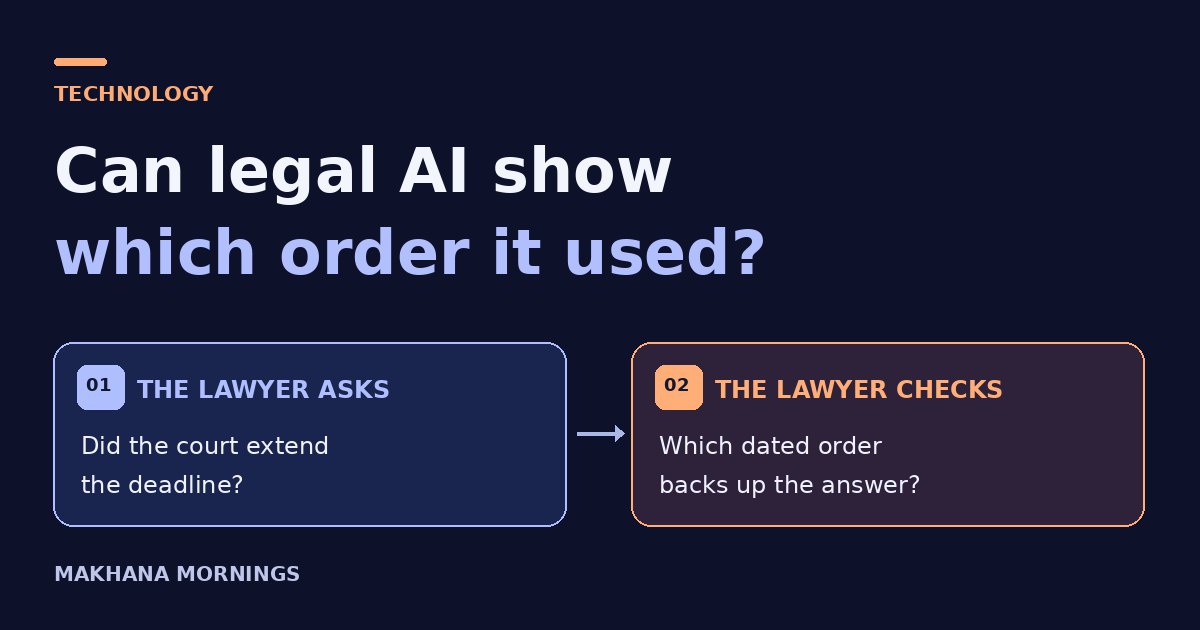
Imagine a lawyer asking whether a court has extended a deadline. A useful answer would point to the dated order and the exact paragraph that grants the extension. If the file contains only a department’s request for more time, the system should say so. Asking for an extension and receiving one are different events, even when both appear in records for the same case.
This matters for more than legal research. A department may need to assign someone to gather records, file a response or carry out a direction. Finding an order faster helps only if the answer reflects the latest document and reaches the person responsible. Access matters too: a tool should not show an internal case document to someone who could not open the original.
What to watch when the tool goes live
The meaningful test is not how many questions it answers. It is how often someone reviewing an answer can open the cited record, verify the wording and see whether a later order changed it. A pilot could measure time saved alongside missed or incorrect citations, rather than reporting time saved alone. RailTel’s filing does not specify those tests.
The Crunch: A deadline tracker tells you when to act. An assistant earns its place if it helps you find out what to do, shows you the order behind the answer and says when the record is incomplete.


Leave your thoughts