
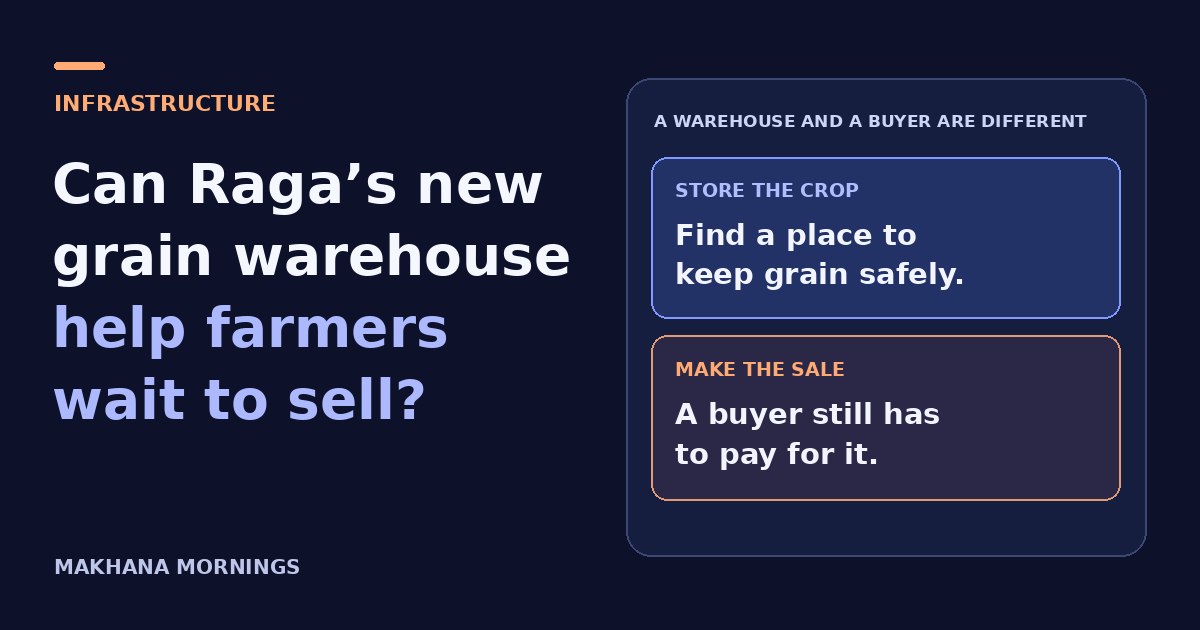
Arunachal Pradesh inaugurated a foodgrain warehouse at the Raga cooperative in Kamle district on Sunday. The opening answers one question: there is a new place to store grain. It does not yet answer the one that matters most to a farmer at harvest: can I afford to wait for a buyer?
A nearby warehouse can give farmers time to sell
NABARD’s 2023–24 district credit plan identified a lack of storage and processing facilities in Kamle, alongside transport constraints. A nearby warehouse can reduce the distance farmers have to move grain for storage. It can also give batches from several farms a single collection point, if the operator accepts and handles them that way.
The value of keeping grain for another month depends on more than the price it might fetch. Farmers have to account for storage charges, transport, possible deterioration and the cash they need before the sale. If the higher price does not cover those costs, selling earlier can still be the better decision. Storage creates a choice; it does not guarantee a better price.
Storage and procurement solve different problems
The Union government’s broader cooperative storage programme describes two separate roles: storing grain and, in suitable cases, acting as a collection or procurement point for public agencies. A warehouse can be useful without an agency buying from it. Conversely, a buyer’s interest does not tell a farmer which crops the warehouse takes, how they will be graded or when payment will arrive.
The government confirmed that the Raga warehouse was inaugurated remotely under a grain storage scheme. Its release did not specify capacity, storage charges, which crops would be accepted or whether a buyer had contracted to take the grain. Those details determine what the facility can do beyond holding stock.
The first grain intake will tell us more than the inauguration
The most useful signs will be when the warehouse starts taking grain, how much farmers deposit and who pays for it after storage. For Raga, the test is not simply whether a godown was built. It is whether farmers gain a practical alternative to selling as soon as the crop is ready.



Leave your thoughts