
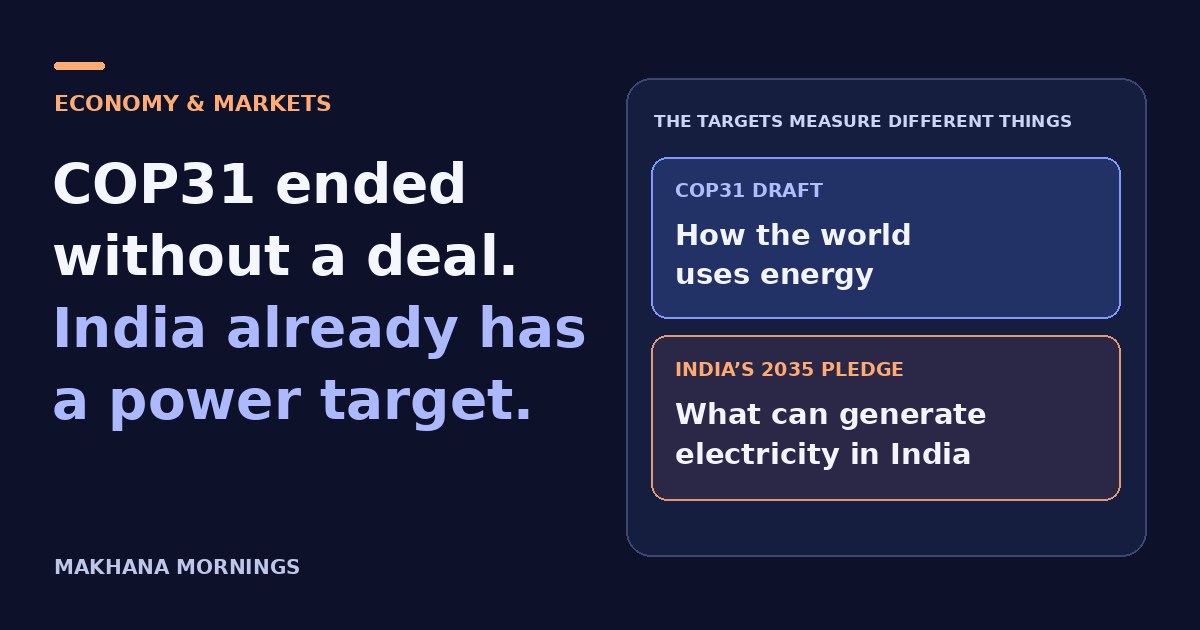
COP31 ended its closing plenary in Antalya on Sunday without adopting its main climate agreement. The presidency had proposed getting 35% of the world’s final energy use from electricity by 2035. India already has a 2035 goal with a bigger number, about 60%, but the two percentages answer very different questions.
The Antalya draft asked how the world uses energy
The 35% proposal looked beyond the power system. It asked how much of the energy that reaches households, businesses and vehicles comes in the form of electricity rather than as fuels such as petrol or gas. Switching a diesel delivery van to an electric one changes that mix. So can replacing a gas boiler with an electric heat pump. The proposal was a global ambition, not a requirement that each country hit 35%.
The European Union and other parties objected to the final draft, which did not explicitly mention fossil fuels. The draft did not achieve consensus, so the summit did not adopt an overarching decision. That outcome is separate from narrower decisions adopted at the summit and from the presidency’s voluntary 35-by-35 electrification pledge. That does not undo the agreement reached in Dubai in 2023, which called for a transition away from fossil fuels in energy systems while leaving countries to contribute according to their circumstances.
India’s own goal asks what can generate power
In April, India submitted a climate pledge that aims for about 60% of installed electricity generation capacity to come from non-fossil sources by 2035, with help from technology transfer and low-cost international finance. It measures the capacity of the equipment installed, not the amount of electricity that equipment produces over a year. It also does not count how much petrol, diesel or gas households and businesses use directly.
Picture a factory with a gas-fired boiler and electric motors. Adding solar capacity to the grid can move India towards its 60% goal without changing how that factory heats anything. If the factory replaces the gas boiler with a suitable electric system, it changes how it uses energy. Whether that switch lowers costs and emissions depends in part on the electricity the factory can buy, the hours it needs it and the equipment the job requires.
The next test is whether cleaner power reaches the users who can switch
At the summit’s opening, India stressed the role of public finance from developed countries, including for adaptation. For a business weighing an electric replacement, the implementation questions are more local: can the site get enough grid capacity, what will power cost during operating hours, and can production continue during the changeover? Those questions did not get easier or harder overnight because the Antalya text failed.
A useful way to follow India’s transition is to keep three measures separate: what is installed, what generates electricity, and which users replace fuels with that electricity. Progress on the first matters. It cannot tell you how far the other two have moved.
Updated 22 November: An earlier version incorrectly attributed the closing announcement to the COP31 president and did not distinguish the separate voluntary electrification pledge from the draft agreement.


Leave your thoughts