
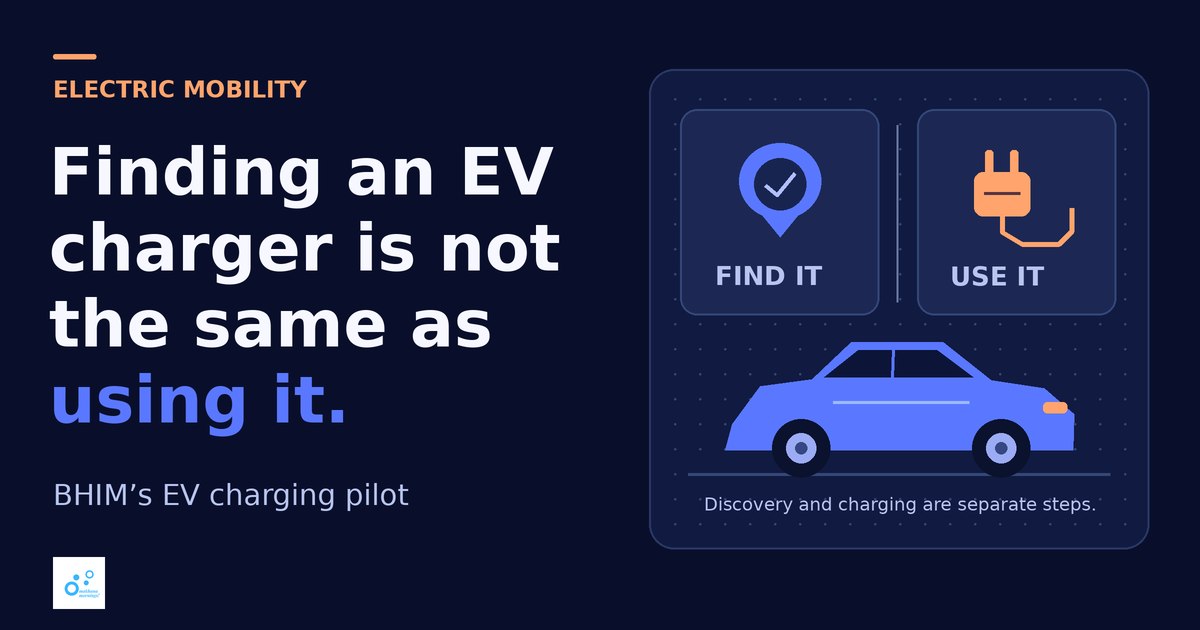
Finding a charger on a map is the easy part. The harder question is whether it can charge your car when you arrive. India’s Unified Bharat e-Charge pilot brings participating networks into the BHIM payments app, so drivers can find, access and pay for charging without switching apps for each operator. It makes the networks easier to use together; it doesn’t add a working plug to your route.
Where the BHIM pilot operates
The Ministry of Heavy Industries identified five pilot areas: Maharashtra, Karnataka, Delhi–NCR, Haryana and Rajasthan. Participants named by the ministry include Indian Oil, Bharat Petroleum, Hindustan Petroleum and ChargeZone. These are examples of participating operators, not a list of stations that work with BHIM. On November 20, a ministry official said about 12 charging network operators had joined and that the pilot would expand as the network became more reliable. He did not give a rollout date. This was an update on a pilot already underway, not a nationwide launch.
A pin doesn’t tell you whether you can plug in
Think of a driver choosing between two stops. One is close, but its connector doesn’t match the car. The other is farther away, has the right connector and shows it as available. The second stop is the useful one. Even there, availability can change before arrival, and a displayed charger rating is not a promise that the car will accept that much power.
India’s public EV charging guidelines recognise that difference. They call for stations to display location, charger type and power, the number available, charging rates and additional fees. Remote booking is optional. That is the information the guidance calls for, not a claim that every station in the pilot displays it in BHIM or lets customers reserve a slot.
A common app helps, but the charger still has to work
A common interface can make it easier to compare operators and pay. But the equipment, connection to the electricity network and maintenance remain separate from the app. Under PM E-DRIVE, when a public agency gets an advance to install chargers itself, the final instalment follows only after the chargers are connected to power, ready for use and added to the shared platform. The scheme also calls for implementing agencies to share availability, price and digital payment information. That distinction matters: an approved charger, a charger that appears in an app and a charger that can serve a car today are not the same thing.
The Crunch: Check the plug before choosing the stop
Before relying on a charging stop, check the connector and charging power your car supports, whether a suitable plug is shown as free, the price and any extra fee. Keep a second viable stop on the route. A shared app is useful because it can give you more choices in one place. The test is whether those choices turn into successful charging sessions.
Leave your thoughts