
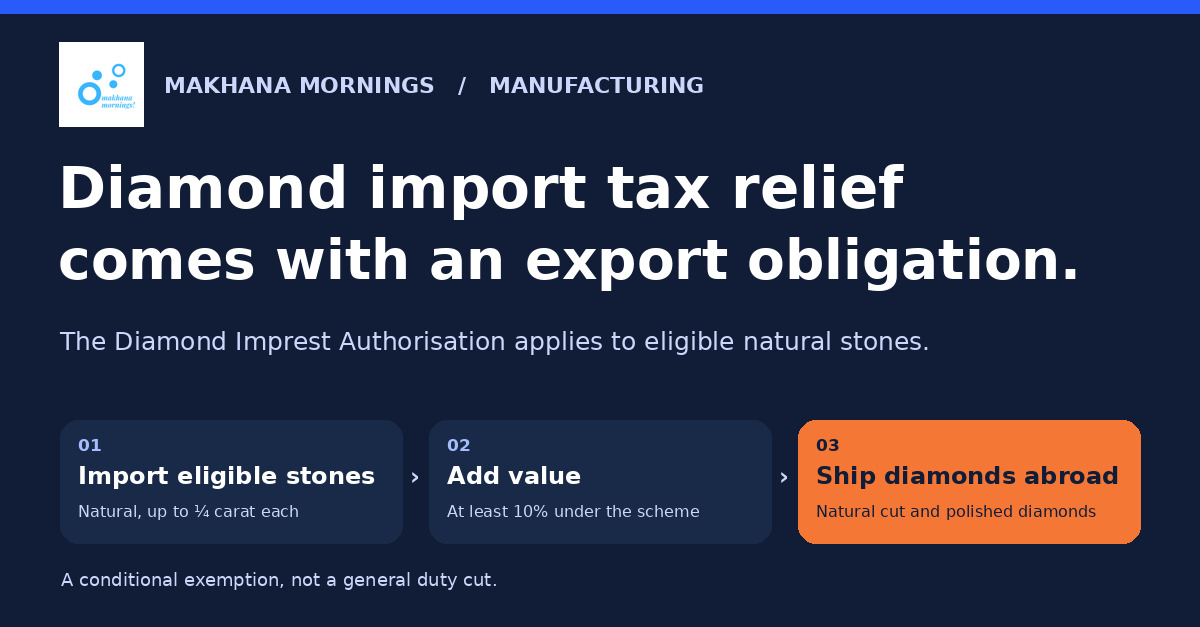
India’s 20 November customs notification puts a tax exemption into effect for eligible diamond imports under the Diamond Imprest Authorisation scheme. Qualifying imports are exempt from applicable customs duties and integrated GST. The exemption is tied to subsequent exports. It is not a general tax cut for imported diamonds.
The $15 million figure does two different jobs
An exporter needs at least Two-Star Export House status and at least US$15 million in cut and polished diamond exports in each of the preceding three financial years, along with the required tax filings. That is a test of past performance.
The import limit is calculated separately. It is the lower of 5% of the exporter’s average annual cut and polished diamond exports over the same three years and US$15 million. A firm averaging US$40 million would have a US$2 million ceiling if it met the other conditions. The US$15 million figure is not an allowance for each shipment.
Only eligible natural stones qualify
The scheme covers natural cut and polished diamonds weighing at most a quarter carat each, including certain partly processed stones. Lab-grown diamonds are outside it. Imports have to come before the exports that count towards the obligation. The exporter must physically ship qualifying natural cut and polished diamonds abroad and achieve at least 10% value addition.
The Crunch
The relief changes the tax charged on eligible inputs at import. It does not remove the need to add value and sell abroad. For the separate cash-flow question, see how India’s natural diamond businesses manage the gap between holding stock and receiving cash.




Leave your thoughts