
The Government e-Marketplace, India’s public purchasing portal, signed an agreement with the Tribal Indian Chamber of Commerce and Industry on 20 November to help tribal businesses participate in public procurement. Announced the next day, the agreement covers outreach, training and help resolving problems. It does not announce a tender or guarantee an order.
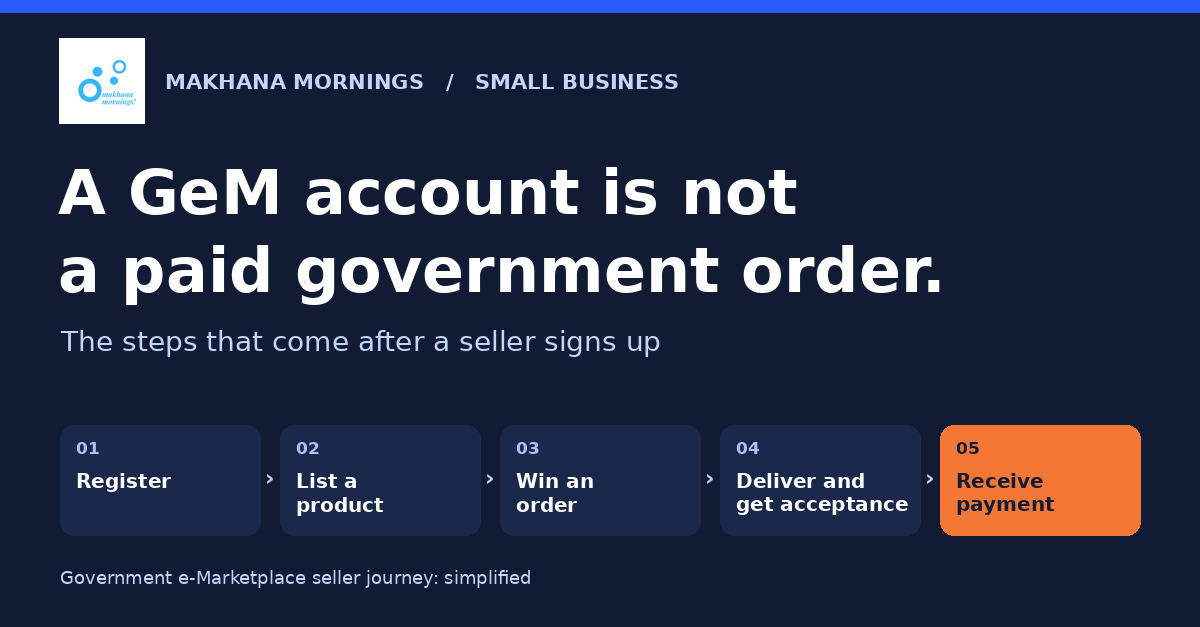
Getting onto the portal and getting paid are different steps
GeM’s training separates registration, listing, bidding and fulfilment. A seller needs to offer a product or service a public buyer can source. Depending on the purchase, the buyer can order directly or select a supplier through a bid or a reverse auction, in which sellers compete by lowering their offers.
Once a buyer places an order, the seller still has to meet its specifications and delivery terms and submit an invoice. The buyer’s receipt and acceptance certificate records what it accepted and forms the basis for payment. Contract terms can vary. For a small business, the work and expense of fulfilling the order can come well before it gets paid.
A Surat furniture maker made it past registration
The MSME Ministry previously reported that Modufurn Benchcraft, a Surat furniture maker, joined GeM with support from the separate National SC-ST Hub. It went on to secure and fulfil orders for the Union Ministry of Education and Gujarat’s Education Department. The case predates the new agreement. The ministry did not say how long payment took.
The Crunch
GeM reported more than ₹6,000 crore in FY2025–26 orders from micro and small enterprises owned by Scheduled Caste and Scheduled Tribe entrepreneurs combined. That is order value, not a figure for tribal businesses alone or a measure of cash received. A better way to judge the new partnership is to follow sellers who join through it: how many list a product, win an order, deliver it and get paid, and how long each step takes.

Leave your thoughts