
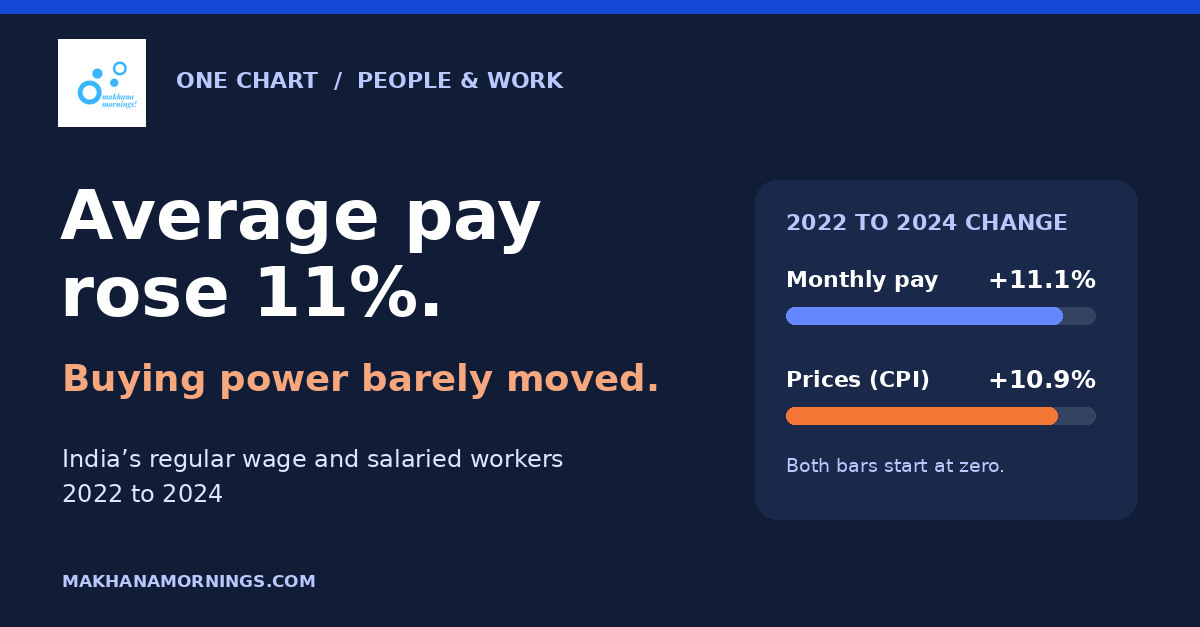
India’s average monthly earnings for regular wage and salaried workers rose from ₹19,316 in 2022 to ₹21,455 in 2024. But ₹19,316 in 2022 bought about as much as ₹21,418 did in 2024. Compare both pay figures at 2024 prices and nearly all of the apparent gain disappears.
Consumer prices rose almost as much as pay
Average monthly earnings rose 11.1% from 2022 to 2024. The national consumer price index rose 10.9% over the same period, using the average index for each calendar year. After accounting for inflation, average pay was about 0.2% higher. That is too small to conclude that purchasing power meaningfully improved from these estimates alone.
| Year | Reported monthly pay | Pay at 2024 prices |
|---|---|---|
| 2022 | ₹19,316 | About ₹21,418 |
| 2023 | ₹20,408 | About ₹21,418 |
| 2024 | ₹21,455 | ₹21,455 |
The average does not measure individual raises
The Periodic Labour Force Survey measures earnings in the preceding calendar month for people classified as regular wage or salaried workers in the survey week. It does not track the same people’s pay raises. Imagine an employer gives its existing staff raises and then hires a large group of lower-paid trainees. The average could fall even if every existing employee got a raise. That is an example of how the mix of workers can affect the average, not an explanation for what happened in India.
The price adjustment uses a national basket, so it may not match your experience of rent, groceries and transport. We also stop at 2024: the survey design changed in 2025, and MoSPI cautions that estimates may not be strictly comparable.
The Crunch
A raise tells you how much more money is on your payslip. Comparing pay with prices tells you how much more it buys. Try the Inflation & Buying Power Calculator with your own inflation assumption, or see what the registered-factory wage survey measures.

Leave your thoughts