
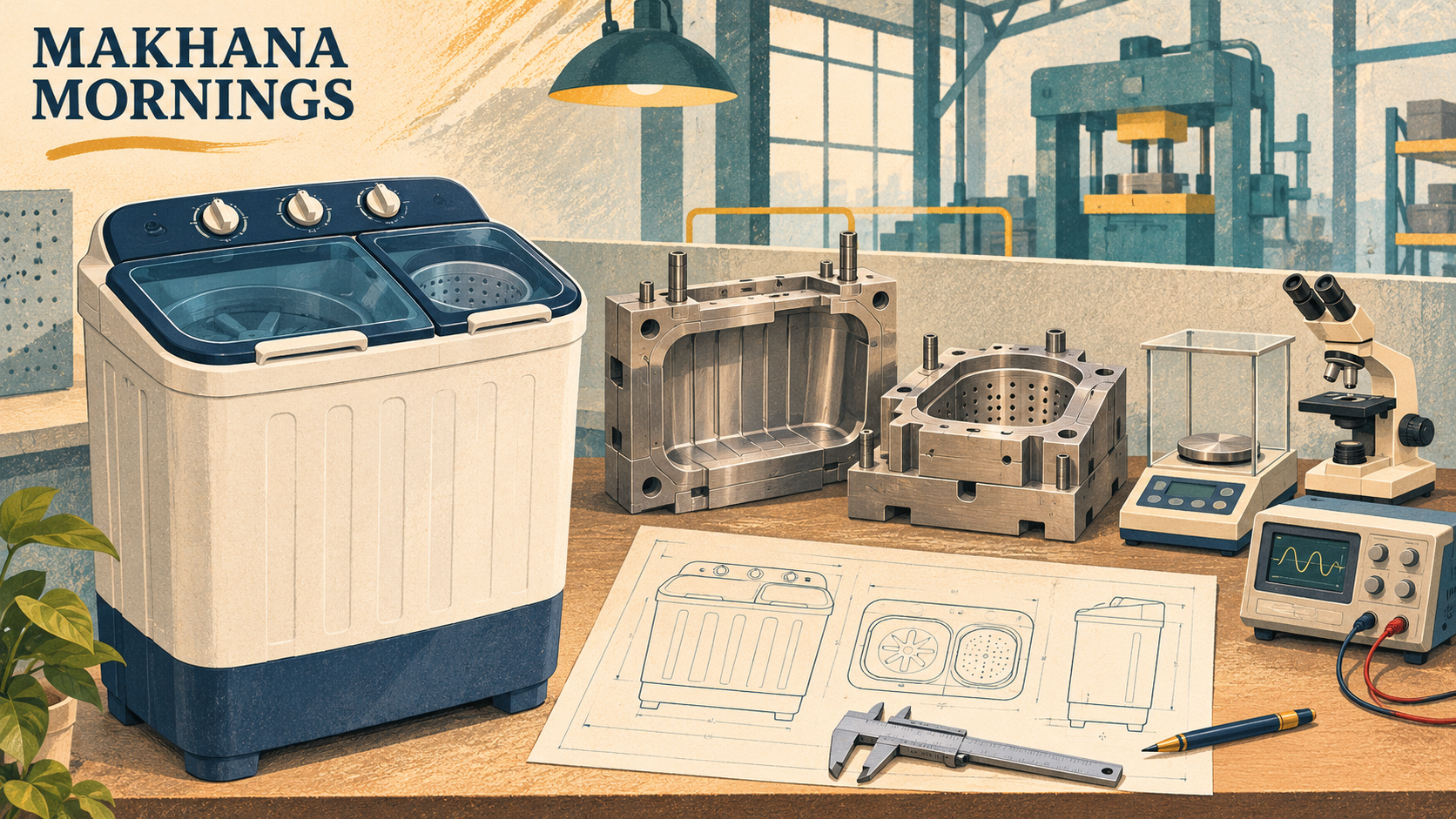
Dixon is buying equipment, not another company. Its latest agreement puts washing-machine tooling and product-development capability in focus.
The Breakdown
Dixon Technologies signed an agreement on 16 November to buy movable assets from Vimal Plast (India) for up to ₹49.75 crore, excluding taxes. Completion remains subject to conditions precedent, according to its stock-exchange filing.
The assets include moulds, research-and-development laboratory equipment, basket-assembly machines, jigs and fixtures. Dixon says the purchase will support its semi-automatic washing-machine original design manufacturing, or ODM, business. It is not acquiring an equity stake in Vimal.
Why This Matters
An ODM does more than assemble a brand’s specifications: it also contributes to product design and development. Tooling helps turn that design into a repeatable manufacturing process, while testing equipment helps evaluate the product.
That makes this a capability purchase rather than simply a bigger factory footprint. For a customer brand, the useful question is whether a supplier can develop and manufacture the required product reliably, not just how much equipment it owns.
Dixon expects the integration to improve utilisation and efficiency and accelerate product launches. These are management expectations, not results already delivered.
The Crunch
The filing does not quantify additional production capacity, committed customer orders, savings or a completion date. The agreement therefore should not be read as proof that output or earnings have already increased.
The next meaningful milestones are closing the purchase, integrating the assets and converting the added capabilities into customer business. A signed equipment deal is the starting point, not the finished product.
For the broader distinction between assembly and design, read Inside a made-in-India device.
Cover: original AI-generated editorial illustration, not a photograph of company facilities.


Leave your thoughts