
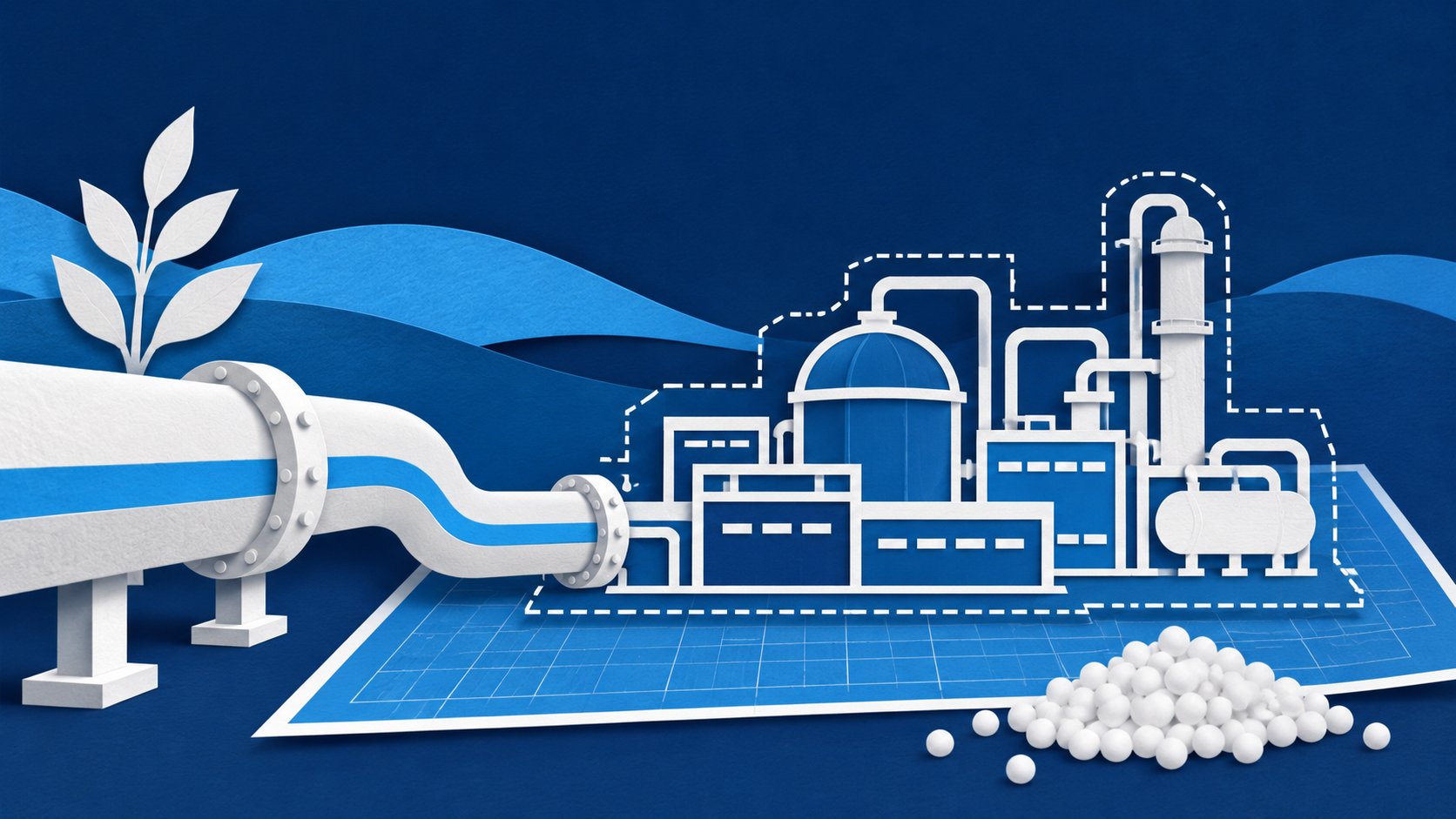
Original AI-generated conceptual illustration, not the proposed plant’s engineering design or evidence of construction.
For a gas-based urea factory, dependable gas supply matters as much as the plant itself. Gas is a feedstock for production, not merely a fuel for running equipment.
On November 12, GAIL and KRIBHCO signed a memorandum of understanding to explore a urea project at Mulapeta in Andhra Pradesh’s Srikakulam district. The proposed facility would have annual capacity of 1.27 million tonnes and sit along GAIL’s Srikakulam–Angul natural gas pipeline. The companies envisage a joint venture.
This is a development proposal, not an operating plant. The announcement does not establish a construction start or commissioning date.
The bigger pattern
The proposal follows GAIL’s July agreement with Rashtriya Chemicals and Fertilizers for a separate 1.27-million-tonne annual urea project in Maharashtra’s Vidarbha region, along the Mumbai–Nagpur–Jharsuguda pipeline.
The common logic is to pair gas infrastructure with fertilizer-making expertise. Neither announcement establishes that all funding and approvals are in place.
Domestic production is not the same as energy independence
India’s experience earlier this year illustrates the distinction. In a March 30 briefing, the government reported that disrupted gas availability had affected domestic urea production and described alternative supply arrangements to restore output. That episode illustrates a supply risk; it does not describe today’s operating conditions.
A domestic fertilizer plant can reduce the need to import finished urea if it is built and operates reliably. But its feedstock supply and cost still matter. A location beside a pipeline does not establish where the gas will originate or what it will cost.
The Crunch
The next meaningful milestones are a firm investment decision, financing, approvals, gas-supply arrangements and a construction timetable. Until then, this is a proposal to connect fertilizer production with gas infrastructure, not new fertilizer already reaching farms.
Related categories: Business & Brands




Leave your thoughts