
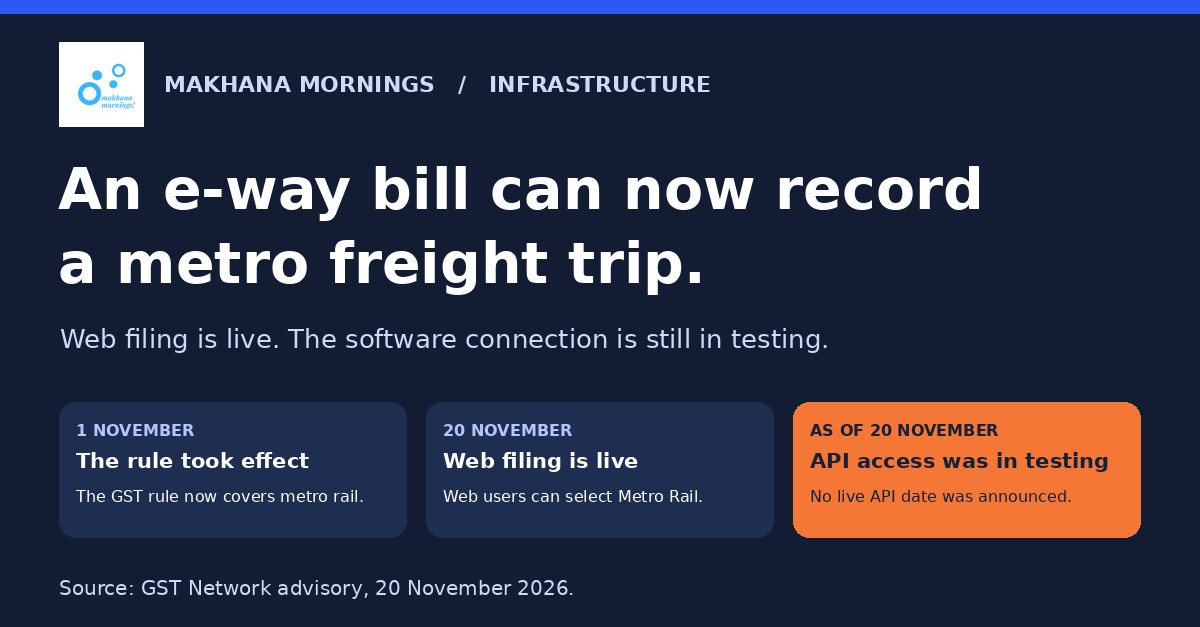
A parcel can spend part of its journey on a metro train instead of a van. India’s e-way bill system now has a separate option to record that metro leg. The change is live on the web, but businesses whose software connects directly to the GST system are still waiting for live access.
The rule changed before the portal did
An October 26 notification added metro railway to the Central GST rule for goods transported by rail. The amendment took effect on November 1. On November 20, GSTN confirmed that the live web portal could record Metro Rail alongside road, conventional rail, air and ship. When a user selects Metro Rail, the portal requires the transport document number. Software connected through the GST application programming interface, or API, could test the feature as of the advisory. GSTN said it would announce live API availability separately.
Delhi Metro already had a freight arrangement
In 2025 Delhi Metro and Blue Dart announced a partnership for parcel transport. Delhi Metro’s annual report says the arrangement uses trains outside peak hours. Blue Dart described the metro leg as part of a journey that still needs collection and delivery on either side. The e-way bill change is separate. It neither opens every metro network to freight nor says which companies can book space.
A train ride is only one part of the delivery
For a parcel company, the useful comparison is the whole trip: road pickup, transfer to the station, the train leg and delivery from the other end. An off-peak train slot could be useful on the right route, but transfers and waiting time also count. The new field records how the goods moved. It does not tell us whether the trip cost less or arrived faster.




Leave your thoughts