
Hirect has received a letter of acceptance from Chittaranjan Locomotive Works for approximately ₹136.26 crore of traction motors. The manufacturing story is not just the order size: the delivery timetable and the warranty obligation run on different clocks.
What the filing establishes
In its 18 November exchange filing, the company, formerly Hind Rectifiers, says the order covers 900 three-phase asynchronous traction motors for WAG-9 electric locomotives. That is a component count, not an announcement of 900 completed locomotives.
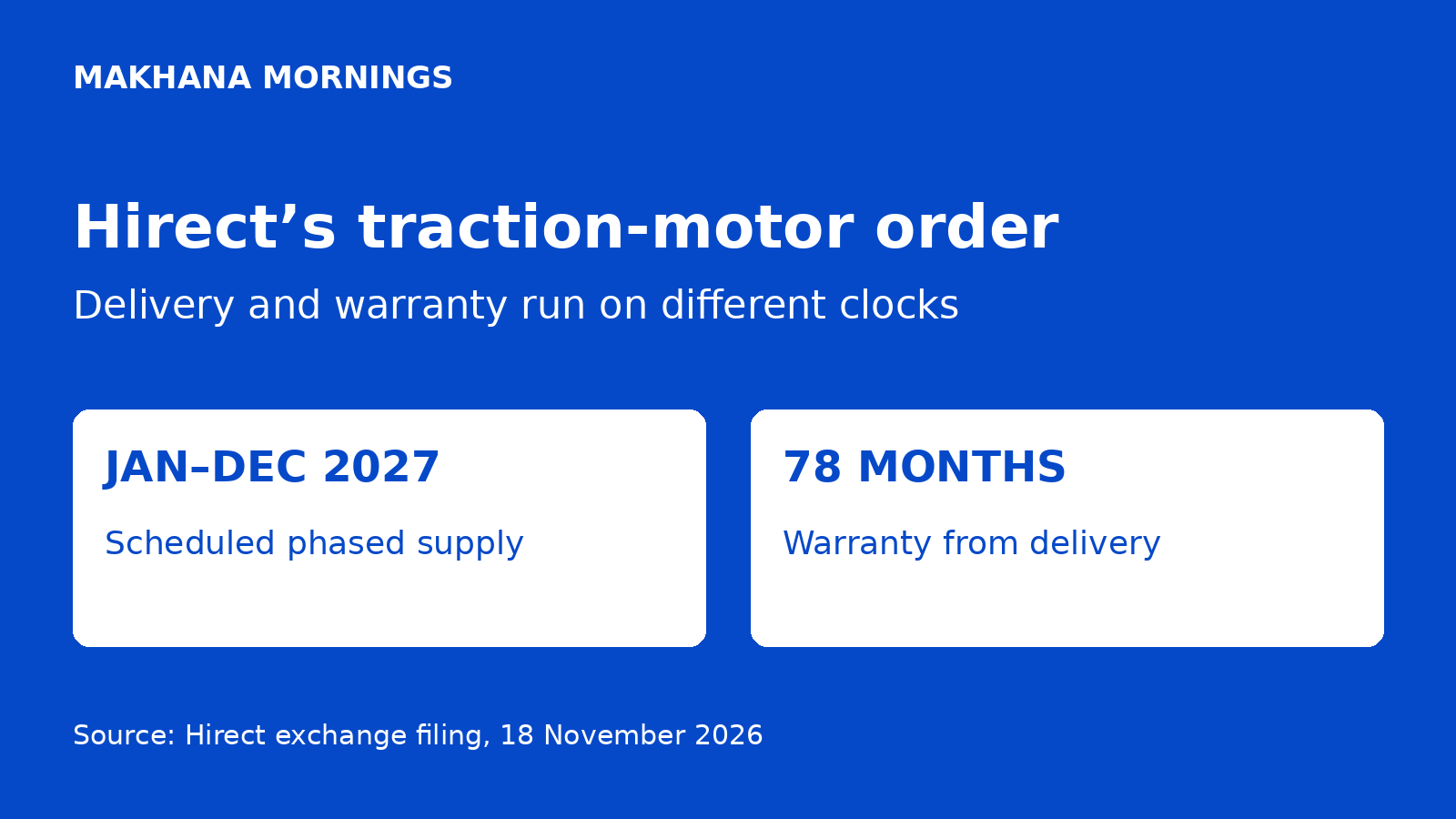
Supplies are scheduled in phases between January and December 2027. The stated warranty runs for 78 months from delivery. These are future delivery commitments, not evidence that the motors have already been supplied.
Our reading: the work continues beyond dispatch
For an industrial supplier, a delivery schedule helps frame production planning. A warranty creates a separate obligation extending beyond that schedule. The two should not be collapsed into a single headline about an order win.
The practical questions are therefore about execution as well as volume: how production is sequenced, how delivered equipment is supported and what resources are needed over the support period. Those are questions for subsequent disclosures, not conclusions about this order’s profitability.
What remains undisclosed
The release does not give payment milestones, an expected profit margin or quantified warranty costs. Its approximate order value should not be read as revenue already recognised, cash already collected or a forecast of earnings.
The next useful evidence will be actual delivery progress and more detail on the commercial terms. Until then, the distinction is straightforward: an accepted order, a planned supply window and a longer warranty period.


Leave your thoughts