
An AI system depends on more than its model. The equipment, electricity, communications and transport behind it can be just as important to keeping it usable. India’s latest technology-security commitment brings those less visible dependencies into focus.
The Breakdown
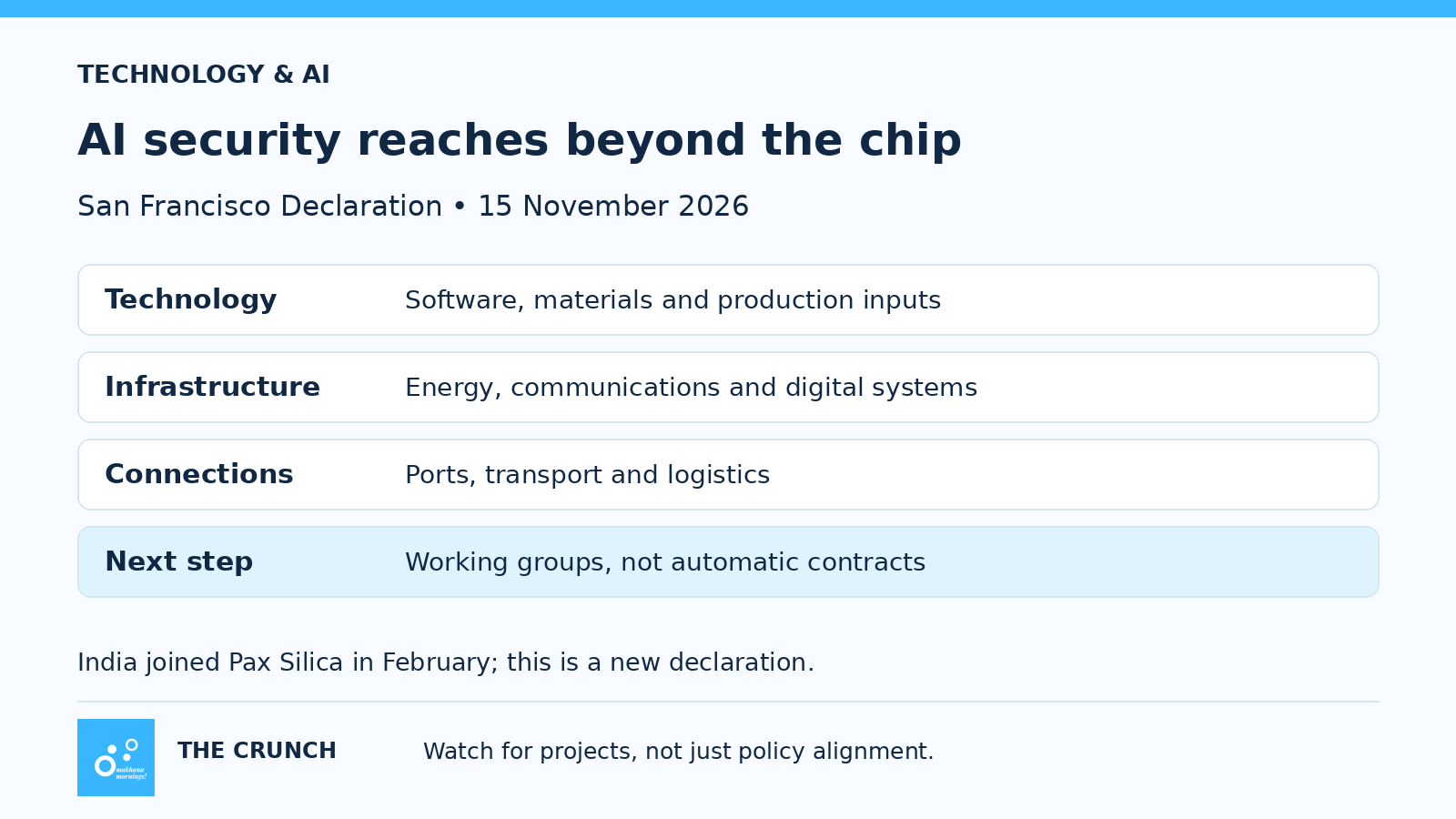
India signed the San Francisco Declaration on November 15 alongside the United States and eight other countries, including Singapore. The declaration treats sensitive technologies and the infrastructure supporting them as a shared security concern.
Its scope covers software, materials, technical knowledge and production inputs, alongside energy, communications, ports and logistics. Participants intend to establish working groups; the accompanying announcement proposes five areas, spanning innovation policy, adoption, supply-chain cooperation, security hubs and resilience.
The text does not announce an Indian investment allocation, award a manufacturing contract or grant automatic access to controlled technology. Nor does it name China or publish a new list of prohibited suppliers.
What Is New For India?
India had already joined Pax Silica at the India AI Impact Summit on February 20. At that time, the initiative’s stated scope ran from critical minerals and semiconductor fabrication to AI systems and deployment infrastructure.
November’s declaration is therefore not India’s first entry into the coalition. It adds a shared description of the technologies and infrastructure participants want to safeguard, with working groups intended to turn that approach into practical cooperation.
Why This Matters
For Indian companies, the useful distinction is between strategic alignment and a commercial opportunity they can act on. A common policy direction can create a basis for collaboration, but a factory still needs financing, equipment and customers. A supplier still needs to understand the requirements of the particular buyer and jurisdiction.
Consider the practical question for a business planning AI infrastructure: identifying a dependable chip supplier would not answer how its equipment reaches the site, who maintains the systems or whether power is available. Assessing dependencies across the project is more useful than assuming one component solves the entire problem.
The Crunch
Watch for defined work programmes and concrete projects, not just membership announcements. The declaration sets a direction for cooperation; its value to Indian businesses will become clearer through the arrangements that follow.



Leave your thoughts