
A small seller can book a parcel at a nearby post office. What happens after that depends on a different part of the network: how the parcel is packed, where it is sorted and how many times it changes vehicles before delivery. India Post’s latest approvals address both sides of that journey.
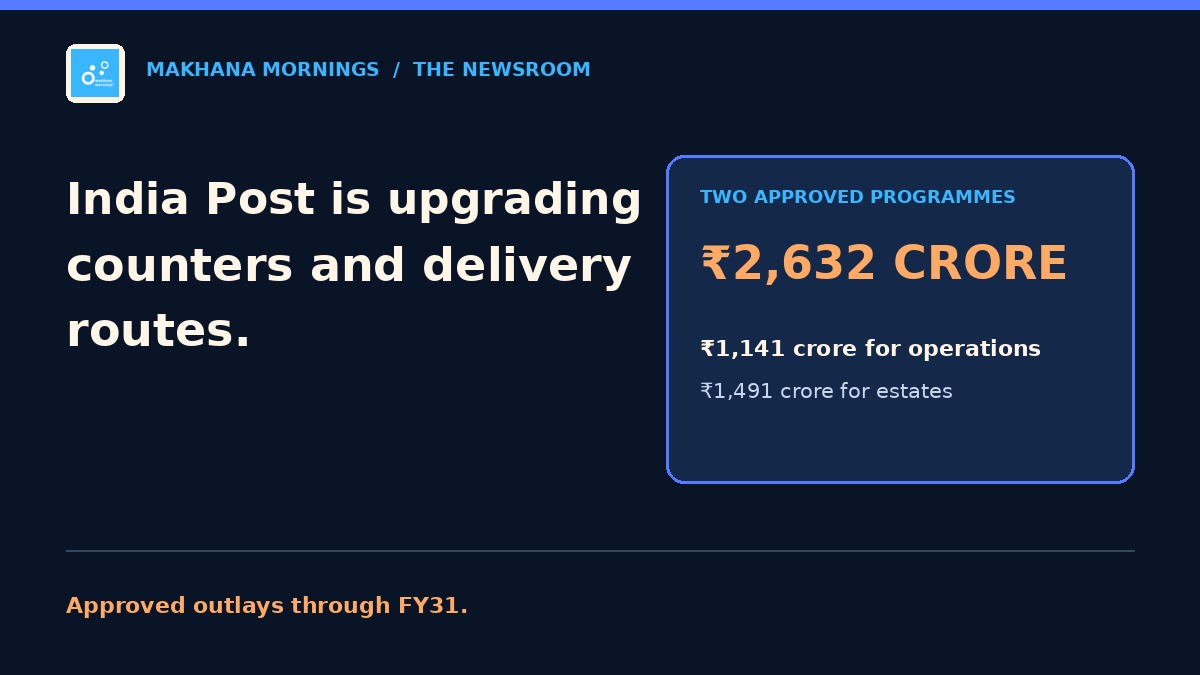
On 25 November, the Cabinet approved the continuation of two schemes for the five years from FY2026–27 to FY2030–31. The ₹1,141 crore Postal Operations Scheme funds the network and services. The separate ₹1,491 crore Estates Management Scheme covers physical premises. Together, the approved outlays are ₹2,632 crore, not money already spent.
The parcel budget is ₹278 crore, not ₹2,632 crore
The operations scheme sets aside ₹278 crore for parcel hubs and packaging units. The aim is to simplify sorting and reduce the number of times each parcel is handled. Another ₹575 crore is for the broader mail network, including delivery offices, sorting systems and road transport. The two amounts fund related work, but only the first is the dedicated parcel allocation.
Upgrading a counter is different from upgrading a route
The estates scheme sets aside money to renovate and brand 2,550 departmental sub-post offices and upgrade 2,500 post offices in rented premises. It also includes plans for 190 buildings on departmental land to replace rented space. These are different kinds of work: a better counter can improve the booking experience, while a better sorting route can change what happens once the parcel leaves it.
Reliability is the measure that matters to a seller
A seller shipping from a smaller town does not need every parcel to arrive a day earlier. Knowing which orders can reliably make a promised date, and which cannot, can be just as useful. The approvals do not come with a new delivery promise. As upgrades roll out, the measure to watch is whether a seller can see where a parcel is and quote a delivery window that holds up on the routes they actually use.



Leave your thoughts