
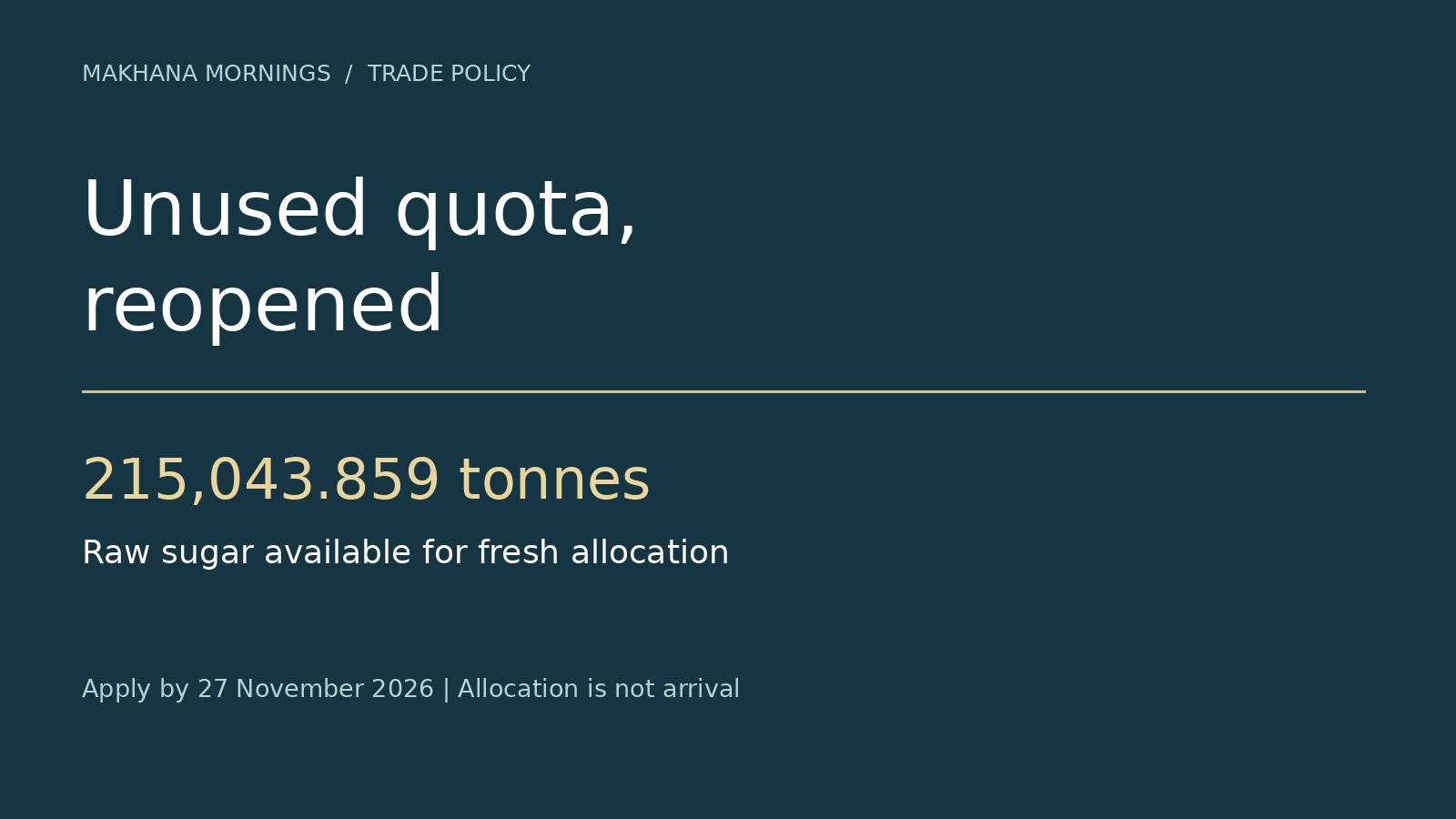
An import quota is permission to bring goods into a market. It is not a shipment. India’s latest raw-sugar notice illustrates another distinction: reopening unused permission does not necessarily increase the overall allowance.
DGFT’s Public Notice 41/2026-27, dated November 18, opens a one-time application window for 215,043.859 metric tonnes of raw sugar. Eligible millers and refiners can apply until November 27. This is a fresh allocation process within the existing 10 lakh-tonne tariff-rate quota, not an additional quota of that size.
The Breakdown
The arithmetic starts with the existing 1,000,000-tonne allowance. DGFT says 812,450 tonnes had been allocated, leaving 187,550 tonnes unallocated. Earlier recipients surrendered another 27,493.859 tonnes. Adding those two balances produces the 215,043.859 tonnes now available.
These are administrative quantities. Allocation does not establish that sugar has arrived, been processed or reached the domestic market. The surrendered amount likewise cannot, on its own, explain why individual importers returned their allocations.
Capacity comes before access
The November notice limits applications to eligible sugar millers and refiners with their own functional capacity to convert raw sugar into white or refined sugar. It directs applicants to DGFT’s Import Management System and its Tariff Rate Quota section. It does not open the window indiscriminately to every trader.
The underlying August application framework requires a capacity declaration with supporting evidence. It says the evaluation considers refining capacity, quantity requested, import history and other relevant factors. Applying therefore does not guarantee an allocation.
For an operating refinery, the business question is whether an allocation can be converted into an executable import and processing plan. Available capacity, a supplier contract and the timing of arrival are separate requirements; unused quota alone is not evidence of an attractive margin.
Two dates, different meanings
November 27 is the application deadline in the new notice. DGFT separately says the quota’s validity has already been extended to December 31. Neither date should be presented as proof of completed imports.
The notice retains other eligibility, documentation and procedural conditions from the August framework, as amended. An August 24 corrigendum also changed a processing-and-sale provision. Applicants should read the current notices and their authorisation together rather than treat this summary as a complete compliance checklist.
The reopening is also distinct from forecasts about sugar-mill margins. An administrative window changes the opportunity to seek quota; actual profitability still depends on the costs and proceeds of the transaction. The November notice does not quantify a consumer-price effect.
The Crunch
India is putting unused raw-sugar import permission back into circulation. The next evidence to watch is allocation, followed by actual imports and processing. Treating those stages separately avoids confusing a policy opening with sugar already supplied.


Leave your thoughts