
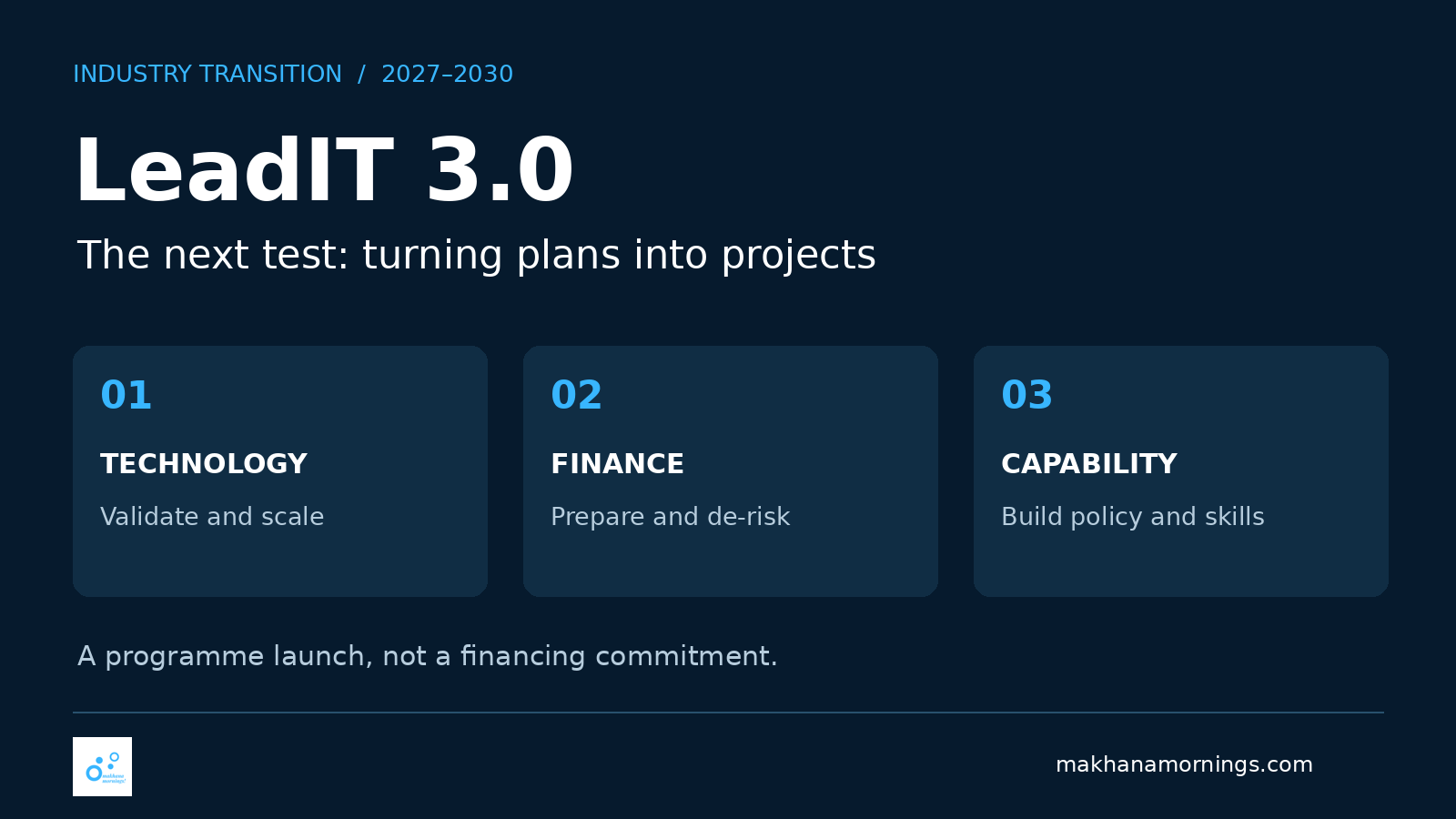
India and Sweden launched LeadIT 3.0 at COP31 in Antalya on November 17, putting industrial projects, investment preparation and workforce skills at the centre of their next phase of climate cooperation.
The 2027–2030 programme aims to move more low-carbon industrial technologies towards commercial use. For Indian manufacturers, the useful question is what help follows with testing, financing and deployment.
What changes in the new phase
LeadIT, the Leadership Group for Industry Transition, began in 2019. Sweden’s government describes the new phase as a shift from building knowledge and dialogue towards implementing solutions at greater scale.
The partnership’s own launch statement sets out three areas of work: helping technologies develop and spread; preparing projects and connecting them with finance; and strengthening policy expertise and workforce skills. Its financing agenda includes links with national investment plans and financial institutions, alongside conversations between suppliers and buyers of low-carbon materials.
Steel, cement and transport remain central. India’s environment ministry says Brazil has joined, bringing the coalition to 20 countries and 33 companies.
Eleven projects, still at the pre-pilot stage
The ministry says the previous phase facilitated 11 pre-pilot steel and cement projects under the India–Sweden Industry Transition Partnership. Areas explored include hydrogen-based ironmaking, electrified industrial heat, carbon capture and replacing clinker in cement.
That description matters: pre-pilot work is an early step towards testing an industrial process. It should not be read as 11 completed plants or a tally of commercial capacity already added.
At a preparatory meeting on November 12, industry participants had asked for more help with project preparation, pilots and capacity building. The new programme addresses that agenda, but the launch announcements do not specify a new committed financing total or a schedule of funded projects.
What to watch next
The next useful evidence will be project-level: which pilots receive financing, what is being tested and whether demonstrations lead to larger installations. For businesses evaluating the programme, named partners and financing terms will be more actionable than the coalition’s membership count.
LeadIT 3.0 sets out how governments and industry want to work together. Its practical value will become clearer as those plans turn into funded projects.



Leave your thoughts