
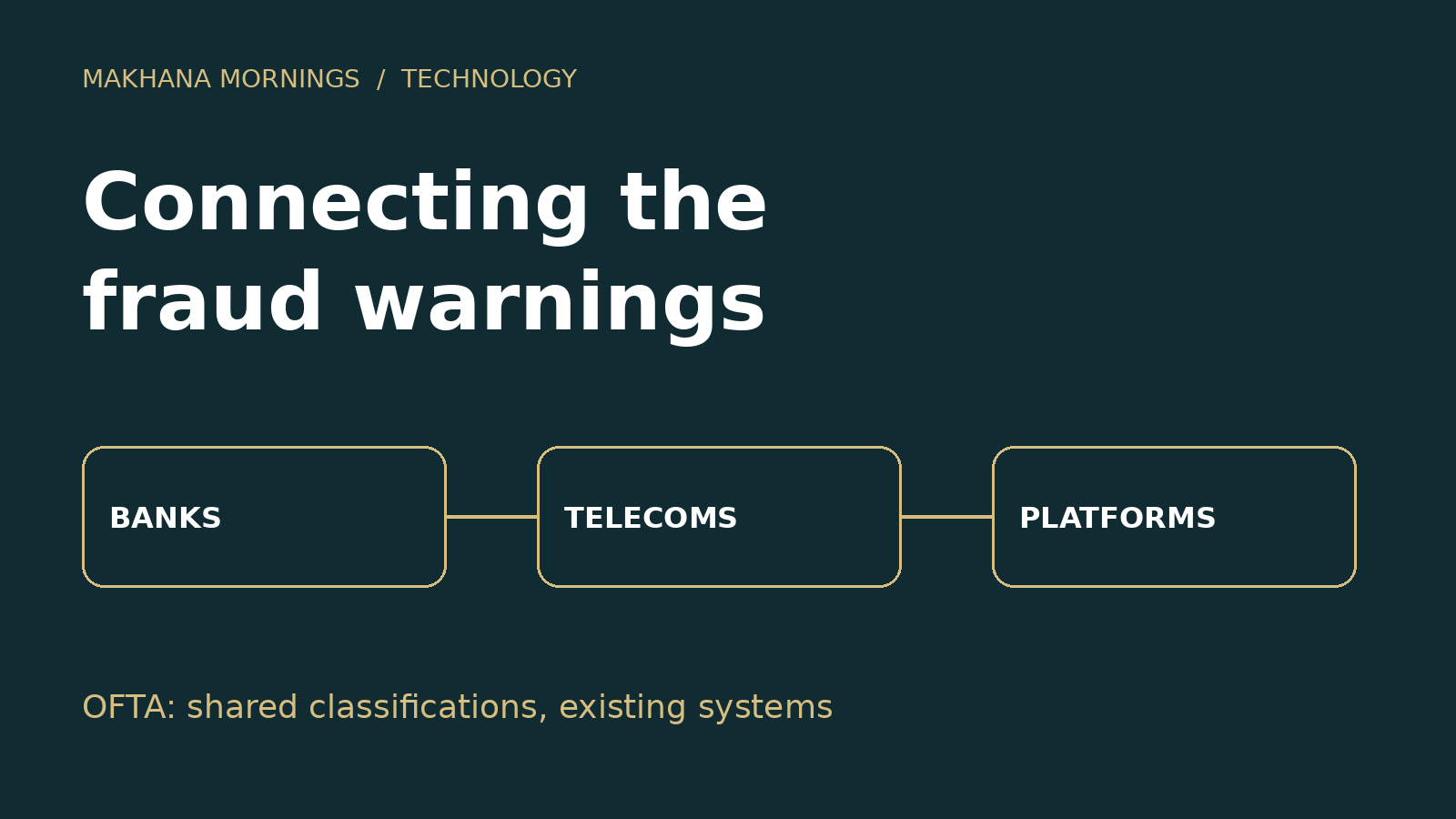
Banks, telecom providers and digital platforms can encounter different parts of the same scam. But a warning is harder to reuse when each organisation describes the threat differently. A new Linux Foundation initiative is targeting that translation problem.
The Open Financial Trust Alliance launch announcement, dated 18 November 2026 at the Singapore FinTech Festival, sets out plans to connect existing fraud classifications and develop practical defence playbooks. This is an alliance launch, not evidence that participating institutions have already reduced losses.
A common language, not a replacement system
The foundation says OFTA will build a technical interoperability layer linking fraud and scam taxonomies and typologies: the categories and patterns organisations use to describe threats. It will work with intelligence-sharing partners to keep those connections current as fraud changes.
Its initial members include Cifas, The Knoble, Mobile Ecosystem Forum and Stop Scams Alliance. The announcement separately identifies Feedzai and the Global Anti-Scam Alliance as endorsers. A Gates Foundation grant supports the launch; the announcement does not specify its amount.
What stays with the organisation
The alliance’s own explanation says the connecting layer is built as code and is intended for both commercial and open-source implementations. Organisations need not replace their classification frameworks or adopt a particular technology.
OFTA is not a regulator. Participants keep responsibility for their data, systems and decisions, and apply its guidance within their regulatory constraints. That distinction matters: making two warning categories understandable to each other is not, by itself, permission to transmit personal information across borders.
Tazama, the transaction-monitoring project within Linux Foundation Charities, is an early contributor. OFTA describes its purpose as broader than that application, with detection remaining in the technologies organisations already use.
The business test comes after the launch
For a bank or platform assessing the initiative, the useful questions are practical: can an incoming warning be interpreted consistently, routed to the right team and acted on without adding another manual reconciliation queue?
Those are evaluation questions, not reported outcomes. The launch does not establish a measured reduction in fraud losses, a deployed Indian banking network or a universal detection service. The next meaningful evidence will be usable mappings and playbooks, adoption by operating institutions, and results that distinguish better coordination from simply collecting more alerts.


Leave your thoughts