
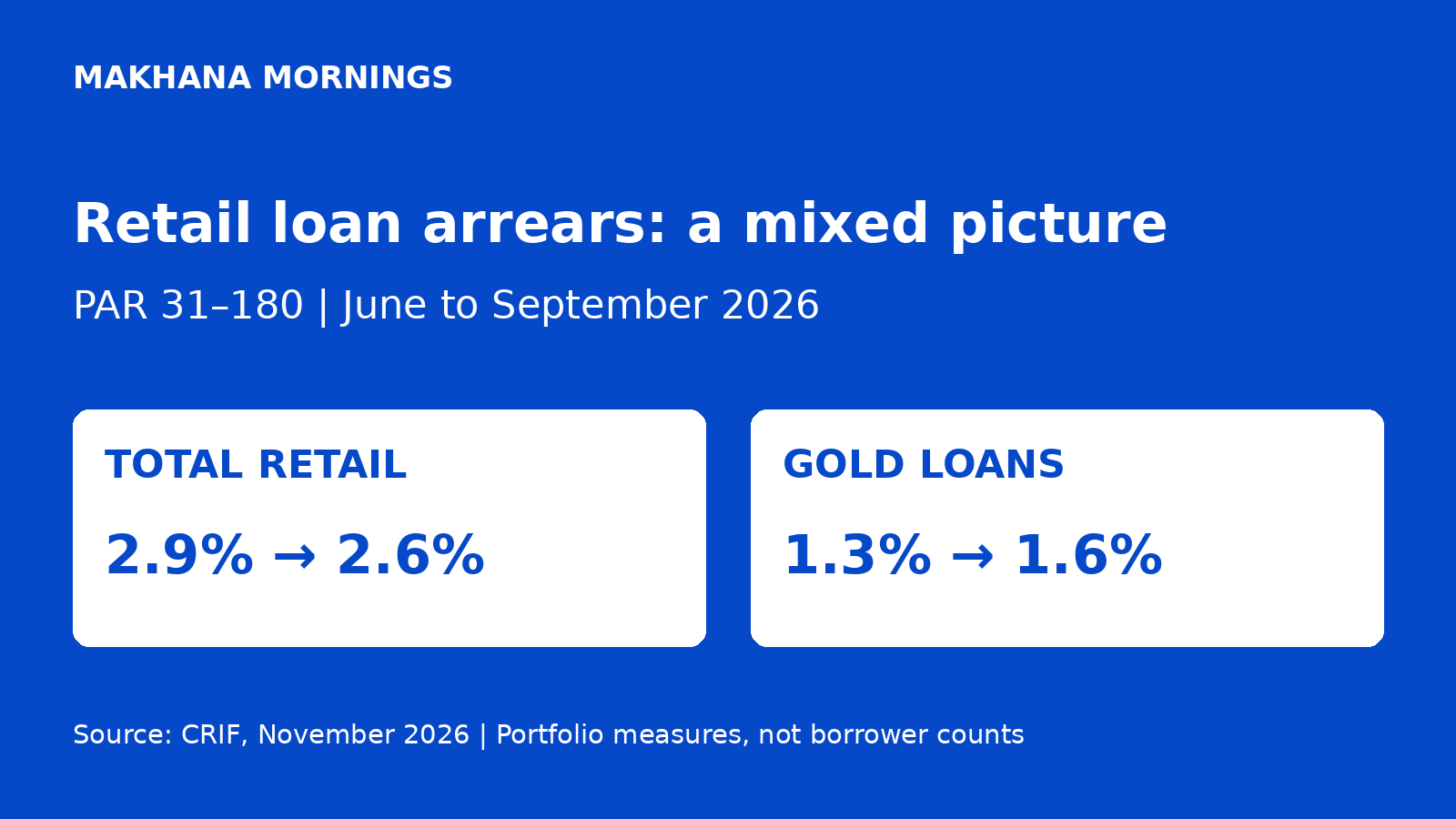
Retail loan arrears did not move uniformly in the September quarter. CRIF’s November report shows an improving overall measure alongside deterioration in particular products. Neither a blanket “stress spike” nor an unqualified all-clear captures that contrast.
The comparable figures
The PAR 31–180 table on printed page 3 of How India Lends, November 2026 shows total retail falling from 2.9% in June to 2.6% in September. Gold loans rose from 1.3% to 1.6%, consumer-durable loans from 1.6% to 1.8%, and personal loans from 2.3% to 2.4%.
PAR is the report’s portfolio-at-risk measure. This comparison concerns the 31–180-day delinquency band, not the percentage of individual borrowers defaulting or losses ultimately incurred. CRIF uses reported September data; its gold category includes priority-sector gold loans.
A reporting caveat matters
Commercial-vehicle PAR rose from 5.0% to 6.1%, but CRIF attributes much of that movement to account closures by a member and cautions against treating it as an organic increase in stress.
We use the directly reported, same-band table rather than reconstructing it from rounded sub-buckets. The executive summary’s gold early-arrears change conflicts with the detailed page; that change is not used here.
Our reading: an average is not every portfolio
An aggregate can improve while individual segments worsen. For readers, that means keeping the product, reporting period and measure together. A quarterly comparison should not quietly become a claim about every lender, every household or the direction of eventual credit losses.
The next useful questions concern persistence and recovery: does a higher arrears measure continue in subsequent periods, and what happens to affected accounts? A single snapshot cannot distinguish every temporary payment delay from lasting repayment difficulty.
Our earlier gold-loan story examined Bajaj Finance’s payment calendar and combined Stage 2 and Stage 3 assets. That lender-specific accounting measure is different from this bureau portfolio comparison and should not be spliced into the same numerical trend.
The takeaway is selective monitoring, not a blanket verdict. The overall direction and the pockets moving against it both belong in the story.




Leave your thoughts