
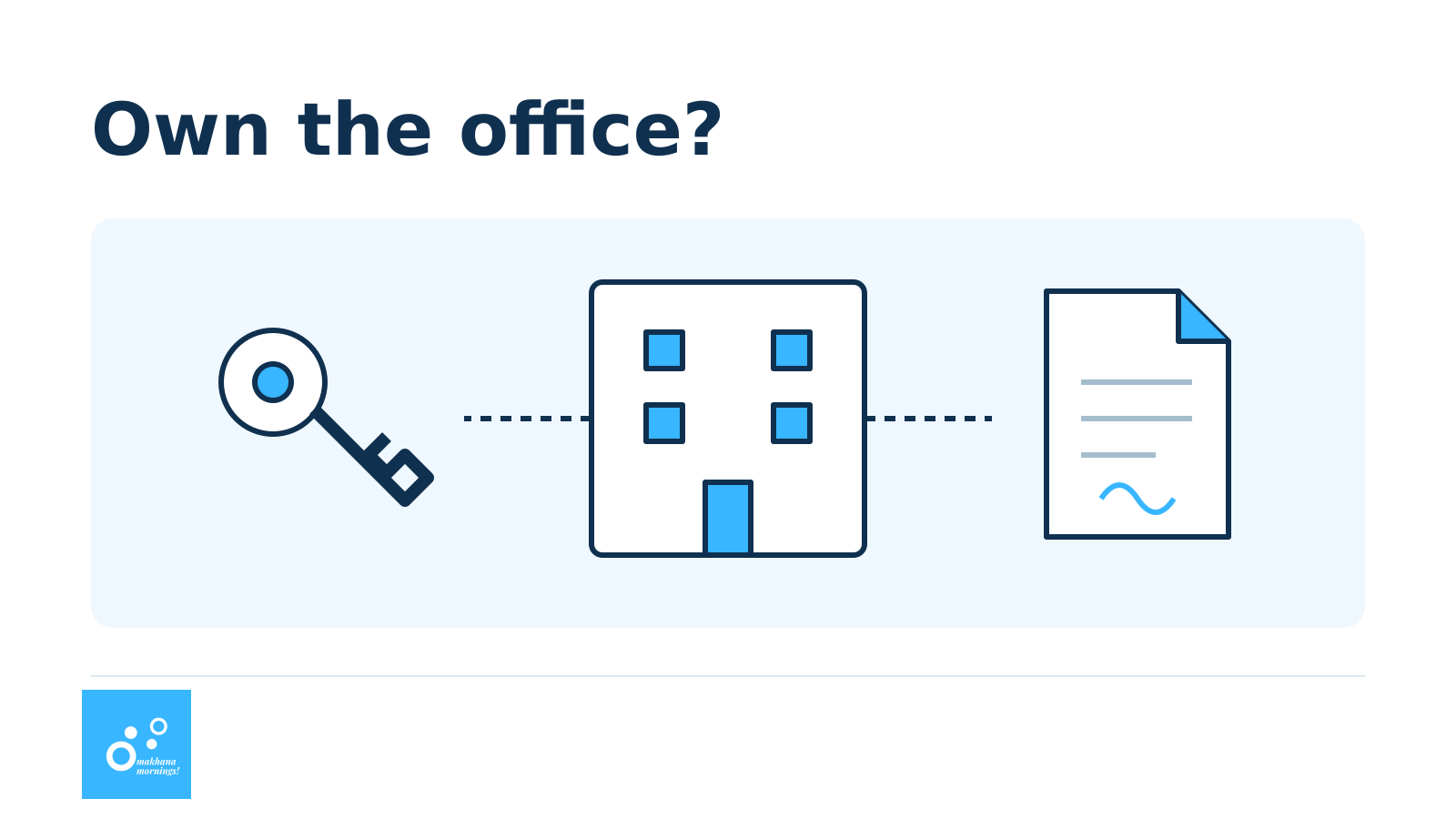
An office can fit a business today and become the wrong space later. That makes the ability to change plans part of the purchase-or-lease decision, alongside the immediate cost.
Lodha plans to sell offices at its recently launched Pantheon project in Gurugram. Executive Sushil Modi puts the planned cost at ₹1,100–1,200 crore. This is a company plan, not completed construction or money already spent.
The Breakdown
Buying commits capital to a property; leasing commits the business to contractual payments for its use. Both decisions need to allow for the work the space must support.
Consider a hypothetical firm comparing two offices for a team of 30. It expects to need space for 60 people later, but has not established when that growth will happen.
A purchase could leave it paying for room it does not yet use, or owning a space it later outgrows. A lease could also commit it to unsuitable space if its terms restrict expansion or an early exit. These are possible outcomes in the example, not claims about Pantheon or a particular lease.
Why This Matters
The comparison becomes more useful when the business separates three questions:
What space is needed? Distinguish the team’s current requirements from an expansion assumption.
When is cash committed? Put the purchase or lease payments, fit-out and other agreed costs on a timeline instead of comparing unlike headline amounts.
What happens if the plan changes? Check the actual options and costs for leaving, expanding or finding another use for the space.
Neither route automatically provides flexibility. The actual premises and terms determine which changes are possible and what they cost.
The Big Picture
The project’s identity is separately checkable. Lodha’s page maps Pantheon to Haryana RERA registration GGM/1090/822/2026/62. The regulator’s register names Lodha Developers as promoter of the Sector 28 project and records the certificate upload on September 21, 2026.
That record establishes a registration trail. It does not establish completed construction or settle the buyer’s price, possession terms or alternatives. A project check and a business case answer different questions; neither should stand in for the other.
The Crunch
Compare space requirements, payment timing and the consequences of a changed plan. Owning an office does not remove the need to plan how the business will use it.
Related categories: Business & Brands


Leave your thoughts