
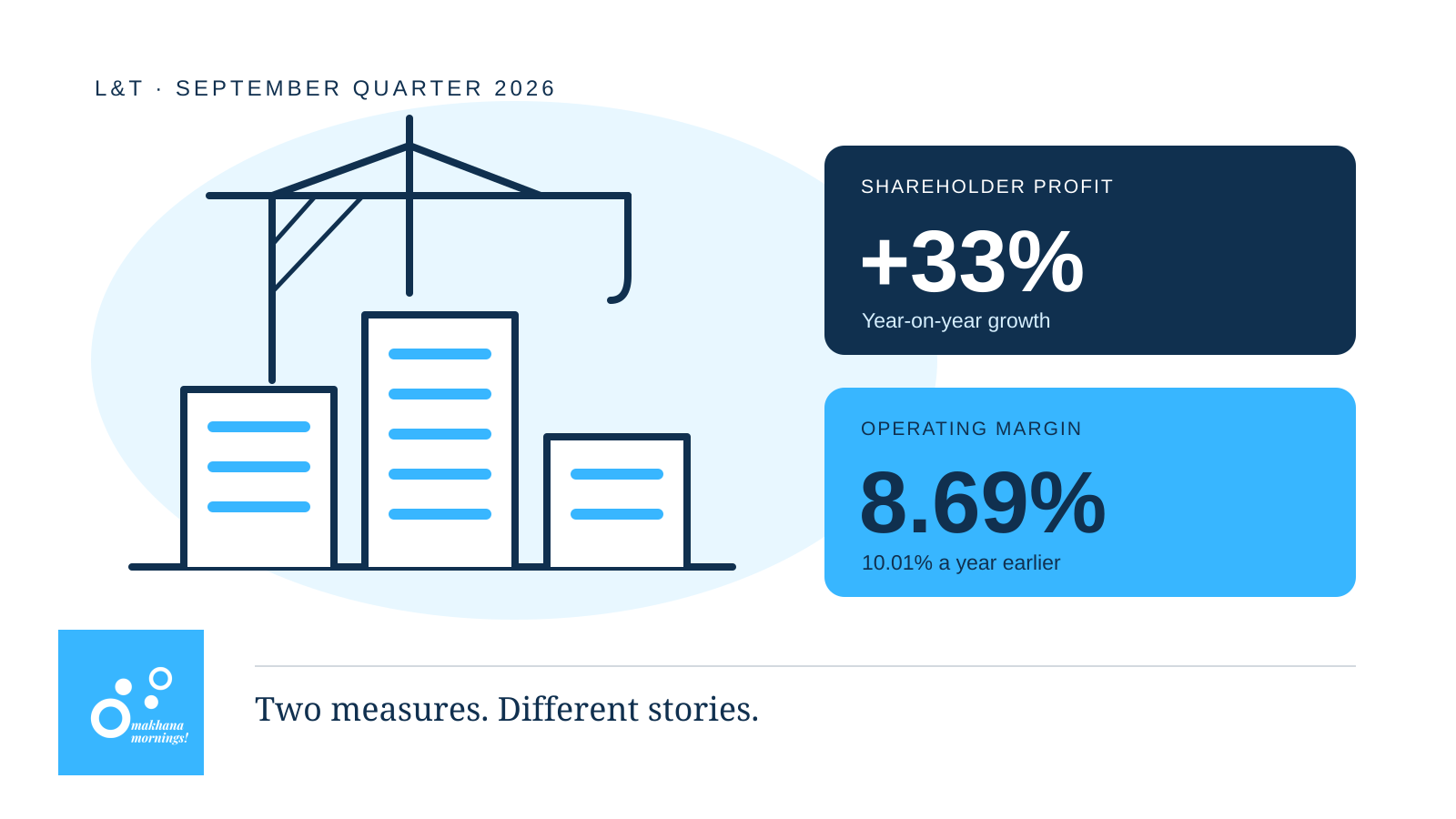
L&T’s September-quarter results tell two different stories: stronger reported profit, but little growth in operating earnings. Reading only the bottom line misses the distinction.
The Breakdown
Revenue rose about 16% to ₹78,750 crore. Profit attributable to shareholders increased about 33% to ₹5,202 crore. Yet the group’s operating margin fell to 8.69% from 10.01% a year earlier.
The operating profit behind L&T’s reported margin was almost flat at about ₹6,845 crore. Higher other income and lower finance costs helped bridge the gap to the much faster growth in shareholder profit. Total tax expense rose year on year.
L&T says the margin decline reflected pressure across its portfolio and a larger share of revenue from projects, products and manufacturing. The presentation’s segment margins were not uniform. Margins fell in infrastructure and utilities and in conventional energy, but rose in manufacturing and products.
Other income also had more than one source. The company points to higher surplus funds, better yields and a one-time gain from an LTTS business disposal. That last component should not be treated as recurring project earnings.
Why This Matters
For businesses reading large contractors as a signal of the investment cycle, activity and profitability answer different questions. More work can support suppliers without automatically producing a higher profit on each rupee of sales.
The Crunch
The next test is whether execution growth translates into stronger operating earnings, not merely whether reported profit keeps rising. Follow margins, cash collection and the mix of recurring earnings alongside the headline growth number.
Related categories: Economy & Markets




Leave your thoughts